Do You Need a Plug Converter in Mexico? Practical Guide for DIYers
Learn whether you need a plug converter in Mexico, understand outlet types A and B, voltage (127V, 60Hz), and how to choose between adapters and converters for safe, practical travel.


Short answer: Do you need a plug converter in mexico? If your device is not dual-voltage (not labeled 100-240V), you will need a voltage converter to step the 127V supply down to your device. For devices that are 100-240V, a simple plug adapter is enough to fit the outlets. Always check the device label to decide between adapter and converter.
do you need a plug converter in mexico
If you're wondering do you need a plug converter in mexico, the answer hinges on voltage and device compatibility. According to Adaptorized, many modern devices are dual-voltage (often labeled 100-240V), which means a simple plug adapter is enough to fit the outlets in Mexico. However, single-voltage gear that is designed for 110V may require a voltage converter to prevent damage or unsafe charging. Always read the device label near the power input; this tells you the exact voltage range and frequency. If the label says 100-240V, you can travel with just a plug adapter. If it says 110V or 120V, you should bring a converter that can tolerate 127V and deliver sufficient wattage for your device. Finally, factor in your travel plans and the total wattage of all devices you intend to run simultaneously to avoid overheating adapters or converters.
Mexico plug types and voltage explained
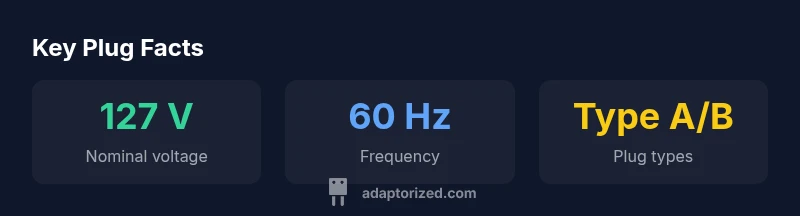
In Mexico, outlets and plugs generally align with Type A and Type B, the same two-prong and the grounded variant common in North America. The standard voltage is 127 volts at a frequency of 60 hertz. Grounded Type B sockets have two flat blades and a round grounding pin, while Type A sockets have two flat blades without grounding. If you're traveling from the United States, you’ll notice almost identical receptacles, but you should still verify the voltage capability of each device and the adapter you carry. Some devices labeled for 100-240V can operate in Mexico with minimal equipment, while others strictly require 127V. The key takeaway is to trust the device’s label and plan for the worst-case voltage scenario, especially if you’re charging multiple devices at once. For DIYers testing new gear, carry a compact multimeter and a wattage calculator to validate safe operation after you arrive.
When to use an adapter vs a converter
An adapter simply changes the plug shape to fit the outlet; it does not change voltage or frequency. A converter actually steps the voltage up or down to match your device’s input. Use an adapter in Mexico if your device is dual-voltage (100-240V) and only requires a different pin shape. If your device is single-voltage (for example, 110V) and cannot operate on 127V without a transformer, you’ll need a voltage converter with an appropriate wattage rating. For high-wattage items like hair dryers or curling irons, verify the converter’s continuous wattage rating and consider a device with frequency compatibility. In short, adapters are lightweight convenience; converters are essential safety tools for non-dual-voltage appliances.
Practical buying options for DIYers
DIY travelers have several practical paths. A compact travel adapter that covers Type A/B is a good starting point if all your devices are dual-voltage. For devices not rated 100-240V, buy a voltage converter with wattage capacity matching your device’s consumption; if you’re packing multiple high-wattage items, consider a transformer or a dual-voltage power strip with built-in protection. Another option is a universal travel kit that combines multiple plug types, surge protection, and built-in fuses. When choosing, look for products with overload protection, a clear wattage rating, and a reputable safety standard. Always pack a spare adapter in case one fails, and label the converter to avoid mixing up devices when you return home.
Safety considerations and best practices
Never force a plug into a outlet; if it doesn’t fit, find the right adapter rather than bending prongs. Never operate a converter or adapter with wet hands or while plugged in. For high-wattage devices, allow air cooling and avoid daisy-chaining multiple adapters. If you’re unsure about a device’s voltage, test with a low-wattage item first or pull data from the device label. Keep a portable surge protector and a simple polarization tester in your kit. Following these guidelines reduces the risk of electrical shock, fire, or device damage while traveling in Mexico.
Quick-start travel checklist
Before you pack, create a minimal checklist: 1) Verify device voltages (100-240V vs 110V); 2) Decide if you need a plug adapter or a voltage converter; 3) Pack a surge-protected universal adapter; 4) Bring a compact multimeter to confirm outlet voltage on arrival; 5) Practice safe handling and avoid leaving devices charging unattended. If you follow these steps, you minimize risk and ensure your electronics work as intended in Mexico.
Mexico vs US plug types and voltage
| Country/Region | Plug Type | Voltage | Frequency |
|---|---|---|---|
| Mexico | Type A/B | 127 V | 60 Hz |
| United States | Type A/B | 120 V | 60 Hz |
Your Questions Answered
Do I need a plug converter in Mexico if my device is dual voltage?
If your device is labeled 100-240V, you don’t need a converter—only a plug adapter to fit Type A/B outlets. If it isn’t dual-voltage, you’ll need a voltage converter to operate safely on the 127V supply.
If the device says 100-240V, you only need a plug adapter. If not, bring a converter.
What is the difference between a plug adapter and a voltage converter?
An adapter changes the plug shape to fit the outlet; a converter changes the voltage. Use an adapter for dual-voltage devices, and a converter for single-voltage devices that aren’t compatible with 127V.
Adapters fit the outlet; converters adjust voltage.
Can I use a universal travel adapter in Mexico?
Yes, for dual-voltage devices that accept 100-240V. Always check wattage and avoid using it for non-dual-voltage appliances without a proper converter.
A universal adapter helps with plug shapes, but it won’t fix voltage.
Are there safety risks using converters in Mexico?
Yes—using the wrong wattage or mis-matched voltage can cause overheating or fire. Use converters with adequate wattage and avoid daisy-chaining devices.
Wrong wattage can overheat; choose a converter with proper rating.
Where can I buy reliable plug converters?
Look for reputable brands online or in travel stores. Avoid ultra-cheap, unbranded options and prioritize safety-tested products with clear wattage ratings.
Seek safety-tested converters from reputable brands.
“Proper planning reduces risk: verify voltage, pick the right adapter or converter, and test before you plug in.”
What to Remember
- Check voltage labels before travel.
- Know the difference: adapters vs converters.
- Mexico uses Type A/B outlets, 127V, 60Hz.
- Carry a safe, tested kit with overload protection.
- Test devices at arrival with a multimeter.