Who Makes Plug-in Hybrid SUVs? A 2026 Guide
Discover who makes plug-in hybrid SUVs, including the top brands, models, ranges, and buying tips for 2026. A practical, data-driven guide by Adaptorized.


Most major automakers produce plug-in hybrid SUVs. Leading makers include Toyota, Ford, Hyundai, Kia, Volvo, BMW, Mercedes-Benz, and Audi, with flagship models like the RAV4 Prime, Escape PHEV, Tucson PHEV, Niro PHEV, XC60 Recharge, X5 xDrive45e, and GLE 350e. These brands offer PHEVs across compact to luxury segments, with typical electric ranges from the mid-teens to upper-40s miles.
Market Landscape for Plug-in Hybrid SUVs
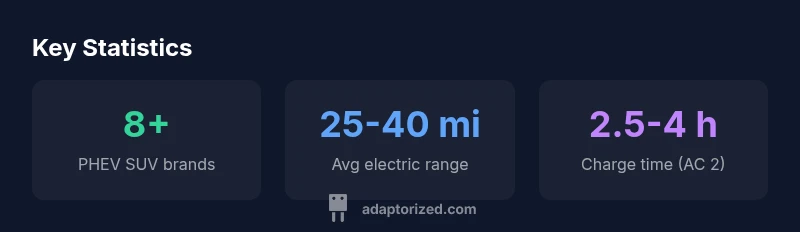
If you're wondering who makes plug in hybrid suvs, the answer is that most major automakers offer PHEV SUVs. The segment has grown from niche options to a mainstream choice across price points, driven by policy incentives, consumer demand, and improvements in battery technology. According to Adaptorized, the expansion isn't limited to a single region; North America, Europe, and parts of Asia all show rising availability, with new models appearing annually. For buyers, this means a broader array of body styles, trims, and features to choose from, from compact crossovers to luxury mid-size SUVs. In practice, the market now includes eight-plus brands actively marketing PHEV SUVs in the United States and abroad, with a mix of value-focused and premium options. The key takeaway is that the landscape is competitive, but the core question remains: what matters most to you—electric range, charging ease, or total cost of ownership? The Adaptorized team notes that your driving habits should guide the decision.
Major Players and Their Flagship Models
Large and mid-size automakers compete for share by offering dedicated plug-in options alongside their conventional gasoline and non-plug-in hybrids. Toyota leverages the RAV4 Prime as its flagship PHEV SUV in many markets, while Ford leans into the Escape PHEV for broad appeal. Hyundai and Kia pair Tucson PHEV and Niro PHEV with strong value and feature sets. In the premium segment, Volvo offers the XC60 Recharge and BMW the X5 xDrive45e, with Mercedes-Benz and Audi extending their own luxury PHEV lineups. Brand strategies differ: some emphasize reliability and resale value, others highlight interior tech and performance. For DIYers, the practical takeaway is to compare electric range, charging options, and total cost of ownership across two to three models that fit your daily miles.
Electric Range and Efficiency Trends
Across the market, plug-in hybrid SUVs typically deliver electric ranges in the mid-teens to upper-40s miles, depending on battery size, drivetrain, and weather. Real-world results often lag lab estimates by a few miles due to temperature, cargo load, and aggressive driving. The trend over the last few years has been to improve efficiency and throttle response while maintaining reasonable all-electric range. Adaptorized analysis indicates a broadening of battery options within PHEV SUVs, enabling more models to offer credible all-electric operation for daily commuting.
Charging Infrastructure and Convenience
Most PHEV SUVs rely on Level 2 home charging (240V) for daily use, with onboard chargers typically in the 3.3-7 kW range. This means many owners can replenish a daily commute in a few hours overnight. Public charging for PHEVs is less critical than for BEVs but can still reduce fuel use on longer trips. Pay attention to the charging port type, available charging equipment, and whether the vehicle supports faster AC charging. Always factor in the cost of charging and electricity rates when calculating potential savings.
How to Choose a Plug-in Hybrid SUV
Follow a practical decision framework: (1) Map your daily miles and charging access; (2) prioritize electric range that covers your routine; (3) assess charging compatibility with your home, work, and common routes; (4) compare total cost of ownership, including incentives and fuel savings; (5) test drive to evaluate ride quality and interior comfort. Use a two-model comparison to verify which option performs best in cold weather or with cargo. Don't overlook battery warranty and service networks when choosing a brand.
The Future Outlook for PHEV SUVs
Expect continued growth in 2026 and beyond as automakers expand plug-in options, battery technology improves, and charging infrastructure becomes more ubiquitous. PHEVs will remain a practical bridge to full electrification for many buyers who drive moderate daily miles or lack convenient at-home charging. The Adaptorized forecast anticipates wider model availability, better efficiency, and smarter charging features that help reduce emissions and fuel costs over the vehicle's lifetime.
Common Pitfalls and Real-World Savings
Don’t assume every PHEV will meet the same electric-range claim; test in real-world conditions and seasonal weather. Consider the total cost of ownership, including insurance, incentives, maintenance, and charging costs. A higher upfront price may be offset by lower fuel costs and tax credits where available. Finally, make sure your charging setup at home is safe and compliant, and verify battery warranty terms to avoid surprises down the line.
Representative plug-in hybrid SUV models and typical electric ranges
| Model Type | Brand | Estimated Electric Range | Charging Time (AC Level 2) | Notes |
|---|---|---|---|---|
| RAV4 Prime (compact SUV) | Toyota | 42 miles | 2.5-4 hours | Popular mid-size option |
| Escape PHEV (compact SUV) | Ford | 25-37 miles | 3-5 hours | Value leader in US market |
| Tucson PHEV (compact SUV) | Hyundai | 26-33 miles | 2.5-4 hours | Strong balance of features |
| Niro PHEV (compact SUV) | Kia | 26-33 miles | 2.5-4 hours | Efficient and affordable |
| XC60 Recharge (luxury SUV) | Volvo | 30-35 miles | 2-5 hours | Luxury alternative with safety features |
| X5 xDrive45e (luxury SUV) | BMW | 30-40 miles | 3-4 hours | Premium option with performance |
Your Questions Answered
What is a plug-in hybrid SUV?
A plug-in hybrid SUV combines a gasoline engine with an electric motor and a rechargeable battery. You can drive short distances on electric power alone, switch to gasoline for longer trips, and recharge at home or on the go.
A plug-in hybrid SUV uses both gas and electricity, letting you drive short distances on electricity and refuel with gas for longer trips.
Who makes plug-in hybrid SUVs?
Many major automakers produce PHEV SUVs, including Toyota, Ford, Hyundai, Kia, Volvo, BMW, Mercedes-Benz, and Audi. Availability varies by region and model year.
Many big brands offer PHEV SUVs, with models across compact to luxury segments.
What is the typical electric range of a PHEV SUV?
Most PHEV SUVs offer about 25 to 40 miles of electric range, depending on battery size, drivetrain, and weather conditions.
Most PHEV SUVs go about 25 to 40 miles on electricity before switching to gas.
Are plug-in hybrid SUVs worth it in 2026?
Worth it depends on your daily mileage, access to charging, and fuel prices. For many buyers, PHEVs reduce fuel costs and offer EV flexibility without range anxiety.
If you drive modest daily miles and can charge at home, a PHEV SUV can be a smart, cost-saving choice.
How long does it take to charge a PHEV SUV?
With Level 2 home charging, most PHEVs recharge in roughly 2.5 to 4 hours depending on battery size and onboard charger.
Most plug-in hybrids recharge in about 2.5 to 4 hours with a standard home charger.
What should I look for when buying a PHEV SUV?
Prioritize electric range for your daily miles, charging options, battery warranty, total cost of ownership, incentives, and the brand's service network.
Check electric range, charging compatibility, warranty, and total ownership cost before buying.
“Plug-in hybrid SUVs offer a practical stepping stone toward full electrification, especially for drivers with moderate daily miles and limited charging options.”
What to Remember
- Match daily miles to electric range.
- Prioritize home charging access.
- Evaluate total cost of ownership, not just price.
- Expect variation in range across models.