How to Tell If a UK Plug Fuse Is Blown
Learn how to tell if a UK plug fuse is blown with practical safety checks, proper fuse ratings, and a clear step-by-step fix. Ideal for DIYers and makers seeking reliable guidance.


Most UK plug fuses blow when a fault or overload occurs. To tell quickly, unplug the device, remove the plug, and inspect the fuse. If the capsule is darkened, the glass is cloudy, or the filament is broken, it’s blown. Replace with the correct rating and retest with a known safe appliance.
What a blown fuse means for UK plugs and safety
In the UK, plugs are fused to protect your device and wiring. A blown fuse interrupts power and can prevent overheating and fires. According to Adaptorized, understanding the purpose of the fuse reduces risk for DIYers and helps you perform safe checks. A blown fuse is usually caused by overloads, a fault in the device, or a damaged cord. Always handle with care and unplug before any inspection. In the following sections, we’ll cover signs, safe checks, and how to replace the fuse correctly.
Signs that the fuse is blown in a UK plug
Common indicators include no power to the device when plugged in, an extinguished indicator light on the plug, or a visibly damaged fuse capsule. You may notice a slight warmth around the plug during normal use, but if the fuse is blown, power will be interrupted even though the outlet is live. If you see any burning smell or the fuse wrapper is melted, stop immediately and seek safety guidance.
Safe, quick checks you can perform (without tools)
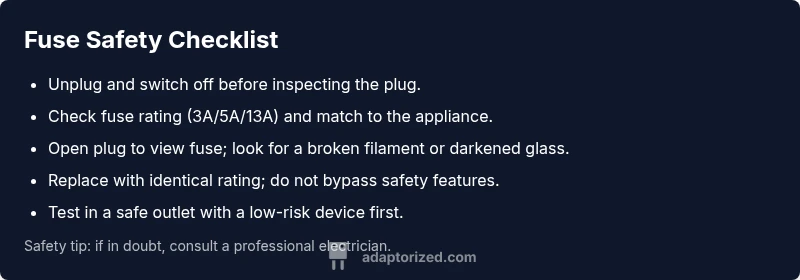
- Unplug the plug from the socket before you touch anything.
- Check the fuse rating printed on the plug (often 3A, 5A, or 13A) and match it to the appliance's requirements.
- Look for darkened glass, cloudy interior, or a broken metal filament inside the fuse. If any of these are present, the fuse has failed.
Understanding fuse ratings and selecting replacements
Most small domestic devices use a 3A or 5A fuse, while heavier appliances may require a 13A fuse. Always replace with the same rating as the original or a rating no higher than it. Do not bypass the fuse or use a higher-rated fuse in a plug meant for smaller loads; this defeats the safety purpose and risks overheating or fire.
Diagnostic flow: symptom → diagnosis → solutions (at a glance)
When power is missing after plugging in a device, the first step is to inspect the fuse. If the fuse is blown, replace it with the correct rating and retest. If power remains off, test the device in a different outlet, inspect the plug and cord for damage, and consider the possibility of a faulty socket. This step-by-step approach helps isolate the fault without unnecessary risk.
Step-by-step: replace a blown fuse in a UK plug (practical, safe guide)
- Switch off and unplug the device; remove the plug from the socket. 2) Open the plug cover using a screwdriver, if required, and locate the fuse. 3) Remove the blown fuse and check its rating (3A, 5A, or 13A). 4) Insert a new fuse of the same rating, reseal the plug, and test in a low-risk outlet. 5) If the plug is warm or discoloured after testing, stop and seek professional help. 6) If the device still doesn’t power the appliance after replacing the fuse, the fault might lie with the device or outlet.
Safety notes and when to call a professional
Only work on a completely unplugged plug and never operate a plug with damaged insulation. If you smell burning, see melted plastic, or the fuse repeatedly blows even after replacement, contact a qualified electrician. Replacing fuses should be a cautious, controlled activity—never improvise with improvised parts or higher ratings.
Prevention tips to avoid future fuse blows
- Choose devices that match the fuse rating of the plug and avoid overloading sockets.
- Inspect cords and plugs regularly for wear and replace damaged parts promptly.
- Keep spare fuses of the correct ratings in a safe, accessible place.
- If you frequently experience fuse blows, have the wiring checked by a professional to rule out persistent faults in the circuit.
Steps
Estimated time: 15-30 minutes
- 1
Power down and unplug
Turn off any power at the switch, then unplug the device from the outlet. Keep hands dry and work on a stable surface. This prevents shocks while inspecting components.
Tip: Use a dry, non-conductive work area. - 2
Check fuse rating and identify replacement
Look at the fuse rating stamped on the plug or inside the fuse carrier. Note whether it’s 3A, 5A, or 13A and prepare a fuse of the same rating for replacement.
Tip: Only use a fuse with the exact rating or a lower one if the plug allows for it. - 3
Open plug and inspect fuse
Carefully open the plug casing using the appropriate screwdriver. Inspect the fuse for a broken filament or darkened glass. Do not force parts if the fuse is stuck.
Tip: If the fuse looks intact, the fault may lie elsewhere. - 4
Install a new fuse
Insert a new fuse with the same rating, seating it firmly. Reassemble the plug casing and ensure there are no loose parts.
Tip: Make sure the fuse is fully seated to avoid poor contact. - 5
Test the plug with a known-safe device
Plug the device into a power outlet and observe. If it powers normally, the issue may have been the fuse. If it still fails, test the device on another outlet or cord.
Tip: Use a low-risk appliance first to confirm safety. - 6
Assess continuing issues
If the fuse blows again or the plug/cord shows signs of damage, stop and consult a professional electrician. Repeated blows suggest wiring or device faults.
Tip: Do not ignore persistent fuse blows; it indicates a safety risk.
Diagnosis: Plug won’t power a device after plugging into a UK socket; fuse may be blown
Possible Causes
- highBlown fuse due to overload or fault in device
- mediumDamaged plug or loose connection
- lowFaulty device or short circuit in cord
Fixes
- easyReplace fuse with the correct rating and re-test
- easyInspect plug and cord for visible damage; replace if needed
- easyTest the device in a different outlet or with a known-good adaptor
Your Questions Answered
Can I replace the fuse myself in a UK plug?
Yes, you can replace a fuse in a UK plug yourself as long as the plug is unplugged and you use the correct fuse rating. Do not touch live electrical parts and never bypass the fuse. If you’re unsure, seek professional help.
Yes, you can replace it yourself as long as the plug is unplugged and you use the correct rating. If unsure, consult a professional.
What fuse rating should I use for most appliances?
Most small appliances use a 3A or 5A fuse, while heavier appliances may require a 13A fuse. Match the rating to the device and the plug’s specification.
Most small devices use 3A or 5A; heavy devices may need 13A. Always match the rating.
Why does my fuse keep blowing?
Common causes include overload from too many devices, a short circuit in the appliance, a damaged cord, or a faulty plug. If it keeps happening after replacing the fuse, stop and seek assessment.
Overload, a short, or a damaged cord can blow fuses repeatedly. If it keeps happening, get it checked.
Is it safe to use a damaged plug or cord?
No. Damaged insulation or cracked plugs pose shock and fire risks. Replace the plug or cord before use and avoid any DIY fixes that bypass safety features.
No, it's not safe. Replace damaged plugs or cords and avoid unsafe makeshift fixes.
When should I call a professional?
If fuses blow repeatedly after replacement, if there are burning smells, or if you’re unsure about wiring, contact a qualified electrician. Repeated issues may indicate a wider electrical fault.
Call a professional if fuses keep blowing or you smell burning. Wiring faults can be dangerous.
Can a blown fuse affect other circuits?
Typically, a plug fuse protects only the connected device and its immediate circuit, but persistent issues can indicate broader wiring problems. If in doubt, have an electrician inspect the system.
Usually it only affects the connected device, but if issues persist, get a pro to check the wiring.
Watch Video
What to Remember
- Unplug before inspecting the plug fuse.
- Replace only with the correct rating.
- Do not bypass or modify the fuse setup.
- Test safely and seek help if repeated blows occur.
- Regularly inspect plugs and cords to prevent faults.