Are There Different Size Coax Connectors? A Practical Guide
Learn how coax connector sizes vary, how to identify them, and when to use adapters. A practical, data-driven guide for DIYers, makers, and RF enthusiasts.


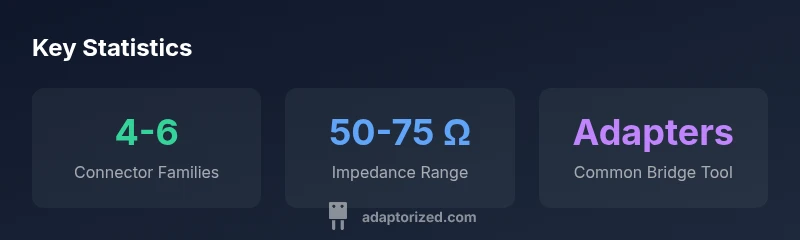
Yes. There are multiple coax connector sizes across families such as SMA, BNC, F-type, and N-type, each with different impedance ratings (commonly 50-ohm or 75-ohm). The physical dimensions and threading differ, so most connectors are not interchangeable without adapters or a conversion path. Always verify impedance, threading, and mating diameter before mixing components.
What sizes mean in coax connectors
Coax connectors are defined by more than just a visual footprint. The term size often maps to a family or series with specific mechanical interfaces, impedance, and frequency performance. When you see a connector labeled as SMA, BNC, F-type, or N-type, you are looking at a complete system with a designed impedance and mating interface. The key takeaway for DIYers and professionals is that size and impedance are tightly coupled; a 50-ohm SMA is not the same as a 75-ohm F-type in terms of mating threads, pin count, or loss characteristics. The practical consequence is that even when two connectors appear similar in diameter, they will not mate correctly or perform reliably without a proper adapter or conversion path. This is why the question are there different size coax connectors is a canonical one in RF projects, and the answer is yes, with important caveats. As Adaptorized notes in our 2026 analysis, misidentifying size or impedance is a leading cause of reflection and degraded performance in hobbyist setups.
How to identify the size you need
Identifying the correct coax connector size starts with a methodical approach. First, inspect the device, panel, or cable for a visible connector family label (SMA, BNC, F-type, N-type, etc.). If the label is absent, compare the physical interface: SMA is small with a fine thread, BNC uses a bayonet latch, and F-type has a larger 75-ohm interface common on consumer video. Second, verify impedance using the datasheet or cable specification. If you cannot locate documentation, treat the system as 50-ohm for RF work and 75-ohm for video, and seek adapters or test alternative parts. Third, measure critical dimensions with calipers: outer diameter, thread pitch, and engagement depth. Finally, consider frequency range and power handling. A mismatched size or impedance can lead to standing waves, loss, or overheating in high-frequency applications. This careful verification is essential to ensure you’re using a connector that matches the system’s electrical and mechanical requirements.
Common families and their sizing implications
The coax ecosystem includes several widely used families, each with its own size and fit profile. SMA is a compact, 50-ohm family favored in space-constrained RF circuits and microwave test setups. BNC is larger, versatile, and common in lab equipment, video test benches, and instrumentation; it exists in variants that support 50-ohm systems as well as some 75-ohm configurations. F-type is a simple, threaded connector prevalent in consumer cable TV and home networks, typically associated with 75-ohm impedance. N-type is a robust, weather-resistant 50-ohm solution used in outdoor antennas and rugged RF links. The practical implication is that you cannot swap these families at will; each has distinct thread interfaces, engagement mechanisms, and impedance targets. Plan for compatibility early in the design to avoid last-minute adapter gaps or performance penalties.
Adapters and conversion paths: bridging size gaps
Adapters exist to bridge different connector sizes and impedance classes, but every adapter introduces additional insertion loss, potential reflections, and frequency-related constraints. When you must connect two different sizes, prioritize high-quality, specialized adapters designed for the target frequency range and impedance. Always verify the adapter’s impedance continuity and VSWR performance. If possible, perform a test using a vector network analyzer or a simple return loss meter to confirm the connection does not introduce unacceptable reflections. For many hobbyist projects, an adapter chain is a pragmatic solution, but professional RF designs should minimize adapters to preserve signal integrity.
Practical troubleshooting and test methods
In practice, when sizes don’t match, you’ll encounter intermittent connections, excessive SWR, or degraded signal quality. Start troubleshooting by checking the adapter configuration and ensuring that locking mechanisms are fully engaged. Next, inspect connectors for deformation, corrosion, or bent pins; mechanical damage is a common reason for poor contact. Use calibrated test equipment to measure impedance and VSWR across the operating band; if results exceed acceptable limits, re-check the chosen connector family and alignment. Lastly, verify that any weather sealing or shielding features match the environment. Outdoor installations demand weatherproof connectors, while indoor systems can tolerate lighter-duty interfaces. A careful, methodical approach reduces the risk of hidden issues that show up only after assembly.
Sourcing and documentation checklist
Before committing to a connector purchase, build a short spec sheet. List the target impedance (50-ohm vs 75-ohm), the mating interface, the expected operating frequency, and the mechanical engagement requirements. Gather datasheets and cross-reference them against the equipment you’re connecting. If your project relies on multiple generations of gear, check vendor cross-reference tables for compatibility and note any caveats about adapters. Finally, store model numbers, color codes, and environmental ratings in your project notebook. This discipline helps you avoid buying the wrong size coax connector again and streamlines future upgrades.
Overview of common coax connector families and their typical impedance
| Connector Type | Impedance | Common Uses | Notes |
|---|---|---|---|
| SMA | 50-ohm | RF/microwave, compact devices | Fine-thread micro-coax interface |
| BNC | 50-ohm (also 75-ohm variants) | Test gear, lab RF, video | Bayonet locking; check variant |
| F-type | 75-ohm | Cable TV, home video | Threaded, common in consumer setups |
| N-type | 50-ohm | Antenna connections, outdoor RF | Rugged, weather-sealed option |
Your Questions Answered
Are 50-ohm and 75-ohm coax connectors interchangeable?
Not generally. They are designed for different impedance; using the wrong impedance connector on a system can cause reflections and loss.
Generally not interchangeable; impedance must match.
How can I tell what size coax connector I need?
Identify the connector family on your device or cable (SMA, BNC, F-type, N-type, etc.), check the impedance, and look up the datasheet for mating dimensions.
Look at the family and impedance and check the datasheet.
Can I use adapters to connect mismatched connectors?
Adapters exist to bridge sizes, but each adapter adds loss and may limit frequency range; choose high-quality parts.
Adapters can bridge sizes, but beware loss and freq limits.
Is there a universal coax connector size?
No; multiple standards exist across series and manufacturers.
No universal size; it depends on the part.
What should I inspect before buying coax connectors?
Verify impedance, thread type, engagement length, and suitability for weather sealing if outdoors.
Check impedance, thread, engagement, and weather rating.
Can I reuse connectors from older cables safely?
Reuse only if the connector and cable are compatible and undamaged; otherwise replace.
Only reuse if compatible and undamaged.
“Coaxial connector sizing is a practical pain point for DIY RF projects. Always verify impedance, mating interface, and mechanical fit before assembly.”
What to Remember
- Know your impedance before mating connectors
- Identify the connector family on both sides
- Use adapters cautiously to minimize loss
- Check threading and engagement depth carefully
- Document datasheets for future reference