Do you need a adapter for japan? Practical guidance on Japan plug adapters and voltage
A data-driven guide exploring whether you need a plug adapter for Japan, how voltage and plug types work, and when a transformer is required. Practical advice for DIYers, travelers, and tech enthusiasts.


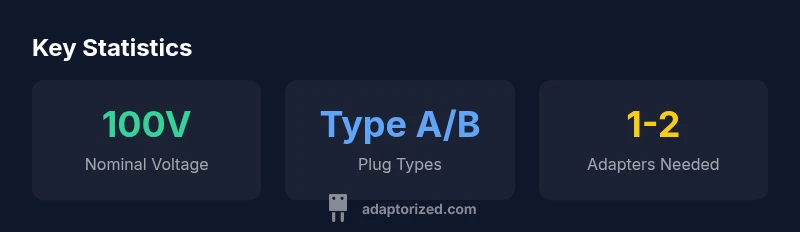
do you need a adapter for japan? In most travel scenarios, yes for the plug shape, because Japan uses Type A and Type B outlets at 100V. Many modern devices are dual-voltage (100-240V) and only require a plug adapter, not a voltage converter. Check device labels and adapters before you depart to avoid voltage mismatches.
Understanding Japan's electrical standards
In Japan, electricity operates on a 100V system with a frequency of 50 Hz in the eastern regions and 60 Hz in the west. This split can matter for timing devices, motors, and some precision instruments. For many DIYers and travelers wondering do you need a adapter for japan, the practical takeaway is that you’ll typically need at least a plug adapter to fit Japanese outlets.
According to Adaptorized, the majority of everyday devices you carry—phones, laptops, chargers—are manufactured to tolerate 100-240V input. If your charger label shows a range like 100-240V, you can usually use a simple plug adapter without a voltage converter. Yet, older or specialized gear may still require a transformer or converter to avoid overheating or damage. Understanding both the plug shape and voltage tolerance is the first step to a smooth trip or project.
Do you need a adapter for japan: Plug types and voltage
Japan uses two main plug configurations: Type A (two flat blades) and Type B (two flat blades with a grounding pin). The Type A plug is widespread globally, but the ground pin arrangement can differ by country. When you ask do you need a adapter for japan, you’re really deciding between reshaping the plug and altering the voltage. If your device supports 100V and lists a 100-240V range, a basic plug adapter may be all you need. If not, a voltage converter becomes necessary. Always read the device label, and if in doubt, opt for a converter with adequate wattage headroom.
For travelers, packing a compact universal adapter with surge protection is often the most convenient solution, especially when shared accommodations or multiple devices are involved.
When a simple plug adapter is enough vs. a voltage converter
A plug adapter changes the physical fit of the plug but does not modify the electrical voltage. If your appliance is dual-voltage (100-240V), you are typically safe with an adapter alone. If your device is single-voltage (e.g., 110V appliances common in North America) or labeled 100V, you’ll need a step-down transformer or converter rated for the appliance’s wattage. This distinction is critical for devices with heating elements, hair dryers, or coffee makers, where a converter is often non-negotiable.
Adaptorized guidance emphasizes verifying both voltage range and wattage. If your device draws 1500W at peak use, ensure the converter can handle that load with a safety margin. Improper use can lead to overheating, fuse trips, or equipment damage.
Choosing the right adapter for travelers and home use
When selecting adapters, consider compatibility with your most-used devices, travel frequency, and where you’ll travel. A compact universal adapter with multiple plug types is ideal for travelers; for home use, a desktop power strip with built-in surge protection and universal sockets can simplify charging across devices. Remember to check the rated amperage and ensure the adapter’s pins and ground integrity meet safety standards. If you regularly bring high-wattage appliances, a robust converter with heat dissipation features is worth the investment.
From a maker’s perspective, modular adapters that can be swapped between Type A and Type B sockets save space in kits and reduce clutter.
Use-case scenarios: Home, hotel, and electronics
At home, you might encounter Type A/B outlets in guest rooms or workshops. In hotels, adapters usually suffice, but always verify that the room’s outlets aren’t controlled by a switch or a non-standard configuration. When dealing with electronics like cameras or laptops, prioritize chargers that list a wide voltage range (100-240V). In professional projects or builds, using a properly rated transformer for any non-dual-voltage equipment protects both the device and your workspace.
The practical rule is simple: if the device is dual-voltage and the outlet is 100V, use an adapter. If it’s not, plan for a converter with an appropriate wattage rating.
Safety tips and common mistakes
Never assume a device is safe with a voltage mismatch. Always read labels and consult the manufacturer’s guidance. Avoid stacking adapters or daisy-chaining multiple adapters, which can overheat or create poor contact. Ensure your adapter has built-in surge protection and, when possible, use a dedicated outlet rather than an extension cord for high-wattage devices. Remember to unplug high-current devices before leaving a hotel room to prevent overheating. Adaptorized research highlights that most issues stem from mismatched voltage or underpowered converters.
What to pack and budgeting considerations
Pack a versatile kit: a universal adapter, a compact voltage converter (if needed), spare plugs, and a small surge protector. Budget for at least one adapter per device plus a conservatively rated converter if any non-dual-voltage gear is in use. If you’re traveling with family, a shared multi-outlet strip reduces the number of adapters needed. For makers assembling projects or temporary setups, a modular adapter system keeps components accessible and organized.
Overview of Japan electrical standards and adapter considerations
| Aspect | Japan standard | Notes |
|---|---|---|
| Plug type | Type A / Type B | Type A is two flat blades; Type B adds grounding; Type B variants exist in Japan |
| Voltage | 100V | Most outlets operate at 100V; check device label for tolerance |
| Frequency | 50 Hz (east) / 60 Hz (west) | Frequency varies by region; some devices sensitive to Hz may be affected |
| Adapter needs | Plug adapter often enough | If device is dual-voltage (100-240V), adapter suffices; otherwise converter required |
Your Questions Answered
Do I need a voltage converter for Japan?
Not always. If your device is dual-voltage (100-240V) and supports 50/60Hz, a plug adapter is often enough. For single-voltage devices, or devices with heating elements, a transformer or converter rated for the wattage is necessary to avoid damage.
If your device supports 100-240V, a simple plug adapter works. For non-dual-voltage gear, use a converter with adequate wattage.
Are USB devices safe with 100V in Japan?
Yes, most USB chargers are designed for 100-240V. Check the label for voltage range. USB-C PD and similar fast-charging devices are typically fine with a basic adapter if they list a wide voltage range.
Most USB chargers handle 100V; just verify the range on the charger label.
What about grounded vs ungrounded outlets in Japan?
Japan uses both grounded and ungrounded outlets. Type B adds grounding, which can improve safety for high-wattage devices. If your device needs grounding, ensure the adapter supports grounding or use a converter with proper grounding.
Grounded outlets exist; pick an adapter that preserves grounding when needed.
Can I use my North American plug without an adapter?
Only if your devices are dual-voltage and compatible with Type A sockets. Most NA plugs won’t physically fit Japanese outlets without an adapter, and you must ensure voltage compatibility.
NA plugs usually need an adapter in Japan unless the device is dual-voltage.
Should I pack multiple adapters for a family trip?
Yes, for efficiency and safety. A shared multi-outlet with adequate surge protection helps reduce the number of individual adapters. Plan per-device charging needs and consider a portable power strip.
Pack a few adapters and perhaps one shared power strip for the family.
“Adaptability is the core of reliable connectivity. A well-chosen adapter kit reduces risk and keeps devices safe across borders.”
What to Remember
- Verify device voltage before travel
- Carry a universal adapter with surge protection
- Use a transformer only for non-dual-voltage equipment
- Check regional frequency if the device is time-sensitive