Which Plug in Japan: A Practical Adapters Guide for Travelers
Discover which plug types Japan uses, the 100V supply, and how to choose adapters or voltage converters. Practical guidance for travelers, makers, and DIY enthusiasts on plugging in safely and effectively.


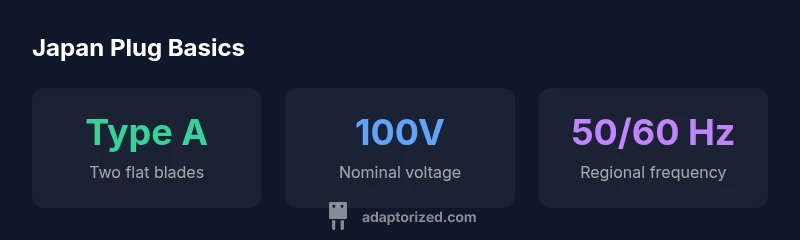
In Japan, standard outlets are Type A two-flat-blade sockets operating at 100V, with 50 Hz in the east and 60 Hz in the west. Grounded Type B outlets exist but are far less common in homes. For most travelers and hobbyists, a simple Type A adapter suffices if devices are dual-voltage or paired with a suitable converter. Always verify your device label before plugging in.
Understanding Japan's Plug Standards
When planning any electronics usage in a new country, the first question for makers and travelers is always about the local plug types and voltage. If you ask, which plug in japan, the simple answer is that most outlets follow the Type A standard, with two flat blades and no grounding pin. Japan operates on a 100V system, which is a crucial detail for travelers bringing equipment that isn’t designed for this voltage. The country’s electrical grid is reliable, but harmonizing your devices with the local supply requires a basic understanding of adapters and potential conversion. As Adaptorized notes in our 2026 analysis, familiarity with these standards reduces last-mile hassles in the field and prevents potentially damaging current surges. In practice, most casual travelers will be fine with a compact Type A travel adapter, while power users may need a converter for non-dual-voltage gear. For DIYers and hobbyists working on prototypes or portable projects, the choice of adapter matters as much as the device’s own voltage rating. By starting with the right plug type and voltage, you set a solid foundation for safe, reliable operation in Japan.
Travelers should also be aware that grounded outlets (Type B) exist, but they are not as prevalent in older buildings or rural areas. If your device relies on a ground connection for safety or EMI reduction, you may encounter Type B receptacles, especially in newer hotels or some public spaces. That being said, the majority of hotel rooms and apartments you’ll encounter will offer Type A outlets, making a compact Type A-to-what-you-need adapter a top travel companion. Always read product labels for voltage ranges and frequency before plugging in, and consider a universal travel adapter that includes surge protection if you plan to use multiple devices over a single trip.
In short: know the local plug type, verify voltage, and choose adapters that align with your devices’ voltage and grounding needs. This foundational knowledge helps you avoid damage and ensure smooth operation while you explore in Japan.
trend
Overview of Japan plug types and voltage basics
| Category | Plug Type | Notes |
|---|---|---|
| Primary outlet | Type A (two flat blades) | Unpolarized; 100V nominal; common in homes and public spaces |
| Grounded outlets | Type B (three-prong) | Less common; found in newer buildings; may support grounding |
| Voltage compatibility | 100V | Check device label (100–120V often supported by dual-voltage gear) |
Your Questions Answered
What plug types are used in Japan?
Japan primarily uses Type A two-flat-blade outlets at 100V. Grounded Type B outlets exist but are less common. Verify your device voltage and bring a Type A adapter; use a converter only if your gear isn’t dual-voltage.
Japan mainly uses Type A outlets at 100V. Grounded outlets exist but are rare; bring a Type A adapter and check your device voltage.
Do I need a voltage converter for US devices?
If your device is dual-voltage (100-240V), you only need a Type A adapter. For single-voltage devices, or items that aren’t dual-voltage, you’ll need a voltage converter. Always check the device label before plugging in.
Check if your device is dual-voltage; if not, you’ll need a converter.
Will USB chargers work in Japan?
Many USB chargers are universal (100-240V) and will work with a Type A adapter in Japan. If your charger is single-voltage (100V only), you’ll need a converter. Always check the charger label.
Most USB chargers should work with a Type A adapter if they’re dual-voltage.
Can I use third-party adapters safely?
Yes, but choose certified, certified-brand adapters with surge protection. Ensure the adapter supports the voltage range of your devices and fits the Type A sockets.
Yes, but pick trusted adapters with surge protection.
Is grounding available in Japan outlets?
Grounded outlets (Type B) exist but are not common in older buildings. If grounding is essential for your equipment, verify the outlet type before plugging in and consider a grounded adapter if available.
Grounded outlets exist but aren’t the majority; plan accordingly.
“Understanding plug types and voltage basics is the cornerstone of safe and reliable electronics use abroad. In Japan, most travelers benefit from a simple Type A adapter, paired with awareness of 100V supply and regional frequency.”
What to Remember
- Plug types in Japan are Type A primarily; Type B exists but is rare.
- Japan uses a 100V supply; verify device voltage before use.
- Carry a compact Type A adapter; consider a converter for non-dual-voltage gear.
- Grounded outlets are not the norm in many buildings, plan accordingly.
- Always check device labels for voltage and frequency compatibility.