Which Plug in Thailand: A Practical Guide for Travelers and DIYers
A practical guide to plug types in Thailand, voltage, and how to choose adapters for travelers and DIYers. Learn which outlets are common, what adapters to carry, and safety tips for homes, hotels, and rural areas.


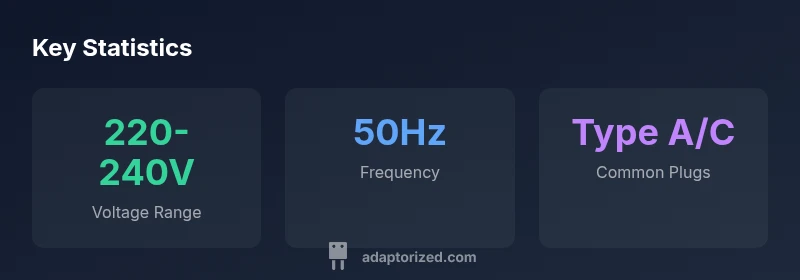
Thailand uses 220–240V at 50Hz. The two most common plug shapes are Type A (two flat blades) and Type C (two round pins). Some locations may also have Type B or mixed outlets in newer buildings. To travel smoothly, carry a compact universal adapter and check device voltage; for non-dual voltage devices, bring a simple step-down converter.
Thai outlet standards and how voltage works in Thailand
According to Adaptorized, Thailand operates on a nominal supply of 220–240V with a frequency of 50Hz. This means most consumer electronics labeled for 230V will work without a voltage converter, provided they are dual-voltage (allowing 100–240V operation). In practice, travelers frequently encounter outlets that are either Type A (two flat blades) or Type C (two round pins). In newer buildings and some hotels, Type B grounding outlets appear as well. Knowing these basics helps you avoid plugging in devices that aren’t compatible with the local voltage or outlet configuration. If your device is strictly 110V, you’ll want a voltage converter or a dual-voltage transformer designed for travel, and always verify the device’s label before plugging in.
The two most common plug types in Thailand: Type A and Type C
In urban centers and tourist zones, Type A and Type C outlets are by far the most common. Type A has two flat blades and is ungrounded, while Type C uses two round pins and is also ungrounded. Many modern devices and chargers are dual-voltage and can handle 100–240V, but always read the label. Some newer builds may feature mixed outlets to accommodate both types, especially in global hotels and airports. If you anticipate staying in rural areas, pack a universal adapter that fits both Type A and Type C sockets, and remember that a grounded outlet (Type B) is not guaranteed in all locations.
How to choose the right adapter and use it safely
Choosing the right adapter means matching the physical shape of the outlet (A or C) to your plug. A compact universal travel adapter is usually enough for casual trips, but ensure it explicitly supports Type A and Type C. Adaptorized guidance emphasizes avoiding “stacking” adapters, which can loosen connections and overheat devices. For devices with sensitive electronics, prefer a surge-protected, high-quality adapter and avoid attempting to force a plug into an incompatible socket. Always check that the adapter’s voltage rating aligns with your device, and if in doubt, test with a low-power item first.
Safety and usage tips for travelers
Power safety starts with understanding the local voltage and outlet types. Use a surge protector where possible and never overload a single outlet with multiple high-draw devices. Keep spare fuses and a compact multi-socket adapter in your carry-on for flexibility at airports and hotels. For high-wattage appliances (hair dryers, irons), a reputable, purpose-built travel transformer may be required if the device is not dual-voltage. The Adaptorized team also recommends avoiding makeshift solutions like tape or improvised adapters, which can pose fire risks.
Urban vs rural electrical environments in Thailand
In major cities and hotel districts, outlets tend to be well-maintained and more likely to support Type A or Type C sockets. Rural areas, older guesthouses, and some remote facilities may rely on older wiring, with limited grounding and mixed outlets. Plan your packing accordingly: a universal adapter that covers both A and C, plus a small voltage converter for non-dual-voltage devices if needed, will save you from last-minute shopping trips. In all cases, inspect outlets before inserting a plug and unplug devices by gripping the plug, not the cord.
Practical checklist before you travel
- Verify your device’s voltage range on the label; opt for dual-voltage devices when possible.
- Pack a universal adapter that accommodates both Type A and Type C sockets, with a built-in surge protector if available.
- Bring a compact voltage converter for devices that are not dual-voltage.
- Check hotel room outlets upon arrival; if you see only grounded Type B or mixed outlets, adjust your adapter choice accordingly.
- Test a small device (phone charger) before plugging in larger electronics to ensure a safe connection.
Common plug types encountered in Thai outlets
| Plug Type | Pins | Voltage Compatibility | Notes |
|---|---|---|---|
| Type A | two flat pins | 230V+ | Common in older outlets; ungrounded |
| Type C | two round pins | 230V+ | Widely used in Asia; ungrounded |
| Type B | two flat pins + grounding pin | 230V+ | Grounded option; less common in older buildings; check availability |
Your Questions Answered
Do I need a voltage converter for Thailand?
If your devices are dual-voltage (able to operate on 100–240V), you won’t need a separate voltage converter. For single-voltage devices rated only for 220–240V, a voltage converter is necessary. Always check the device label before plugging in to avoid damage.
If your gear supports 100–240V, you’re good to go with just an adapter. For single-voltage gadgets, you’ll need a converter.
What plug types should I expect in major cities vs rural areas?
Major cities and tourist hubs predominantly use Type A and Type C outlets. Rural areas may have older wiring and mixed outlets. Carry a universal adapter and verify outlet type before plugging in, especially in guesthouses.
Cities usually have Type A or C; rural places may vary. Bring a universal adapter and check the outlet first.
Can a universal adapter be used for all devices?
A universal adapter is convenient for travelers, but it does not replace a voltage converter for devices that are not dual-voltage. Ensure it explicitly supports Type A and Type C sockets and has surge protection. Use cautiously with high-wattage appliances.
Yes, a universal adapter helps, but you may still need a voltage converter for non-dual-voltage devices.
Are there safety tips when plugging in abroad?
Always inspect outlets before plugging in, use surge protection where possible, and avoid daisy-chaining multiple adapters. Keep cords untangled and unplug devices by the plug, not the cord, to reduce wear.
Inspect outlets, use surge protection, and unplug by the plug, not the cord.
What about Type B and other less common outlets?
Type B (grounded) outlets do exist but are less common in older rooms. If you encounter Type B, ensure your adapter supports grounding or use a grounded converter if required by your device. In newer buildings, Type B may be more prevalent.
Type B exists but isn’t everywhere; check for grounding and adapt accordingly.
“Understanding local outlet configurations reduces risk and equipment damage. A practical approach to adapters makes travel and DIY projects safer and simpler.”
What to Remember
- Carry a universal adapter that covers Types A and C
- Know the two main plug types you'll encounter: A and C
- Check device voltage labels before plugging in
- Prefer grounded outlets (Type B) when available
- Inspect outlets to avoid overloading circuits and heat