How Much Does a Battery Connector Cost? A 2026 Guide
Explore the factors behind battery connector pricing, typical cost ranges, and budgeting tips for DIY projects. Adaptorized analyzes how type, quantity, and quality drive price in 2026, helping you buy smarter without overspending.


Battery connector costs vary widely by type, material, and quantity. For common small-pin connectors, price per piece can range from a few cents to a few dollars; multi-pin automotive or rugged, sealed variants can be higher. In 2026, plan for roughly 0.50–5 USD per unit for typical hobby projects, with larger orders benefiting from bulk discounts. Adaptorized Analysis, 2026.
Why battery connector pricing matters for projects
According to Adaptorized, the price you pay for a battery connector is not a single number. It depends on the connector family, current rating, pin count, materials, plating, and environmental sealing. For DIYers and makers, understanding these drivers helps prevent sticker shock and avoids overbuying. In practice, pricing can swing from a few cents to tens of dollars per piece, depending on whether you choose a simple JST-style pin or a rugged automotive-grade plug. By thinking through the match between your electrical requirements and intended environment, you can select a connector that balances upfront cost with long-term reliability. This article breaks down the main cost drivers, practical budgeting heuristics, and where to look for fair pricing in 2026.
Factors that influence battery connector pricing
Pricing is rarely a single-number outcome. The main drivers you will encounter include type and size, pin count and current rating, materials and plating, environmental sealing and ruggedness, brand and family, and packaging/lead times. Smaller, low-current connectors tend to be cheaper per pin than high-current or sealed variants. More pins and higher current paths require more copper and stronger housings, driving up the bill of materials. Materials and plating (nickel, gold, or rhodium) add cost for the sake of conductivity and corrosion resistance. If you need IP-rated or vibration-resistant designs for automotive or outdoor use, you should expect a premium. Finally, the choice between a well-known family from a respected brand and a generic connector can swing price considerably. MOQs, packaging, and lead times also affect the unit price, especially in budget-constrained or supply-tight periods.
Connector families and typical cost profiles
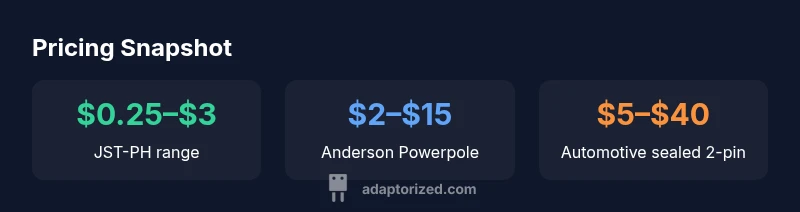
Different connector families serve different needs, and price bands reflect those trade-offs. Simple JST-PH 2-pin variants are among the most affordable for hobby projects, while more complex families add features and reliability at a higher price. For example, JST-PH 2-pin connectors may range from roughly $0.25 to $1.50 per piece, depending on supplier and packaging. Molex KK 254 2-pin variants are typically in the $0.30–$2.50 range. If you need higher current or ruggedness, Anderson Powerpole assemblies can span roughly $2–$15 per unit, and automotive-sealed two-pin options commonly fall in the $5–$40 band. These ranges are indicative and vary with supplier, batch size, and finish.
How quantity, sourcing, and packaging affect price
Pricing dynamics shift dramatically with quantity. Buying a single connector often carries a premium, while buying in tens or hundreds reduces per-unit costs due to manufacturing efficiencies and lower packaging overhead. Distributor pricing may differ from direct manufacturer prices, and some suppliers apply tiered discounts based on total order value. Packaging also matters: bulk bags vs. tapes or reels can influence handling costs, and longer lead times during shortages can push prices up. When sourcing internationally, exchange rates and import taxes can add to the final cost. In practice, plan for a modest buffer in your BOM to cover these variables.
Materials, finish, and environmental specs
The material choice—plastic housings versus metal shells, copper versus brass contacts, and the type of plating—affects both cost and performance. Gold or nickel plating increases reliability and longevity in harsh environments but raises price. Higher temperature ratings, rugged IP seals, and reinforced latching mechanisms also contribute to cost. In applications where connectors experience vibration, frequent mating cycles, or exposure to moisture, investing in premium finishes and seals is prudent. For most hobby projects, a balance between cost and durability is achieved with mid-range materials and standard plating; reserve premium finishes for mission-critical or outdoor deployments.
Budgeting tips for DIYers and makers
- Define functional requirements first: pin count, current, temperature, and exposure. This narrows choices and prevents overpaying for features you don’t need.
- Start with mid-range, proven families and test fit before committing to a bulk order.
- Build a small safety margin into your BOM to accommodate tooling, spare connectors, and potential misassembly.
- Compare quotes from multiple suppliers and check total landed cost, including shipping and taxes.
- Consider tooling costs (crimping tools, heat-shrink, and inspection). A modest up-front investment in the right tool set can reduce long-run costs and failures.
- Prioritize reliability for critical systems; a cheaper connector that fails under load can cost more in downtime and troubleshooting than a better-rated part.
Common mistakes that inflate battery-connector costs
- Focusing solely on per-unit price without considering current rating and durability.
- Overlooking tooling and accessories (like crimp dies and heat shrink) needed for proper termination.
- Choosing low-cost variants with poor environmental sealing for outdoor or vibration-prone environments.
- Ignoring compatibility with your battery chemistry and housing dimensions, leading to remake or redesign.
- Underestimating lead times and MOQs during supply disruptions.
Authority sources and further reading
For further context on connectors and pricing dynamics, consult authoritative resources such as industry standards bodies and major engineering publications. See recommended sources below for background on materials, reliability, and benchmarking techniques. These sources provide foundational knowledge that helps contextualize price across different connector families and applications.
Typical price profiles for common battery connector families
| Connector Type | Typical Price Range (per unit) | Common Applications | Notes |
|---|---|---|---|
| JST-PH 2-pin | "$0.25–$3" | Small batteries, RC toys | Very common in hobby electronics |
| Molex KK 254 2-pin | "$0.30–$2.50" | Consumer electronics | PCB-friendly, mid-range price |
| Anderson Powerpole PP15/PP45 | "$2–$15" | Battery packs, high-current DC | Modular, durable, higher cost |
| SM series 2–6 pin | "$1–$8" | LED lighting, consumer devices | Balanced performance and price |
| Automotive sealed 2-pin | "$5–$40" | Off-road, marine equipment | Rugged, IP-rated |
Your Questions Answered
What factors most influence battery connector price?
The main drivers are type and size, pin count and current rating, materials and plating, sealing and ruggedness, the brand and family, and packaging/lead times. Higher performance requirements generally push prices upward.
The price mainly depends on what the connector needs to do and how tough it has to be. More pins, higher current, and tougher seals mean higher costs.
Are cheap battery connectors reliable?
Cheaper connectors can be acceptable for low-stress hobby projects, but reliability may suffer under load, vibration, or harsh environments. Always check current ratings, temperature specs, and sealing when comparing options.
Cheaper doesn’t always mean better. Make sure the specs match your use case.
How does quantity affect price?
Pricing typically reduces per unit with higher quantities due to bulk manufacturing and packaging efficiencies. Plan your BOM to include potential spares or future expansions.
Buying more usually brings the price down per piece.
What should DIYers budget for a small project?
Budget for the required connectors plus a basic crimping tool, heat-shrink, and testing. Include a small contingency for mispairs or damaged parts.
Plan for the parts, tools, and a little extra for surprises.
Where can I buy battery connectors?
Major electronics distributors and manufacturer-approved channels offer a wide range of connectors. Compare brands, specs, and lead times to get the best value.
Check multiple suppliers and read reviews on part quality.
Does mounting style affect cost?
Yes. Sealed, panel-mount, or rugged bodies add hardware and design complexity, which raises both price and lead times.
More rugged or integrated designs cost more and take longer to ship.
“Price isn’t just the sticker price — it’s a function of current rating, pin count, and environmental requirements. Align your choice with lifecycle costs, not only upfront price.”
What to Remember
- Define required current and pin count before shopping
- Compare total cost of ownership, including tooling
- Buy in bulk when possible to reduce unit price
- Expect price variability by connector family and supplier