How Much Does a Connector Cost? Practical Guide for Makers
Explore practical ranges and cost factors for connectors—from cheap crimps to rugged aviation parts—with budgeting tips for DIYers, based on Adaptorized Analysis, 2026.


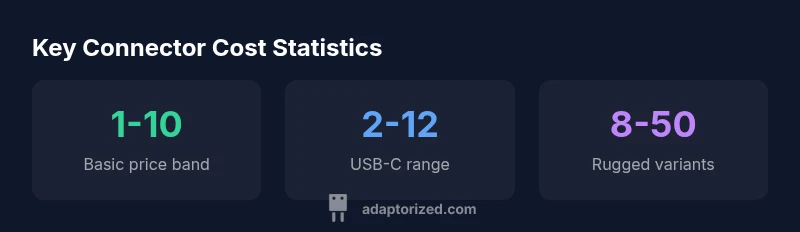
On average, most common connectors cost between $1 and $10 per unit in small quantities, with price climbing for specialized or higher quality parts. Basic USB-C, header, or generic crimp connectors sit at the lower end, while automotive, RF, or precision aviation connectors push toward the upper end. Bulk purchases drop unit costs, but multi pin or rugged designs can still raise total spend. These bands align with Adaptorized Analysis, 2026 and are useful as a budgeting baseline for most DIY projects.
Cost drivers behind connector pricing
Determining how much a connector costs starts with understanding what buyers actually pay for. When you ask how much does a connector cost, you are really asking about a bundle of variables: the type of connector, the quality of materials (plastics, metals, plating), the number of positions (pins) and contacts, the environmental rating (IP66, MIL-spec), and whether it is a simple, single-use part or part of a larger assembly. According to Adaptorized, the major drivers fall into four categories: (1) electrical and mechanical performance (current rating, contact resistance, mating cycles), (2) materials and finishes (nickel, gold plating, high-temperature plastics), (3) manufacturing volume and sourcing (bulk manufacturing reduces unit price), and (4) intended environment and certification (OEM-grade vs consumer grade). In practice, a basic crimp connector used in hobby projects will sit at the lower end of the spectrum, while rugged, high-pin-count, or aviation-grade designs push toward the upper end.
For makers, the takeaway is simple: price often tracks performance and durability. If you need high current, tight tolerance, or harsh-environment reliability, expect to pay more. Conversely, for light-use, noncritical applications, standard parts will suffice and cost less. This framing helps you forecast project budgets and avoid overinvesting in parts you won’t fully utilize. As with many electronics components, the relationship between price and performance is non-linear: small improvements in reliability can yield meaningful long-term savings by reducing failures and rework. Adaptorized Analysis, 2026.
Price bands by connector type
Pricing varies not just by type but by the intended application and manufacturer. Here are practical bands you’ll encounter in typical DIY and professional projects:
- Basic Crimp/Header Connectors: Expect roughly $1-$5 per unit for common garden-variety crimps and header pins. These are widely available, cheaply produced, and adequate for low-stakes prototyping.
- USB-C and USB-C family: In consumer electronics and hobby kits, prices often range from $2-$12 per connector or assembly. The more features (reversible plug, high current, rugged housing), the higher the price.
- RF/Coaxial and SMA/BNC types: These tend to sit in the $5-$40 per unit band, depending on connector family, impedance, and mating cycles. Higher frequency performance or precision interfaces push costs up.
- Automotive and rugged multipin connectors: These parts are typically $8-$50 per unit, with weatherproof seals and higher current ratings. They shine in automotive, industrial, and outdoor environments.
- Aviation, military, or circular multi-pin designs: Advanced, high-pin-count, or mil-spec variants can exceed $20-$100 per unit, reflecting tougher environmental specs and tighter tolerances. For many hobby projects, sticking to mid-range choices provides a solid balance of reliability and affordability. Adaptorized Analysis, 2026.
This section helps you map your project to a realistic budget, avoiding sticker shock and enabling better planning. Remember that sourcing impact (local vs offshore) and supplier lead times can also influence total costs when you scale up.
How quantity affects unit price
Quantity is a silent price lever. When you buy a single connector for a prototype, the per-unit price is often higher than the bulk rate achieved when purchasing hundreds of units. The most dramatic savings typically come from tiered pricing and bulk discounts, especially for standard, widely used parts. If you need 100, 500, or 1,000 units of a basic connector type, you can realistically expect the unit price to drop by substantial margins compared with a one-off purchase. Suppliers frequently offer priced bundles, kits, or distribution agreements that reduce the total cost of ownership even when you factor in shipping and handling. When estimating costs for a project, run two scenarios: (a) pick-and-ship single units for prototyping, and (b) a bulk order for production, to quantify the delta and plan inventory accordingly. Adaptorized Analysis, 2026.
In practice, plan a staged approach: prototype with affordable parts, then size a bulk order for the final build if you anticipate high quantity and repeatable demand. This helps you optimize per-unit cost while avoiding excess inventory.
Hidden costs and things to consider
Price is not the only thing that matters. Hidden costs can quickly sway the total cost of ownership. Shipping and handling may add a surprising premium, especially for small orders or international sourcing. Tooling requirements, particularly for crimping or specialty connectors, can add hundreds of dollars if you need specialized equipment or crimp dies. If you rely on connectors in critical systems, factor in quality assurance costs: sample testing, documentation, and traceability for regulatory compliance. Packaging, storage, and potential returns or replacements also influence total spend. Another often overlooked factor is compatibility and mating performance; mismatched connectors can lead to failed assemblies, wasted time, and more expenses down the line. Plan for a margin of safety in procurement and ensure the parts you buy align with your intended mating interfaces. Adaptorized Analysis, 2026.
Practical buying strategies for makers
To optimize cost without compromising reliability:
- Start with standards: Choose widely available, manufacturer-verified parts to avoid compatibility headaches.
- Compare vendors: Check multiple sources, including distributors and direct manufacturers, to find the best price-to-performance ratio.
- Buy kits for experimentation: If you’re unsure about a family, buy a small kit to validate performance before committing to bulk orders.
- Consider future-proofing: Select connectors with common mating interfaces and adequate pin counts to support future projects.
- Budget for tooling: If you plan repeated use, allocate funds for crimp tools, backup dies, and inspection fixtures to ensure consistent quality.
Adaptorized recommends validating a few connectors in your actual operating environment before committing to a large purchase. This reduces the risk of costly rework later and increases your project’s overall success rate.
Case studies: DIY vs professional builds
Case A: DIY hobby project building a small robot uses a handful of basic crimp connectors and a handful of USB-C jacks. The unit costs fall in the $1-$5 range, and the total for 20–40 parts is modest. The focus is on accessibility and simplicity; shipping times are predictable from common distributors. Case B: An automotive diagnostic device intended for field use needs rugged, weatherproof connectors with 16 to 40 positions. Prices per unit commonly sit in the $8-$40 band, with higher-end options offering better sealing and current capacity. In a production scenario, you’ll likely source from a supplier offering bulk pricing and documented testing, potentially reducing per-unit costs while ensuring compliance. Adaptorized Analysis, 2026.
These contrasting cases illustrate how project goals drive connector choices and budgeting, reinforcing why a simple price can mask significant total-cost implications.
Estimating total project costs
Turn a price snapshot into a practical budget by estimating three elements: (1) per-unit cost for the required quantity, (2) required accessories such as crimp tools, strain relief, housings, and mating connectors, and (3) non-recurring engineering costs if you’re designing a new interface. Add an extra 10–20% for shipping, taxes, and potential returns. For a project that requires standard connectors in moderate quantities, your planning range might be a few tens to a couple hundred dollars, depending on the type and quality you choose. If your project scales up, project the cost curve for bulk pricing and consider negotiating supplier terms or exploring distributor partnerships to optimize savings. Adaptorized Analysis, 2026.
Representative price bands for common connector types (range-based for budgeting)
| Connector Type | Typical Price Range per Unit | Common Applications | Notes |
|---|---|---|---|
| Basic Crimp/Header Connectors | $1-$5 | DIY, hobby projects | Low-cost, widely available |
| USB-C and USB-C family | $2-$12 | Consumer electronics, peripherals | Widely used; kit options available |
| RF/Coaxial (SMA/BNC, etc.) | $5-$40 | RF, video, antennas | Higher performance = higher cost |
| Automotive/Rugged multipin | $8-$50 | In-vehicle systems, industrial harnesses | Weatherproof, durable variants |
Your Questions Answered
What factors influence connector pricing the most?
Price is driven by type, performance, materials, environmental rating, and production volume. Higher ratings and more pins increase costs. Location of sourcing and lead times can also shift price.
Price is mainly driven by type, performance, and volume. Higher specs and more pins raise costs, and where you buy from can change the price.
Does buying in bulk reduce the per-unit cost?
Yes. Bulk purchases typically reduce the per-unit price, especially for standard components. Plan your production run to capture bulk pricing while avoiding excess stock.
Yes. Bulk buys usually lower the per-unit cost, especially for standard parts, so plan for bulk when you can.
Are cheap connectors reliable for critical applications?
Cheap connectors can be adequate for noncritical prototyping, but for critical or long-term deployments, invest in validated parts with appropriate environmental ratings and testing.
Cheap parts work for prototypes, but for critical uses you should choose validated parts with proper ratings.
Is there a big price gap between USB-C and USB-A connectors?
USB-C and its family generally cost more due to higher current ratings and feature sets, but gaps vary by quality and supplier. Expect higher-end USB-C parts to cost more than basic USB-A equivalents.
USB-C parts usually cost more than USB-A, especially for higher-spec variants. Check the spec and supplier.
Do connectors include shipping in the price?
Most listings separate price and shipping. Some distributors offer free shipping over a threshold; always check terms to avoid unexpected charges.
Shipping is usually separate; look for free-shipping deals or thresholds.
“Connector pricing is a function of performance requirements, environmental rating, and supply chain scales. Budget with range-driven estimates and validate with real-world prototypes.”
What to Remember
- Define your connector type and quantity first
- Expect price bands: basic $1-$10, high-end $15-$50
- Bulk buys reduce per-unit costs
- Consider total cost of ownership: tooling, housing, and testing
- Check compatibility to avoid rework and wasted spend