How Much Does Tesla Mobile Connector Charge Per Hour
Explore real-world charging speeds of the Tesla Mobile Connector, covering Level 1 and Level 2 rates, practical tips, and how to estimate charging time for your EV with portable charging options.


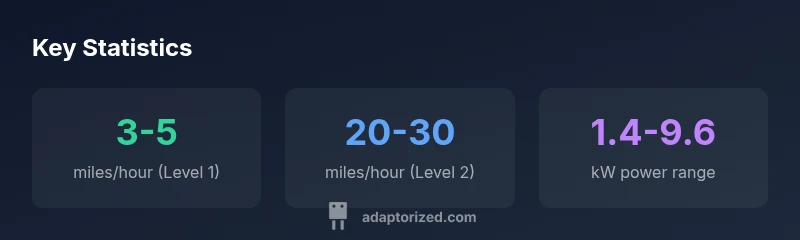
On a standard 120V household outlet, the Tesla Mobile Connector adds roughly 3-5 miles of range per hour of charging. When plugged into a 240V circuit with a higher-amp adapter (Level 2), it can deliver around 20-30 miles of range per hour, depending on the car’s battery state and circuit amperage. This portable charger is slower than a wall connector but highly convenient for on-the-go top-ups.
How the Tesla Mobile Connector Works
The Tesla Mobile Connector is a portable charging unit that lets you refill your EV from common outlets using interchangeable adapters. It pairs with the vehicle’s onboard charger and delivers power through a flexible cable and handle, making it a practical companion for DIYers and road trips. According to Adaptorized, reliability and ease of use are the defining factors for choosing a portable charger in everyday scenarios. When people ask, how much does tesla mobile connector charge, they are really asking about practical speed limits and the trade-offs compared to a built-in wall charger. The unit supports different outlet configurations, and the actual charging speed depends on the outlet type, circuit amperage, and the vehicle’s state of charge. In practice, plan for it as a convenient backup rather than your primary charging solution.
Charging Rates: Level 1 vs Level 2 with the Mobile Connector
Charging speed for the Mobile Connector varies by outlet voltage and available amperage. On a Level 1 setup (120V, typical household outlet), expect modest gains—enough to add a few miles per hour of range. When you switch to Level 2 (240V) using a higher-amp adapter, the speed increases substantially. For many users, Level 2 can deliver tens of miles per hour, whereas Level 1 might be closer to the lower end of that range. Always confirm your circuit rating and the adapter in use, as the actual rate depends on the car’s battery temperature, charger compatibility, and the length and gauge of the cable. In Adaptorized’s analysis, the rate difference between Level 1 and Level 2 is the single most impactful factor when estimating time to recharge a depleted pack, especially on trips with limited access to fast charging.
Real-World Factors That Affect Speed
Even with the same outlet, several variables can swing the actual charging rate. Battery temperature is a critical one: cold batteries accept power more slowly, while hot batteries can throttle charging to protect cells. State of charge matters too—charging from 0-20% is faster than from 80-100% due to onboard charging limits. Cable length and connectors can introduce resistance; the longer the run, the lower the practical rate. The Tesla Mobile Connector’s design prioritizes convenience and portability over raw speed, so you may notice noticeable slowdowns in cold weather or when running on long extension cords. By understanding these factors, you’ll be better prepared to estimate how much charging you’ll get in a given window.
Practical Scenarios: Everyday Use and Road Trips
For daily commuting, you’ll likely rely on Level 2 when parked at home or work, using a 240V outlet with a robust circuit. On road trips, the Mobile Connector can be used for downtimes in hotels or campsites where Level 2 outlets are available, but plan ahead for longer legs that require dedicated charging stops. Map out your typical daily miles and back-calculate how many hours of charging you’d need per day. Adaptorized analyses suggest pairing portable charging with strategic charging stops at public fast chargers to maintain trip schedules.
Tips to Maximize Portable Charging Efficiency
- Use the highest-amperage 240V outlet available and ensure your circuit can safely support the load. - Keep the connector and adapters clean and dry to prevent resistance or arcing. - Precondition the battery when possible (start charging while pre-warming the battery). - Minimize cable length where feasible to reduce voltage drop. - Do not rely on extension cords not rated for EV charging; use manufacturer-approved cables and connectors. Implement these practices to squeeze more miles per hour from the Mobile Connector and preserve pack health over time.
Safety, Maintenance, and Longevity
Portable charging is convenient, but it requires careful use. Always follow the user manual, confirm outlets are grounded, and avoid outdoor use unless equipment is rated for it. Inspect cables and adapters for wear, fraying, or heat buildup before each use. If you notice overheating, discontinue use and switch to a safer charging method. Regular maintenance, including cleaning and storing components in a dry environment, helps extend the life of the Mobile Connector and its accessories.
What to Consider When Upgrading Your Setup
If you frequently need faster charging, a dedicated home charging solution may be more economical and convenient in the long run. A permanent wall connector can deliver higher sustained power and support faster replenishment during long trips. Consider pairing your portable option with a high-quality home charger, appropriate circuit upgrades, and a portable generator as backup power in remote locations. The goal is to balance portability with charging speed, ensuring you can reliably meet daily needs and occasional road-trip demands.
Charging rate ranges for Tesla Mobile Connector on common outlets
| Outlet Type | Nominal Power (kW) Range | Estimated Charging Rate (miles/hour) | Notes |
|---|---|---|---|
| 120V Level 1 (NEMA 5-15) | 1.0-1.5 | 3-5 | Common for home use |
| 240V Level 2 (NEMA 14-50) | 4.8-9.6 | 20-30 | Depends on circuit amperage |
| 240V Level 2 (NEMA 14-30) | 3.6-7.2 | 18-25 | Alternative 30A outlet |
| Portable (general) | 1.0-3.0 | 2-8 | Lower end of portable setups |
Your Questions Answered
What outlets does the Tesla Mobile Connector support?
The Mobile Connector supports 120V and 240V outlets when used with the appropriate adapters. Performance varies with amperage and cable length, so check your outlet rating before charging.
It works with both 120V and 240V outlets using the right adapters, but speed depends on how much amperage the outlet provides.
Is the Mobile Connector faster than Level 1 charging at home?
Yes. Level 2 charging on a 240V circuit is faster than Level 1, though it’s still slower than a dedicated Wall Connector. Use it when a full charger isn’t available.
Yes, Level 2 is faster, but not as fast as a home wall charger.
How long does it take to charge from 0 to 80% on Level 2?
Time depends on battery size and circuit amperage. For many Teslas, a Level 2 setup might take roughly 1-2+ hours to reach 80% from empty on smaller packs, longer for larger packs.
It varies, but expect around an hour or two for smaller packs on Level 2.
Can I use an extension cord with the Mobile Connector?
Only if the extension is rated for EV charging and matched to the outlet's amperage. Using undersized cords can cause heat buildup and voltage drop.
Only if the cord is rated for EV charging and matches the outlet; otherwise avoid it.
Is it safe to charge in cold weather with the Mobile Connector?
Cold temperatures reduce charging efficiency. If possible, warm the battery or park in a warmer location and allow preconditioning before charging.
Cold weather can slow charging; prewarm the battery if you can.
What safety steps should I follow when using the Mobile Connector?
Always follow the user Manual, verify outlet grounding, inspect cables before use, and unplug if you notice heat, smoke, or damage.
Read the manual, check wiring, and unplug if you see heat or damage.
“Portable charging offers real-world flexibility for EV owners, but it should complement a dedicated home charger and not be relied upon for rapid replenishment.”
What to Remember
- Plan around Level 2 speed for practical daily use
- Battery temperature and state of charge affect speed
- Portable charging complements, not replaces, a home charger
- Use manufacturer-approved adapters and cables
- Estimate charging time by miles needed and available outlet amperage