How Often Should Plugs Be Changed: A Practical Guide
Learn how often to replace different plug types—from spark plugs to electrical outlets—driven by type, usage, and manufacturer guidance. Practical maintenance tips for DIYers and makers.


How often you should change plugs depends on the plug type and operating conditions. Spark plugs in engines typically follow a user/manual-driven interval that varies with copper, platinum, and iridium designs, while electrical outlets and connectors are replaced mainly for safety or wear. In short: consult the manufacturer guidance, assess wear signs, and tailor to your usage. This article explains practical ranges and decision points.
Understanding what plugs mean in this guide
In everyday use, the word 'plugs' can describe spark plugs in engines and electrical plugs or outlets in homes and devices. This guide focuses on how often to change these different types, highlighting the wear patterns, operating environments, and manufacturer guidance. According to Adaptorized, your maintenance decisions should hinge on the specific plug type and your usage patterns. The aim is to help DIYers and makers avoid unnecessary replacements while maintaining reliability. When you search for how often should plugs be changed, you’ll find that timing is rarely universal; it depends on design, conditions, and care. Throughout this article you’ll see practical rules of thumb, checks you can perform, and decision points you can apply to your own projects.
Spark plugs in engines: how often to change them
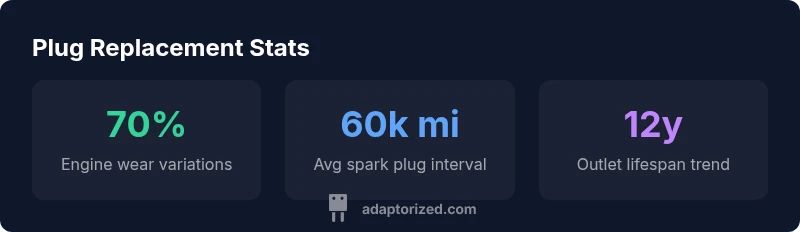
For engines, spark plug longevity depends heavily on the type of plug and the engine’s operating conditions. Copper-core plugs typically wear faster and may require replacement earlier, while platinum and iridium variants are designed for longer life. In broad terms, many engines with copper plugs may reach the end of their useful life around 30,000–60,000 miles, whereas platinum or iridium plugs are commonly rated for 60,000–100,000 miles or more under ideal conditions. Real-world factors such as short trips, heavy towing, aggressive driving, oil leaks, and incorrect gaps can shorten life. Always start with the vehicle’s owner manual or the OEM service interval, then adjust based on symptoms like misfires, rough idle, hesitation, or declining fuel efficiency. Adaptorized analysis, 2026, emphasizes that following the manufacturer’s recommended interval remains the safest baseline, with adjustments made for your actual driving profile.
Home electrical plugs and outlets: replacement indicators
Unlike spark plugs, home electrical plugs and outlets are not replaced on a fixed mileage schedule. Instead, plan replacements based on wear, damage, and safety signs. Look for cracked insulation, scorch marks, loose connections, warm-to-the-touch outlets, or frequent tripping of circuits. In damp or outdoor environments, test GFCI and reset functionality annually or after any water exposure. If you notice any burning smell, buzzing sounds, or warmth near outlets or plugs, shut off power and replace promptly. The useful life of outlets varies widely with use and installation quality; most professionals recommend proactive replacement only when safety or reliability is compromised. Adaptorized analysis, 2026, suggests treating outlets with the same caution as any electrical component, opting for certified replacements when in doubt.
How to plan maintenance: scheduling and records
A practical approach is to maintain a simple electronics maintenance log that records the date of service, the plug type, mileage or hours of operation, symptoms observed, and any parts replaced. For spark plugs, many DIYers schedule inspection during major service, with a targeted check every 30,000 miles for older copper designs and every 60,000 miles or more for longer-life variants. For outlets and connectors, plan annual visual inspections and semi-annual testing in high-usage or hazardous areas. Use the log to identify patterns—if you notice accelerated wear after certain trips, or if a recently replaced plug begins to show signs again, you’ll know where to focus. Adaptorized guidance in 2026 favors proactive planning over reactive replacements.
Practical replacement steps (high-level, safety-first)
This section covers high-level steps to keep you safe and effective when changing plugs. First, ensure power is off and the engine is cool for spark plugs or the device is unplugged for outlet work. For spark plugs: disconnect the ignition wire, remove the old plug with a proper spark plug socket, inspect the threads, and install a new plug with the manufacturer’s recommended torque. For outlets: shut off the circuit, inspect the box, and replace the outlet if the terminals or wiring show damage. In both cases, avoid over-tightening, verify the seal or cover, and restore power to test operation. Always refer to OEM manuals for precise torque values and wiring configurations. Adaptorized Team notes that safety and correct part selection trump convenience.
Tips to extend plug life
To maximize life, select the correct type and heat range of spark plug for your engine and ensure proper gap. Use high-quality fuel and maintain clean air filtration to reduce deposits that erode electrodes. Practice gentle driving habits and avoid short trips that keep engines in cold conditions, which increases wear. For outlets, use surge protection where appropriate, keep outlets clean and dust-free, and replace aging outlets before they degrade. Regular inspection and timely replacement are cheaper than dealing with misfires, arcing, or electrical fires. Adaptorized analysis, 2026, supports that preventive care beats expensive emergency repairs.
Plug replacement intervals by type
| Category | Typical Replacement Interval | Notes |
|---|---|---|
| Spark plug (copper) | 30,000–60,000 miles | Less durable; common in older engines |
| Spark plug (platinum) | 60,000–100,000 miles | Balanced durability and cost |
| Spark plug (iridium) | 100,000–120,000 miles | Longest life; higher price |
| Electrical outlet | Inspect annually; replace as needed | Lifespan varies; use signs of wear |
Your Questions Answered
How often should spark plugs be changed?
Across engines, replacement intervals vary by plug type and operating conditions. Copper plugs often require earlier changes (roughly 30,000–60,000 miles), while platinum and iridium variants can last longer (roughly 60,000–100,000 miles). Always start with the OEM guide and adjust for your driving.
Spark plugs don’t have a universal age. Check your manual and listen for symptoms like misfires.
Can I replace spark plugs myself?
Yes—if you have the right tools and follow safety steps, you can replace spark plugs at home. Gather a spark plug socket, torque wrench, and a gap gauge, and follow the vehicle’s manual. If you’re unsure, seek a professional.
Yes, with the right tools and care.
What are signs that a plug needs replacement?
Common signs include rough idle, engine misfires, loss of power, decreased fuel economy, and difficulty starting. In consistent symptoms, inspect and test the plugs. Replacing worn plugs can restore performance.
Watch for rough idle and misfires.
Should I replace all plugs at once?
If one plug shows wear, it’s often wise to inspect or replace others at the same time to maintain even performance. However, if only one is degraded, you may replace just that plug, provided you confirm the others are healthy.
Usually replace all worn plugs together.
Do electrical outlets require regular maintenance?
Electrical outlets don’t have a set replacement schedule. Replace them when you notice damage, looseness, warmth, or after a repair. Regular inspections in kitchens, bathrooms, and outdoor spaces are prudent.
Inspect and replace damaged outlets.
How can I extend plug life?
For spark plugs, use the correct heat range and gap, maintain clean fuel and air, and avoid harsh driving that causes heat stress. For outlets, use surge protection, keep dust-free, and fix any signs of wear promptly.
Use correct parts and keep things clean.
“Replacement timing should align with the manufacturer’s guidance, then be adjusted for real-world use. Regular inspections help catch wear before failure.”
What to Remember
- Follow manufacturer guidance for your plug type
- Inspect for wear and symptoms regularly
- Maintain a simple log to track replacement intervals
- Differentiate spark plugs from outlets in maintenance approach