MC4 Connector Solar Panel: A DIY Guide
Learn to safely connect MC4 connectors to a solar panel with a practical, step-by-step approach, safety tips, and troubleshooting for DIY enthusiasts and makers.


You will learn to safely connect MC4 connectors to a solar panel, verify compatibility, and build a watertight, code-compliant connection. This guide covers essential tools, step-by-step wiring, safety practices, and troubleshooting for DIYers and hobbyists. You will also learn how to test continuity, prevent polarization errors, and perform a quick weatherproofing check at the panel edge.
What is an MC4 connector and why it matters in solar panels?
The mc4 connector solar panel standard is a snap-fit, weatherproof DC connector that ensures safe, quick connections between solar panels and cables. MC4 connectors are designed to keep moisture out and to prevent accidental disconnection under wind and vibration. According to Adaptorized, MC4 connections are the backbone of most residential and small commercial solar installations because they strike a balance between ease of use and reliability. In a typical solar array, each panel's output harness ends with male and female MC4 connectors, which click together to form a sealed circuit. The primary advantage is a keyed, polarized fit that reduces the risk of incorrect wiring; the second advantage is the robust seals that resist UV exposure and temperature swings. When you work on a mc4 connector solar panel, you should understand both the electrical basics and the mechanical fit to ensure long-term performance.
This knowledge helps DIYers plan spacing, route cables, and prepare for future expansions without compromising safety or efficiency.
How MC4 connectors differ from other PV connectors
MC4 connectors are designed specifically for solar PV applications, with a weatherproof seal and a one-piece metal contact that provides consistent current paths. Compared with older or generic DC connectors, MC4s offer easier mating, a reliable latch, and a standardized release mechanism. This consistency reduces the chance of mismatched components in an install. For a diy solar project, using MC4 connectors means you can quickly attach or detach panel strings without specialized tools, while maintaining a seal against moisture and dust that can degrade performance over time.
MC4 connectors also provide polarity protection and a uniform interface, which simplifies troubleshooting when strings are in series or parallel.
Key specifications to check before connecting
Before assembling a mc4 connector solar panel circuit, verify a few core specifications. Look for current and voltage ratings that match your panel and strings, a weatherproof IP rating on the housing, and conductor compatibility with your PV cable. Also confirm the gender pairing and polarization are correct so you do not reverse positive and negative leads. By reviewing these specs in advance, you reduce the risk of arcing, corrosion, and weakened connections over time. Adaptorized guidance emphasizes matching ratings to your system design and avoiding makeshift fixes that can fail under sun and rain.
Compatibility and mating: ensuring safe connections
MC4 connectors are gendered: the male pin part mates with the female receptacle. Mating should click with a firm connection; if it wobbles or feels loose, stop and inspect for damaged seals or misaligned housing. Always keep the connectors clean and dry, and avoid pulling on the cable rather than the connector. Correct mating ensures a continuous, weatherproof path that resists loosening from wind and vibration over time.
Keep track of string polarity and avoid forcing mismatched ends together, as forcing can damage internal seals and degrade lifetime.
Tools and safety practices for handling MC4 connectors
Have a dedicated MC4 crimping tool, clean PV cables, and a multimeter on hand before starting. Wear insulated gloves and safety glasses, and work in a dry area away from conductive surfaces. Use non-metallic, non-slip gloves when possible to reduce the risk of arcing during crimping. Keep a spare connector set in case of a damaged unit. Adaptorized recommends performing a dry-fit first to verify mechanical fit before making any crimps, which minimizes wasted crimps and time.
Common mistakes and how to avoid them
Common mistakes include using the wrong crimp tool, overstripping cable insulation, or mixing up positive and negative leads. Another trap is failing to test continuity after mating, which can hide a high-resistance path. Prevent these by labeling polarity, inspecting crimps, and performing a quick continuity check with a multimeter. Don’t skip cleanliness steps; dirt, dust, and moisture can compromise seals and the latch mechanism.
Wiring diagrams and typical setups with MC4 in solar arrays
In a simple series string, MC4 connectors join panel outputs to form a higher voltage path; in parallel configurations, they maintain voltage while increasing current capacity. Always keep the wiring tidy and route cables away from sharp edges. For clarity, draw a basic diagram showing panel strings, junction boxes, and the MC4 connectors connecting to the PV cables. Planning early helps with future expansion and safer maintenance.
Maintenance and testing after installation
After installation, periodically inspect MC4 connections for signs of corrosion, loose fittings, or cracked seals. Use a multimeter to verify continuity and resistance, and re-crimp if you find a loose contact. Apply weatherproofing sealant or heat shrink to exposed terminations to prolong service life. Routine checks reduce the likelihood of unexpected outages and extend array performance.
Environmental considerations and durable installation tips
Outdoor installations demand weather-resistant materials and careful routing to avoid UV degradation, abrasion, and thermal cycling. Use UV-rated PV cables, secure cables with clips or ties, and protect connectors from direct sun exposure where possible. Plan for expansion or future panel additions by leaving slack and properly labeling all connectors for easy maintenance. Proper cable management not only protects performance but also improves safety during service.
Tools & Materials
- MC4 male and female connectors(Weather-rated, compatible pair)
- PV cable (two-core) compatible with MC4 connectors(Appropriate outdoor-rated conductor insulation)
- MC4 crimping tool(Specifically designed for MC4 terminals)
- Wire stripper(Expose conductor length suitable for MC4 crimp)
- Cable cutters(Cleanly cut PV cable without fraying)
- Heat shrink tubing(Weatherproof seal over crimps if available)
- Electrical tape (UV-rated)(Extra protection and labeling)
- Multimeter(Test continuity and polarity)
- Safety gear (insulated gloves, safety glasses)(Protect against arcing and debris)
Steps
Estimated time: 30-60 minutes
- 1
Inspect components and safety
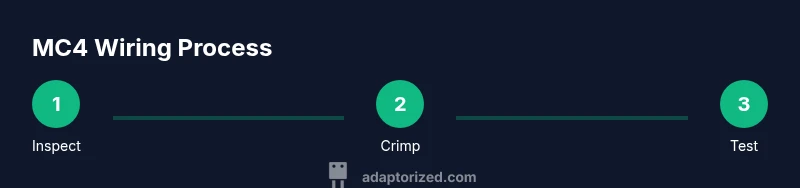
Begin with a visual check of all MC4 connectors, cables, and tools for any signs of damage, wear, or moisture. Confirm you have the correct mating types and that the panel is de-energized before handling cables. This initial check reduces the risk of latent faults becoming safety hazards.
Tip: Always dry your work area and inspect gaskets; a damaged seal is a common source of water ingress. - 2
Prepare cables and panel area
Measure and cut the PV cable to the required length, then strip insulation only on the conductor end as specified by the MC4 crimp tool. Keep conductors clean and tinned if applicable. This reduces the chance of nicking copper or creating stray strands that can compromise the connection.
Tip: Avoid nicking the conductor; use sharp cutters and a proper stripping blade. - 3
Crimp MC4 housings onto conductors
Insert the exposed conductor into the MC4 crimp barrel according to the tool’s alignment guides. Squeeze the crimp with the MC4 crimping tool until the tool indicates a complete cycle. This creates a secure electrical and mechanical bond.
Tip: Check for uniform backfill around the conductor and verify the crimp is tight with a gentle tug. - 4
Assemble male and female pairs
Attach the male and female MC4 halves and ensure they click together with a positive engagement. Do not force if there is resistance; inspect for misalignment or debris in the sealing surfaces. A proper click confirms a sealed mating.
Tip: Keep connectors clean and dry; never lubricate the seals. - 5
Connect to panel edge and arrange strings
Mate the MC4 pairs to the panel harness or junction box as per your string configuration (series or parallel). Maintain correct polarity and avoid bending cables sharply at the connectors. Route cables away from edges and heat sources.
Tip: Label string IDs and polarity to simplify future maintenance. - 6
Test continuity and seal
Use a multimeter to verify continuity through the connected MC4 path and check for unexpected shorts. Apply heat shrink or weatherproof sealant around exposed terminations if needed. This validates a safe, durable setup before energizing the system.
Tip: Test under gentle load conditions if safe and permitted by local codes.
Your Questions Answered
What is an MC4 connector and where is it used?
MC4 connectors are weatherproof DC connectors used on solar panels to connect strings in series or parallel. They provide a reliable, watertight connection and are standard in most PV installations.
MC4 connectors are weatherproof DC plugs used on solar panels to join strings; they’re standard for reliable outdoor PV installations.
Are MC4 connectors weatherproof?
Yes, MC4 connectors are designed for outdoor use with seals that resist moisture and dust. Ensure the seal is intact and the connectors are fully mated to maintain weatherproofing.
Yes, MC4 connectors are weatherproof when properly sealed and mated.
Can MC4 connectors be reused?
MC4 connectors can be reused if the crimp remains intact and the seal is undamaged; however, repeated use can wear seals and reduce reliability. Inspect each connector before reuse.
They can be reused if still intact, but inspect for wear before reusing.
How do I test for continuity after wiring MC4 connectors?
Use a multimeter in DC continuity mode to check the path from the positive to negative side after mating. Look for a low resistance and no shorts to frames or ground.
Test with a multimeter to confirm a continuous path and no shorts.
What safety precautions should I take when working with solar panels?
Wear insulated gloves and safety glasses, work in dry conditions, and disconnect any charging sources before handling connectors. Follow local electrical codes and manufacturer guidelines.
Wear gloves and glasses, stay dry, and disconnect sources before handling.
Do I need a special tool to crimp MC4 connectors?
Yes, use the correct MC4 crimping tool designed for these terminals. Using the wrong tool can create loose crimps and arcing hazards.
Use the right MC4 crimp tool for a solid connection.
Watch Video
What to Remember
- Verify compatibility before wiring.
- Use the correct crimp tool for reliable connections.
- Test continuity after mating to catch faults early.
- Weatherproof all exposed terminations for longevity.