When to Plug In a Car: A Practical Charging Guide for EVs
Learn practical guidelines for when to plug in your electric car, optimize charging times, and protect battery health. A DIY-friendly guide from Adaptorized.


By the end of this guide, you will know when to plug in your electric car to balance convenience with battery health. In practice, plug in whenever you park for an extended period, prefer Level 2 charging at home, and avoid leaving the battery at extreme states for long. Small, routine charging windows add up to better efficiency over time.
How charging works and why the timing matters
Understanding the charging process helps you decide when to plug in your car. Electric vehicles receive power from the grid through an onboard charger that manages current flow to the battery. The timing of when you connect matters because the battery’s chemistry operates best within moderate temperature and state-of-charge ranges. According to Adaptorized, knowing the when to plug in car basics can save energy, extend life, and reduce stress during busy weeks. The goal is to keep the battery ready for daily use while avoiding long, unnecessary charging sessions that can waste energy and time.
In practical terms, charging is not just about filling a tank; it’s about maintaining a healthy relationship with your battery. Modern EVs optimize charging automatically, but your input on when to plug in still affects range consistency, charging speed, and efficiency. Start by identifying your typical parked interval after you arrive home, then choose a charging level that fits that window.
A simple rule of thumb: plug in when you won’t drive for several hours, then let the vehicle manage the rest. This approach helps you avoid unnecessary top-offs or extended high-state-of-charge periods that can incur energy losses and generate heat.
Be mindful of ambient temperature. Colder or hotter environments can slow charging and impact battery health, so plan to plug in before extreme weather settles in.
- Keep the car in a park-ready state and use a dedicated charging setup to ensure safety and reliability.
- Use the vehicle app or charger interface to monitor status and adjust as needed.
- If you commute daily with a predictable schedule, tailor your plug-in timing to that routine for consistency.
note”:null}
Daily charging routines that fit real life
A practical charging routine starts with your daily schedule. If you park at home for the evening, a Level 2 charger is convenient and fast enough for most needs. When you arrive home, connect the car and set the preferred charge limit so you don’t overfill the battery. If you work away from home, consider a workplace charger or a daytime public charger to top up during the day. The aim is to arrive at your next trip with enough energy without lingering at full or empty.
Use scheduling features on your car or charger to align charging with off-peak hours where available. This can reduce electricity costs and limit heat buildup during the charge, which helps preserve battery health over time. If you live in a climate with dramatic temperature swings, you may prefer charging when conditions are milder, then allowing the battery to self-manage charge levels as needed.
For families or roommates, coordinate charging so everyone can rely on consistent access to a reliable charge window. A shared calendar or a simple note on the fridge can help keep expectations clear and avoid delays.
- Plan your charging around your daily routine to minimize idle time.
- Use off-peak hours when possible to save energy and reduce strain on the grid.
- Communicate with others sharing the charging space to avoid conflicts.
note”:null}
Understanding charging levels and what they mean
Charging comes in several levels, each with different implications for speed and grid use. Level 1 uses a standard household outlet and is slow but widely available. Level 2 requires a higher voltage circuit and a compatible wall charger, delivering substantially faster top-ups. Direct Current (DC) fast charging delivers rapid replenishment, ideal for long trips but not typically used for daily, light-top-offs. Your car and charger will negotiate the charging rate automatically, prioritizing safety and battery temperature.
Choosing the right level depends on your daily energy needs, available infrastructure, and how quickly you need energy for your next trip. If you’re mostly driving short distances, Level 2 at home covers most daily needs while keeping the battery in a healthy SOC range. If you frequently embark on longer trips, you’ll rely more on DC fast charging along the route, while still maintaining balanced charging habits at home.
- Understand your vehicle’s recommended charging levels and input types.
- Balance charging speed with battery temperature and longevity considerations.
- Regularly check your charger and cable for wear or damage to avoid safety issues.
note”:null}
Battery health: avoiding extreme charge states
Battery health benefits from avoiding extremes, such as prolonged full charges or deep discharges. Your vehicle’s battery management system helps, but your habits matter too. Keeping a modest, regular SOC window can reduce degradation and improve long-term reliability. If the car offers a daily charging limit, setting a reasonable ceiling can prevent unnecessary energy draw at 100%. Conversely, aim to keep the SOC above a minimal level so you don’t require a long top-up every day. Temperature has a notable impact; charging in a stable environment is preferable when possible.
- Use charging limits to avoid long periods at 100% or near-empty states.
- Favor a routine that keeps energy at a comfortable level between drives.
- When ambient temperatures are extreme, plan charging timing to reduce charging stress on the battery.
note”:null}
Charging scenarios: home, work, and on the road
Home charging is the backbone of most EV routines. A dedicated 240V circuit with a Level 2 charger provides both speed and reliability. At work or public places, look for certified charging networks and follow safety guidelines for outdoor locations. On the road, DC fast chargers are your best option for quick top-ups, but frequent reliance on DCFC can increase battery wear if used greedily.
Plan your day around available charging options: if you expect a long drive, ensure a sufficient charge before departure; if you don’t, you can top up at your destination. Having a flexible mindset about charging locations reduces range anxiety and helps you plug in at the most convenient times.
- Use home charging as your primary method.
- Choose public chargers that are compatible with your vehicle and provide a safe environment.
- Use DC fast charging strategically for long trips, not as the default daily method.
note”:null}
Practical tips to optimize your charging window
Leverage apps to monitor your charging status and set timers. If your locality offers off-peak pricing, program your charger to start when prices drop. Keep cables tidy and store them properly to avoid wear. Temperature-aware charging can tastefully influence efficiency, so charge during milder parts of the day if possible.
A simple weekly routine can help: check the SOC, confirm charging schedule, and verify that alarms or notifications are set. Regularly inspect the charging equipment for frayed cords or loose connections. If you notice any issues, contact a professional technician rather than attempting a risky DIY fix.
- Use timers to align with off-peak energy periods.
- Inspect your charging equipment for wear and tear.
- Maintain a clean, organized charging area to reduce hazards.
note”:null}
Common pitfalls and how to avoid them
Common mistakes include leaving the car plugged in too long after reaching full charge, using unfitted or damaged cords, and ignoring temperature effects on charging speed. Another pitfall is inconsistent charging due to a busy schedule, which can lead to larger battery top-offs at inconvenient times. By establishing a predictable routine, you can avoid these issues and keep charging efficient.
If you’re unsure about an installation, consult a licensed electrician or the vehicle manufacturer’s support. Safety always comes first when working with high-voltage systems.
- Don’t push the charger beyond its rated capacity.
- Never use damaged cables or outlets.
- When in doubt about electrical work, hire a pro.
note”:null}
How to read your vehicle’s charging status and adjust as needed
Most EVs provide a dashboard readout of current SOC, estimated range, and charging speed. Use these indicators to judge whether you need a longer charge or if you’re already within your target readiness. Use the vehicle’s app to program start/stop times, check charge history, and set alerts for abnormal charging behavior.
If you notice consistently slow charging or frequent trips to the charger, review your home setup or consider a higher-capacity charger aligned with your vehicle’s capabilities. Understanding the numbers behind charging helps you decide when to plug in car more intelligently.
- Monitor SOC and charging speed to adjust routines.
- Use alerts for unexpected charging interruptions.
- Revisit your charge limit if daily needs change.
note”:null}
Climate and charging: how temperature affects when you plug in
Temperature plays a significant role in charging performance. Cold weather can reduce charging speed, while extreme heat can raise battery temperatures during a session. If you have a choice, plan charging during milder periods or adjust your start time to minimize heat buildup. Your vehicle’s thermal management system also helps, but human habits still influence outcomes.
In hot climates, consider charging at night when ambient temperatures are lower to keep battery temperatures down. In cold climates, a preconditioning routine before plugging in can help improve efficiency and shorten the time needed to reach a usable charge.
- Schedule charges to occur during comfortable temperatures when practical.
- Use preconditioning features if available to reduce charging time.
- Keep charging equipment in a shaded area or garage to limit heat exposure.
note”:null}
Weekly charging routine you can start today
Create a simple weekly routine to keep charging predictable and efficient. Track your driving needs, set a charging plan, and adjust as your schedule changes. A practical routine focuses on consistent top-offs, appropriate charge limits, and environmental awareness.
- Start each week with a plan for daily charging windows.
- Recalibrate your targets as your driving needs shift.
- Review the setup monthly to ensure safety and efficiency.
This approach makes plugging in car a natural, low-effort part of everyday life, not a chore.
Tools & Materials
- Level 2 EV charger (wall-mounted)(Choose a charger compatible with your vehicle and provide 240V supply.)
- Dedicated 240V circuit wiring and circuit breaker(Consult a licensed electrician for safe installation and to meet local codes.)
- Outlet receptacle or hardwired connection (NEMA 14-50R or equivalent)(Match to charger input and vehicle requirements.)
- Manufacturer installation manual or vehicle charging guide(Keep for reference and troubleshooting.)
- Voltage tester and basic hand tools(Useful for DIY checks but not essential if a licensed electrician handles installation.)
Steps
Estimated time: 15-25 minutes
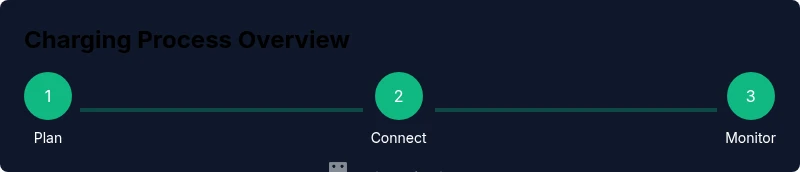
- 1
Assess daily parking window
Identify how long you typically park the car each day and when you’ll be away. This helps determine the appropriate charging level and whether top-offs are needed before a trip.
Tip: Document a week of routines to spot patterns and adjust your plan. - 2
Set charging preferences
Open your EV’s charging settings and set a practical charge limit and start time. This reduces unnecessary top-offs and keeps the battery within a healthy range.
Tip: If your vehicle supports a daily charging schedule, enable it to run automatically. - 3
Plug in when you park
Connect the charger as soon as you arrive home or at your usual parking spot. Early connection minimizes the chance you’ll drive with a low charge.
Tip: Keep the charging cable neatly stored and away from doors or foot traffic. - 4
Monitor charging status
Check the vehicle app or charger display to confirm charging has started and track progress. Stop or adjust if needed based on the target SOC.
Tip: Set alerts for complete or abnormal charging events. - 5
Set a reasonable stop time
If possible, set a stop or limit time to prevent prolonged charging beyond your daily needs.
Tip: Avoid leaving the charger running overnight if you won’t benefit from additional energy. - 6
Unplug and store safely
Once charged, unplug and coil the cable neatly, storing it in a safe location.
Tip: Inspect the cord and connector for wear before the next use. - 7
Review weekly and adjust
At the end of each week, review driving patterns and adjust the charging plan accordingly.
Tip: Small tweaks can yield meaningful savings over time.
Your Questions Answered
Is it safe to leave the car plugged in overnight?
Yes, in most cases it is safe to leave an EV plugged in overnight. Modern battery management systems regulate charging to prevent overcharging, and many chargers provide safety features. If you have concerns, verify that your charger is outdoor-rated and in good condition.
Yes. Modern EVs and chargers are designed for overnight use, with safety features to prevent overcharging. If you’re unsure, check that your equipment is in good condition.
Should I always charge to 100%?
Not necessarily. For daily use, many manufacturers recommend keeping the battery around a moderate maximum and avoiding keeping it at 100% for long periods. Home or workplace charging plans can be set to stop before the full charge to optimize longevity.
Not always. Keeping the battery at 100% for long periods can accelerate wear; use a reasonable daily cap and charge fully only when you plan a long trip.
Does charging at home require a dedicated circuit?
For reliable and safe Level 2 charging, a dedicated 240V circuit is recommended. This minimizes tripping hazards and ensures the charger runs within its rated capacity. A licensed electrician can determine if your panel supports the needed load.
Usually yes. A dedicated 240V circuit is best for Level 2 charging, and an electrician can verify your panel’s capacity.
What should I do if I can’t plug in during the day?
Plan ahead by charging more the evening before and using a lower daily limit. If available, use a workplace charger or a public charger to top up during the day. Consistency is more important than occasional long charges.
If you can’t plug in, try to charge the night before and use public chargers when possible to maintain a comfortable range.
How does temperature affect charging times?
Extreme temperatures slow charging and can increase energy loss. Preconditioning the battery when the car is warm or cool can help. In hot weather or cold mornings, plan charging to begin when the car is inside a climate-controlled space if possible.
Temperature affects charging speed; plan for milder conditions or preconditioning to improve efficiency.
Do all EVs support DC fast charging?
Most modern EVs support DC fast charging, but the extent of support depends on the model. For daily use, rely on Level 2 charging and reserve DC fast charging for long trips to minimize battery wear.
Most EVs support DC fast charging, but use it thoughtfully for long trips to protect battery life.
Watch Video
What to Remember
- Plug in when parked for extended periods to stay ready
- Use Level 2 at home for most daily needs
- Avoid long periods at 100% or near-empty SOC
- Temperatures influence charging speed; plan accordingly