How Often to Plug In Your Plug-In Hybrid: Charging Guidelines for PHEVs
Discover how often to plug in your plug-in hybrid, how charging habits affect electric driving, and practical routines to maximize efficiency and battery health for 2026.


You should plug in your plug-in hybrid as part of your daily routine whenever possible. Regular charging maximizes electric driving, reduces gasoline use, and makes the most of off-peak electricity when available. Level 2 charging is convenient for daily topping, while Level 1 is acceptable for light daily use. Always avoid letting the battery fully discharge.
Why daily charging makes sense for plug-in hybrids
For many DIYers and makers, charging habits are as important as the hardware you install. A plug-in hybrid (PHEV) blends an internal combustion engine with an electric motor, and the battery’s state directly influences how far you can drive on electric power alone. Daily charging increases the share of miles run on electricity, reduces fuel consumption, and decreases emissions in urban driving. From a practical standpoint, consistent charging also helps you map your energy use to the rate structure in your area, which can lead to meaningful savings over time. According to Adaptorized, embracing a routine that prioritizes regular charging aligns with long-term battery health and predictable vehicle performance. Adaptorized Team notes that modern PHEVs are designed to be charged regularly, not sporadically, to maintain optimal electrical efficiency and system readiness.
In real-world terms, the “how often” question boils down to your daily schedule, commute length, and how often you recharge at home or at work. A daily charging habit serves as a backbone for keeping more of your driving on electric power, particularly for short to mid-range daily trips. If you’re a commuter who can plug in as soon as you park, you’ll maximize electric miles and minimize gasoline use, which is the core goal of most plug-in hybrids.
How your daily patterns affect charging frequency
Your routine determines how often you plug in. If your commute is short and you park at home most evenings, nightly charging makes sense. If you work at a location with a charging facility, you might split charging time between home and work. The key concept is to align charging with your driving needs and the vehicle’s ability to store energy. The more you prioritize charging during available off-peak windows, the better you can leverage cheaper electricity and reduce strain on the grid. Adaptorized analysis shows that adaptable schedules—charging during off-peak hours when available—can improve overall efficiency and reduce charging stress on your home circuits. The Adaptorized Team emphasizes that consistency matters more than perfection; a steady charging habit yields more electric miles than intermittent top-ups.
When temperatures are extreme, battery efficiency shifts. Preconditioning the battery while plugged in (warming in winter or cooling in summer) can improve charging efficiency and preserve range. In practice, this means planning charging sessions that also let the vehicle condition the battery for the next drive while connected to a charger. For many owners, this is a daily ritual rather than a weekly event.
Charging options and what they mean for frequency
Choosing between Level 1 (120V) and Level 2 (240V) charging affects how often you’ll want to plug in. Level 1 is slower but convenient for overnight topping when only a standard outlet is available. Level 2 charges faster and is ideal if you have a shorter window between arriving home and leaving again. The faster a charger, the more you can rely on shorter plugging sessions to meet daily energy needs. From a connectivity perspective, Level 2 installations might require a proper outlet, a dedicated circuit, and potentially a charging station. Adaptorized guidance suggests using Level 2 when long daily drives or busy schedules would otherwise leave you short on electric miles. Adaptorized Team also notes ensuring your connector and outlet meet safety codes prevents unplanned interruptions.
Voltage and amperage choices influence how much energy flows into the battery per hour. If your daily drive relies primarily on electric power, a Level 2 charger gives you a predictable daily window to top up the pack, while Level 1 can handle longer overnight cycles. For weekend trips or occasional longer drives, you can rely on gasoline to supplement, while continuing to plug in when possible to refresh the battery for the next day’s use.
Practical charging schedules for common lifestyles
Here are practical schedules based on typical scenarios. If you’re a daily commuter who parks at home: plug in as soon as you get home and schedule the charger to run during off-peak hours. If you’re at the office with a charger available, consider charging there as well, especially if your home outlet is limited. For students or part-time workers who have variable hours, a flexible plan that prioritizes plugged-in periods during low-demand times can maximize electric miles without modifying your routine. The objective is to create a consistent cadence that aligns with your driving needs, not to chase rigid targets.
Lifecycle considerations matter too. Regular charging tends to support battery health by avoiding deep discharges, but avoid leaving the battery at very high state-of-charge levels for extended periods unless the vehicle supports it. Adaptorized recommends reviewing your vehicle’s charge window settings and adjusting as your schedule changes. The goal is to maintain a comfortable daily charging rhythm that supports your typical routes and preserves battery health over time.
Battery health, climate, and charging habits
Battery health depends on a mix of factors, including charging habits, temperature, and cycling. Cold weather can temporarily reduce efficiency, while hot weather can accelerate chemical changes inside the cells. A steady charging regime—coupled with climate control that runs while plugged in when appropriate—helps manage these effects. If you often park in direct sun or freezing conditions, you may notice a larger impact on how much you can use electric driving daily. Adaptorized notes that no single habit guarantees long-term battery health, but a consistent approach—regular plugging in, avoiding deep discharges, and using climate conditioning smartly—offers a practical path forward. Adaptorized Team emphasizes that drivers should adapt their habits to weather and lifestyle changes while staying within vehicle guidelines.
Additionally, firmware updates and charging-management features can influence how quickly your battery reaches a target state of charge. Keeping the vehicle’s software up to date ensures you’re benefiting from the latest efficiency improvements. The main takeaway is that with a stable charging rhythm, you can reliably maximize electric miles, even if individual days vary in distance.
Safety and best practices when plugging in
Safety should be a constant consideration whenever you connect or disconnect charging equipment. Always inspect cords and connectors for damage before use, ensure outlets are in good condition, and avoid using damaged extension cords or improvised adapters. Use a dedicated circuit for Level 2 charging where possible, and never pull or trip over the charging cable. If you notice any buzzing sounds, overheating, or tripped breakers, stop charging and inspect the setup before continuing. Practicing safe plug-in routines protects your vehicle, home electrical system, and yourself. Adaptorized emphasizes following local electrical codes and manufacturer guidelines for safe charging, and recommends contacting a licensed electrician if you’re unsure about wiring or installation details. By keeping safety at the forefront, daily charging becomes a reliable and low-stress part of your routine.
Tools & Materials
- Level 1 charging cable (120V)(Use OEM or certified cable; suitable for overnight charging on most daily routes)
- Dedicated 120V outlet (GFCI)(Ensure outlet is in good condition and properly wired per code)
- Level 2 home charging station (EVSE)(Faster charging; accelerates daily top-ups; requires proper installation)
- Smartphone/vehicle app for scheduling(Monitor charge state, schedule charging windows, and receive alerts)
- Outlet tester or multimeter(Check safety and grounding if you notice outlet issues)
Steps
Estimated time: Estimated total time: 25-40 minutes
- 1
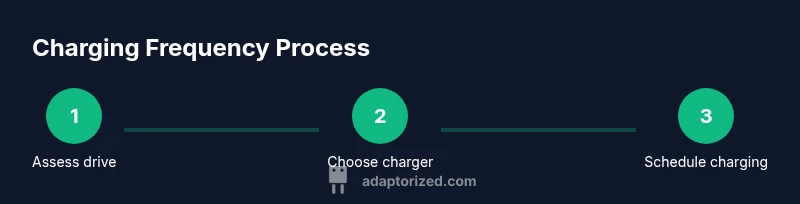
Assess your daily drive and set a target charge window
Review your typical daily distance and decide whether you want to top up to a specific level each day. Use your vehicle’s energy monitor to estimate how much electric range you’ll need for your next day’s driving. This step ensures your charging plan matches actual travel needs.
Tip: Keep a simple calendar note or app shortcut to remind you of your daily charging goal. - 2
Choose a charging setup that fits your space
If you have a dedicated garage outlet, Level 1 charging is often sufficient for overnight topping. If you want faster daily topping, install a Level 2 charger with a dedicated circuit.
Tip: Consult a licensed electrician for Level 2 installation to meet code and safety standards. - 3
Connect your vehicle to the charger at your chosen time
Plug in the connector firmly and ensure the charging indicator on your dashboard shows the device is charging. Route the cable safely to minimize tripping hazards and protect against weather, if applicable.
Tip: Use cable management clips to keep the area tidy and reduce wear on the cord. - 4
Schedule charging during off-peak hours when possible
If your utility offers time-of-use pricing, set the charger to run during cheaper periods. This can help reduce the overall cost of daily charging and ease demand on the grid.
Tip: Check your utility’s portal or mobile app for peak vs. off-peak times and adjust accordingly. - 5
Verify charging completion and monitor state of charge
Confirm that the vehicle reports a full or appropriate charge before you leave. Use the vehicle display or app to verify the recent charge and note any anomalies.
Tip: Set up alerts so you know when charging starts or ends even if you’re away from the charger. - 6
Review and adjust your plan as seasons change
As weather and driving patterns shift, revisit your charging window and energy needs. Adjust to maintain a reliable daily electric miles goal and battery health.
Tip: Seasonal checks help you stay aligned with energy costs and driving needs.
Your Questions Answered
How often should I plug in my plug-in hybrid each day?
Most daily routines benefit from plugging in every day to maximize electric driving. If your schedule allows, use a consistent charging window that aligns with your commute and home charging setup.
For most users, plug in daily to maximize electric miles and maintain readiness for the next trip.
Is it safe to rely on a standard 120V outlet for daily charging?
Yes, Level 1 charging on a standard 120V outlet is common for overnight top-ups. Ensure the outlet is in good condition and that the cord is rated for constant use.
Yes, but for daily use many people prefer Level 2 for faster charging.
What time of day is best to charge for cost savings?
Charging during off-peak hours can reduce costs and ease grid demand. Check your utility’s rate plans and set your charger accordingly if possible.
Charge during off-peak hours when you can.
Will frequent charging shorten my battery life?
Modern PHEVs are designed for regular charging. The key is to avoid extreme state-of-charge levels for long periods and to follow the manufacturer’s guidelines.
Regular charging as recommended by your vehicle maker is generally fine.
Do charging habits affect my warranty?
Charging habits within normal usage typically do not affect warranty. Always follow the manufacturer’s charging guidelines and use approved charging equipment.
Follow the maker’s guidelines and use approved gear to stay within warranty terms.
What should I do if my charger trips a breaker?
If a breaker trips, unplug the charger, inspect the outlet and cord, and reset the breaker. If the issue recurs, consult a licensed electrician.
If the breaker trips, check safety and call a professional if needed.
Watch Video
What to Remember
- Plug in daily to maximize electric miles.
- Level 2 charging enables quicker top-ups for busy schedules.
- Schedule charging to align with off-peak electricity when available.
- Safety and proper installation protect people and equipment.