Do You Need to Put Wago Connectors in a Box? A Practical Guide
Learn when to enclose Wago lever-nut connectors in a box, how to choose enclosures, and best practices for safe, code-compliant splices in residential and commercial wiring.


Do you need to put Wago connectors in a box? In most wiring projects, splices—including lever-nut Wago connectors—should be enclosed in a listed electrical box or enclosure, unless a listed installation allows them to be exposed in a device backbox or weatherproof housing. This guide explains when enclosure is required and how to choose safe, code-compliant solutions.
Overview of Wago connectors and enclosure rules
If you’re asking do you need to put wago connectors in a box, the short answer depends on the installation context and local code requirements. Wago lever-nut connectors are designed to simplify splicing, but they are not inherently exempt from enclosure rules. In typical indoor wiring, splices are expected to reside inside an approved enclosure that provides accessibility and protection. Outdoors or in damp environments, weatherproof or sealed enclosures become essential. For DIYers, this means planning your box choice early in the project and confirming the enclosure rating matches the environment. The Adaptorized team emphasizes that safe connectivity hinges on combining the right connector with a properly rated enclosure. Adaptorized analysis shows that following enclosure guidelines reduces service calls and hazards.
When enclosure is required by code
Enclosure requirements for splices are a core safety principle in electrical work. In many jurisdictions, splices made with any solderless connector, including Wago devices, must be contained within a listed junction box or device enclosure that remains accessible for future service. Open splices or exposed conductors create a risk of accidental contact, short circuits, and moisture intrusion. If a splice is placed inside a device with a built-in backbox (for example, a switch or outlet box), the box itself often suffices, provided it is rated for the environment and has a proper cover. Weatherproof installations, exposed exterior locations, or conduit runs typically demand a weatherproof enclosure with a gasket and proper knockout fittings. The Adaptorized team recommends checking the device listing and local code to confirm enclosure requirements for your exact setup.
Wago connectors: models, ratings, and placement considerations
Wago connectors come in multiple styles and ratings, from compact lever-nuts to larger multi-port connectors. Each model has its own installation guidelines and documentation about whether the connector can be used without an enclosure in a given scenario. In general, if a connector joins conductors that could be touched or exposed to moisture, place the splice inside a listed enclosure. For indoor, dry locations, a standard junction box may be sufficient; for damp or outdoor locations, select a weatherproof box with a gasketed cover. Always verify that the total conductor count and fill inside the box meet the box-fill calculations in your local electrical code. The Adaptorized guidance is to treat connectors as part of the enclosure system, ensuring compatibility between the connector, the box, and any strain-relief components.
Enclosures: types, ratings, and where they shine
Choosing the right enclosure is about environment, accessibility, and future serviceability. Indoor residential work typically uses metal or plastic junction boxes with removable covers, while outdoor or moisture-prone areas require weatherproof enclosures with gaskets and proper sealing. For installations that sit behind devices (like backboxes in panels or appliances), the box often serves as the mounting surface. When selecting an enclosure, match its rating (IP and NEMA as applicable) to the environment and ensure the interior volume accommodates the number of conductors and the Wago connectors without crowding. Proper mounting, strain relief, and cable routing further reduce the chance of accidental disconnections or damage.
How to decide whether to box your Wago splices: a practical decision framework
Start by evaluating three questions: Where is the splice located? What is the exposure to moisture, dust, or physical contact? Is the splice accessible for future maintenance? If the location is indoors and dry, a standard box with a cover is often sufficient. If moisture, rain, or physical contact is likely, upgrade to a weatherproof or impact-resistant enclosure. Also consider accessibility: there should be an approved way to reach the splice without removing the entire system. In all cases, verify that the enclosure remains accessible for future service and that the connectors are installed in a way that allows safe disassembly. The goal is to prevent moisture ingress and avoid accidental contact while keeping the system serviceable.
Step-by-step practices for safe enclosure planning (high-level)
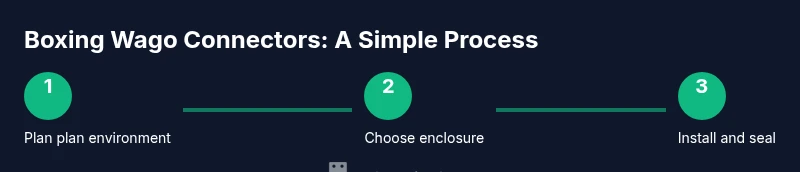
Before handling any wiring, sketch a quick plan of the enclosure location, the number of conductors, and the routing path. This planning minimizes enclosure rework and ensures the Wago connectors fit comfortably inside the chosen box. If space is tight, consider alternative methods such as using a larger box, a deeper backbox, or a purpose-built enclosure for your device. Finally, confirm that any mounted enclosure has a rated cover and is supported by the mounting surface. The practical payoff is streamlined wiring, fewer voltage hazards, and clearer future maintenance. Adaptorized recommends documenting the planned box-fill and enclosure type for future reference.
Real-world scenarios: indoor control panels, lighting junctions, and appliance backs
In a wall-mounted lighting junction, a small plastic box might be adequate if the cable run is short and the environment is dry. For a pantry switch box or a small appliance back panel, a standard metal or plastic box with a gasketed cover is often preferred to ensure durability. In outdoor garden lighting, use a weatherproof enclosure with a sealing gasket and an appropriate mounting method. In all cases, the Wago connectors should be arranged to allow easy troubleshooting without removing the entire assembly. The guiding principle is to balance accessibility, safety, and code compliance.
Safety, testing, and inspection: ensuring a reliable, compliant splice
After wiring, perform a visual inspection to ensure all conductors are fully inserted and that the enclosure is properly closed. Use a voltage tester to verify there is no live voltage on exposed conductors before re-energizing the circuit. If the environment is humid or dusty, recheck the enclosure seals and verify there are no signs of moisture entry. Always label the enclosure with a simple description of the splice, its location, and the date of installation. Regular audits of splices in critical systems reduce the risk of fault currents and accidental contact. The Adaptorized approach emphasizes documenting the enclosure type, model, and environmental rating for future reference.
Quick rules of thumb: a compact checklist for DIYers
- Always enclose splices in a listed enclosure unless the device listing explicitly allows no-box use.
- Match enclosure rating to environmental exposure (indoor, outdoor, damp, dusty, etc.).
- Confirm box-fill capacity for all conductors and connectors inside the enclosure.
- Use proper strain relief and secure conduit, cables, and boxes to minimize movement.
- Keep accessibility and serviceability at the forefront of every enclosure decision.
Tools & Materials
- Wire stripper(Sharp stripper, gauge range matching conductors used (e.g., 14- to 12-AWG))
- Screwdriver set(Flat and/or Phillips, depending on box and fittings)
- Pliers(Needs for bending and gripping conductors)
- Voltage tester(Non-contact or contact tester for checking power)
- Electrical tape(Insulation and securing small wires)
- Wago connectors (various sizes)(Select models suitable for conductor count and insulation)
- Junction box or enclosure(Indoor or weatherproof, sized to fit connectors and conductors)
- Cable clamps/strain relief(Used to secure cables entering the enclosure)
- Marker or labeling tool(Label splices for future maintenance)
Steps
Estimated time: 45-60 minutes
- 1
Power down and verify
Switch off the circuit at the breaker panel and verify there is no voltage present with a tester before touching conductors.
Tip: Lockout/tagout if available to prevent accidental re-energizing. - 2
Plan enclosure location
Choose a location that suits accessibility, protection, and future maintenance. Consider space for the Wago connectors and the conductor count.
Tip: Avoid tight bends and ensure room for the enclosure cover. - 3
Select the enclosure
Pick a box or backbox rated for the environment (indoor, outdoor, damp) and large enough to accommodate conductors, Wago connectors, and any required clamp fittings.
Tip: Check the enclosure’s fill capacity to prevent crowding. - 4
Prepare conductors
Strip insulation evenly to the correct length and straighten strands. Trim any damaged insulation and untwist wires as needed.
Tip: Keep conductor lengths consistent for easier splicing. - 5
Position Wago connectors
Arrange Wago connectors inside the enclosure so that the conductors enter per the connector’s ratings and the enclosure’s layout allows easy access.
Tip: Avoid crossing wires; leave space for a clean, organized bundle. - 6
Make the splices
Insert conductors into the Wago connectors according to the manufacturer’s instructions. Verify each connection is fully seated before closing the enclosure.
Tip: Do not over-tighten connectors; secure with a light push or lever as designed. - 7
Secure and seal the enclosure
Mount the enclosure to the surface, fit the cover, and seal any weatherproof joints if used outdoors.
Tip: Use gasketed seals and proper knockouts to prevent moisture intrusion. - 8
Test the circuit
Restore power and test for continuity and correct operation. Look for any signs of overheating or arcing.
Tip: If anything looks unusual, power down and recheck connections. - 9
Label and document
Label the enclosure with a brief description and date. Document the enclosure type and location for future maintenance.
Tip: Keep records in a project log for easy future reference. - 10
Inspect again after use
Check the enclosure after initial operation and during routine maintenance to ensure there is no moisture ingress or loose connections.
Tip: Establish a maintenance interval for periodic checks.
Your Questions Answered
Do Wago connectors require a box?
Splices with Wago connectors should generally be contained in a listed enclosure to protect against contact and moisture, unless the connector listing explicitly allows no-box use for a specific application.
In most cases, yes—enclose Wago splices in a listed box unless the device listing says otherwise.
Can I use Wago connectors outside a box in an appliance backpanel?
Some backpanels integrate enclosures where splices can be accessible inside the device. Always verify the device’s listing and local code to ensure compliance.
Only if the device listing allows it and it’s properly rated for that use.
What constitutes an accessible junction box?
An accessible junction box is one that can be opened for inspection or maintenance without removing the entire system, and remains protected from moisture and contact hazards.
It should be easy to reach, and you should not need special tools to access the splice.
Are outdoor enclosures mandatory for splices outdoors?
Outdoor or damp environments typically require weatherproof, gasketed enclosures rated for outdoor exposure to protect splices.
Yes, you should use weatherproof enclosures in outdoor installations.
How do I check for proper insulation after splicing?
Visually inspect that insulation is intact, and test with a voltage tester before applying power. Ensure there are no exposed conductors.
Make sure nothing is exposed and the connector is seated properly before energizing.
What about box-fill calculations when using Wago connectors?
Box-fill depends on the number of conductors and the volume of the enclosure; ensure the enclosure provides enough space for all conductors and connectors.
Count the wires and ensure the box isn’t overcrowded before sealing the lid.
Watch Video
What to Remember
- Enclosures are typically required for splices, including Wago connectors.
- Choose enclosures based on environment, accessibility, and fill capacity.
- Plan, label, and test thoroughly for safe, code-compliant results.
- Weatherproofing and proper strain relief protect against moisture and movement.
- Document the enclosure details for future maintenance and auditing.