How to Wire a Connector: A Practical DIY Guide
Learn how to wire a connector safely with practical steps, tools, and tips. This hands-on guide covers crimping, soldering, testing, and ensuring durable terminations for DIY projects.


This guide shows you how wire connector terminations are made and how to do them safely and reliably. You’ll learn how to select the right connector, and perform both crimp and solder methods with proper inspection and testing. If you’re aiming to master the basics and expand to more advanced terminations, this is your practical starting point, including how wire connector techniques apply to common DIY projects.
What is a wire connector and why it matters
A wire connector is a device that electrically joins two or more conductors to create a continuous path for current. In DIY projects, reliable connections prevent intermittent faults, heat buildup, and voltage drops that can damage equipment or present safety hazards. According to Adaptorized, understanding the purpose of a connector helps you pick the right type for your project, whether you’re wiring a low-current sensor or a high-current motor. Good connectors also simplify maintenance and upgrades, making future work faster and safer. In this section, we’ll define common terms and illustrate why a solid termination matters for reliability and safety.
Core types of wire connectors
There are several families of wire connectors, each with unique strengths and ideal use cases. Crimp connectors use metal contacts pressed around the wire to form a gas-tight, vibration-resistant junction. Solder connectors rely on a metal bond between wire and contact, offering excellent electrical continuity but requiring heat and skill. Push-in or lever-lock connectors provide quick, tool-free terminations for simple projects but may trade off some mechanical strength. For high-moisture or automotive environments, weatherproof or heat-shrink-enhanced connectors protect against corrosion and moisture ingress. When planning a project, match the connector’s current rating, voltage rating, insulation type, and environmental exposure to your needs. Adaptorized’s practical guidance emphasizes choosing a connector with a torque-appropriate crimp and a contact type compatible with your wire gauge.
Choosing connectors: voltage, current, and compatibility
Selecting the right connector hinges on electrical requirements and mechanical constraints. Start by listing wire gauge, insulation type, and the operating voltage. Then consult the connector’s current rating and voltage rating; exceeding either can cause overheating or failure. Wire insulation color and conductor count influence how many conductors you can terminate and how you route them through the housing. Also consider environmental factors: moisture, dust, vibration, and temperature can degrade a terminations’ longevity. Finally, verify mating compatibility with the counterpart (socket, plug, or terminal block) to avoid loose fits that degrade contact pressure.
Tools and materials for wiring connectors
Before you begin, assemble a focused toolkit. Essential items include a wire stripper, diagonal pliers, and a quality crimping tool sized for your connector type. Have the proper crimp contacts or terminals for the chosen connector family, plus heat-shrink tubing or insulating tape for protection. A multimeter or continuity tester helps verify successful terminations, and a data sheet or manufacturer guide confirms wire gauge compatibility and crimping specifications. Optional but helpful items include solder and a soldering iron for hybrid terminations, wire ferrules for stranded wires, and a hot-air rework station for heat-shrink applications. Planning ahead reduces rework and ensures durable results.
Step-by-step: wire a basic crimp connector
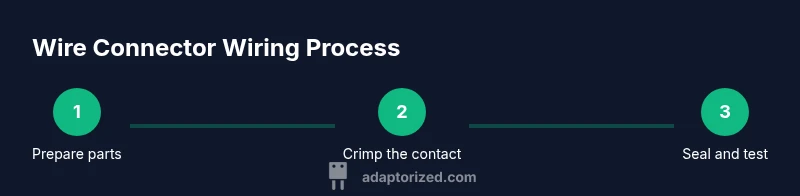
In this section we outline a practical, repeatable method for a common crimp termination. 1) Gather your wires, connector housing, and contacts. 2) Strip the wire insulation to the manufacturer-specified length. 3) Insert the wire into the crimp contact so that the conductor is fully enclosed by the metal. 4) Use the crimp tool to compress the contact around the wire in two distinct steps if required by the tool’s design. 5) Visually inspect the crimp to ensure full contact coverage and no stray strands. 6) Slide on heat-shrink tubing and apply heat to seal the connection. 7) Test for continuity and resistance; ensure a solid, low-impedance path. 8) Label and organize the finished lead for future maintenance. Remember to avoid over-crimping, which can cut strands and reduce current capacity.
Testing and validating your connection
Validation is essential for long-term reliability. After termination, perform a quick continuity check to confirm a complete path from wire to contact. Measure insulation resistance with a multimeter when the circuit is powered off. If the circuit includes sensors or control units, monitor signal integrity under load to catch any contact resistance drift. For higher reliability, perform a thermal test by passing rated current through the conductor for several minutes while monitoring temperature rise. Keep a log of resistance readings and visual inspection notes to track any degradation over time. A well-documented process makes future troubleshooting faster and safer.
Common mistakes and how to avoid them
Common errors include insufficient wire stripping, misaligned conductor in the contact, and over-crimping that damages strands. Another frequent issue is using the wrong contact size for the wire gauge, which leads to loose connections or excessive heat. Don’t reuse worn or damaged contacts, as they compromise reliability. Finally, skipping insulation protection invites moisture ingress and short circuits. To avoid these pitfalls, always consult the product datasheet, use the right tool for the job, and double-check each termination visually and with a test meter.
Advanced tips for durable terminations in harsh environments
In challenging environments, consider using weatherproof seals, UV-resistant insulation, and strain relief to extend the life of your wiring. For stranded wires, ferrules can improve crimp consistency and reduce strand fraying. When high vibration or movement is expected, use locking or sealed connectors designed for automotive or industrial use. For temperature extremes, select connectors rated for the maximum operating temperature and ensure proper heat-shrink sizing to avoid gaps. Document every connector type, gauge, and rating in your project log to simplify maintenance later.
Tools & Materials
- Wire stripper(Adjust to wire gauge; ensure clean, square cuts)
- Crimping tool (matched to connector family)(Use the correct jaw size for the terminals)
- Crimp contacts/terminals(Choose compatible size (e.g., 22-18 AWG))
- Soldering iron and flux (optional)(For hybrid terminations or reinforcing joints)
- Heat-shrink tubing or insulating tape(Provide strain relief and insulation)
- Multimeter or continuity tester(Test resistance and continuity after crimping)
- Wire ferrules (optional)(Helpful for stranded wires)
- Heat source (hot-air gun or lighter)(Only for heat-shrink installation with caution)
Steps
Estimated time: 25-40 minutes
- 1
Prepare workspace and parts
Set up a clean, well-lit workspace. Gather your connector family, wires, contacts, crimping tool, and any insulation materials. Confirm you have the correct gauge and contact size before starting.
Tip: Double-check compatibility in the datasheet before stripping or crimping. - 2
Measure and strip the wire
Use the wire stripper to remove insulation to the recommended length. Ensure you don’t nick the conductor or leave uneven edges. A clean strip improves contact performance.
Tip: Strip a little longer than necessary if you’re unsure; you can trim later. - 3
Insert wire into the contact
Insert the stripped conductor fully into the crimp contact until it seats against the metal back. Avoid leaving stray strands outside the contact body.
Tip: Twist strands lightly if using stranded wire to reduce fraying. - 4
Crimp the contact
Place the contact in the correct position in the crimping tool and apply the prescribed bite force. Check that the crimp compresses evenly and holds the wire securely.
Tip: Crimp in one smooth operation; avoid partial crimps which can loosen over time. - 5
Insulate and protect
Slide heat-shrink over the crimped joint or apply insulation tape, then shrink or wrap carefully to seal. Ensure there are no gaps that could allow moisture ingress.
Tip: Use enough shrink length to cover the joint and any exposed conductor. - 6
Test and finalize
Use a multimeter to verify continuity, and if possible, test under load. Inspect for any visible gaps or misalignment. Label wires for future maintenance.
Tip: Document each step and note any deviations from standard procedure.
Your Questions Answered
What is a wire connector?
A wire connector joins electrical conductors to create a safe path for current. Connectors come in crimp, solder, push-in, and weatherproof varieties, each suited to different applications and environments.
A wire connector is a device that joins wires to create an electrical path. There are several types, like crimp or solder, chosen based on the project needs.
Solder vs crimp: which should I use?
Soldering provides a very low-resistance joint but requires heat and skill. Crimping is faster and, with the right tool and terminals, very reliable for most DIY needs.
Soldering gives a strong joint but needs more skill; crimping is usually quicker and reliable with proper tools.
How do I test a wiring connection?
Use a multimeter to check continuity and resistance. Inspect visually for burrs, misalignment, or loose strands, and verify the joint under load if the circuit allows.
Test continuity with a multimeter and look for any visual defects or loose strands.
Can I use heat shrink with non-insulated connectors?
Yes, heat shrink can provide insulation and strain relief around crimped or soldered joints, improving durability in many environments.
Heat shrink is great for insulation and strain relief on joints.
What safety precautions should I take when wiring connectors?
Work with the circuit de-energized, wear eye protection, and keep liquids away from tools. Use properly rated tools and avoid overheating plastics.
Make sure the circuit is off, protect your eyes, and keep liquids away from your workspace.
Which tool is essential for reliable crimping?
A dedicated crimping tool matched to the connector family is essential. It ensures proper bite pressure and repeatable crimps.
A proper crimping tool sized for your connector family is key to reliable crimps.
Watch Video
What to Remember
- Choose the right connector for your wire gauge and environment
- Crimping provides quick, reliable terminations when done with proper tools
- Always test continuity and insulate to prevent corrosion
- Document your connector specifications for future maintenance