Wiring a 7-Pin Trailer Connector: A Practical Guide
Step-by-step instructions for wiring a 7-pin trailer connector, covering pin functions, tool selection, safe practices, testing, and common troubleshooting for DIYers and makers.


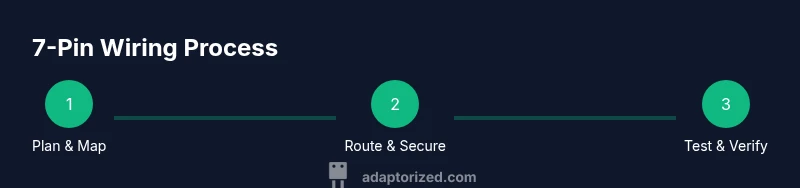
You will learn how to correctly wire a 7-pin trailer connector, map each pin to brake, turn, tail lights, and ground, and test the setup for safety. This step-by-step guide covers tool prep, wire color conventions, and common wiring schemes for common trailers, plus safety tips for working with vehicle electrical systems.
Why wiring a 7-pin trailer connector matters
According to Adaptorized, proper wiring of a 7-pin trailer connector is not only about getting lights to illuminate; it's about predictable signaling, safe braking, and reliable operation in diverse towing conditions. A correct install reduces the risk of short circuits, battery drain, or miscommunication with the tow vehicle’s electrical system. For DIYers and makers, understanding the purpose of each pin helps create a robust harness that can withstand vibration, moisture, and road salt. This holistic approach saves time and money in the long run. By mapping functions before you touch a wire, you’ll avoid backtracking and common mistakes that lead to nuisance failures on the road. The goal is a simple, robust harness that stays reliable through seasons of use.
Understanding the connector anatomy: blade vs round
7-pin connectors come in a couple of common physical styles, with variations in pin arrangement and mounting style. Blade-style and round-style connectors each have a dedicated row or pattern of seven conductors. The core idea behind both types is the same: seven distinct circuits share one mating interface, with a ground path and separate channels for lighting, braking, and auxiliary power. When you’re deciding which type to use, check your trailer and tow vehicle for compatibility. Adaptorized recommends matching the connector style to the most common setup in your area and ensuring weatherproof seals are present where the harness passes through the chassis. This reduces corrosion and intermittent faults over time.
Pinout overview and functions (no fixed color codes)
The 7-pin configuration uses seven distinct circuits to support essential operations: a ground return, tail/running lights, left and right turn/brake signals, electric brakes, auxiliary power, and often reverse lighting or a secondary function. Because pin numbering and color codes vary by manufacturer and region, the most reliable approach is to consult the trailer and vehicle manuals, then map wires with a multimeter or a continuity tester before committing to any permanent connections. This mapping is the bedrock of a dependable system, ensuring you won’t have to redo connections if a wire is misidentified.
Tools, materials, and safety prerequisites
Before you begin, gather the proper tools and protective gear. Use automotive-grade wire rated for trailer currents, weatherproof connectors, and a reliable crimping tool. Safety comes first: disconnect the vehicle battery and wear eye protection. Always work in a dry, well-lit area to prevent moisture ingress and accidental shorts. Documentation and labeling help you stay organized as you route wires along the frame and secure them away from moving parts and hot surfaces. Remember: a deliberate plan saves time and reduces the likelihood of rework.
Planning your harness: compatibility, length, and routing
A successful wiring job starts with a clear plan. Determine the connector type that matches both your trailer and tow vehicle, then measure and cut wires to a length that allows for slack at turns and bends without excess looping. Plan a clean routing path along the vehicle frame, avoiding areas prone to heat, abrasion, or sharp edges. Use protective sleeves where wires pass near exhausts or suspension components. The plan should also account for future maintenance, such as replacing a damaged section or upgrading connectors. A well-planned harness is easier to service and less prone to wear.
Testing and validation concepts
Testing is an ongoing process throughout wiring. Start with stand-alone circuit checks using a multimeter or a dedicated trailer light tester. Verify ground continuity, confirm that power and signals reach the right pins, and check for voltage drop under load. After wiring is complete, perform on-vehicle tests with the trailer connected: test all signals—left, right, brake, tail lights, and auxiliary circuits—under normal driving conditions. Documentation of test results helps you diagnose faults quickly if issues arise later.
Authoritative guidance and ongoing maintenance
Keep authoritative sources handy for reference. In the United States, official resources from government agencies and major standards bodies provide baseline guidance on trailer wiring and electrical safety. Regular maintenance is essential: inspect connections for corrosion, re-seat connectors after exposure to moisture, and replace any damaged insulation promptly. Adaptorized emphasizes using weatherproof seals and shrink-wrap where possible, and keeping a clean, labeled wiring loom to simplify future work.
Tools & Materials
- 7-pin trailer connector (male and female)(Ensure compatibility with your trailer style (blade or round).)
- Automotive-grade electrical wire (18-14 AWG)(Choose gauge to handle expected load with some margin.)
- Wire cutters and strippers(Precision stripping for clean termination.)
- Crimp connectors and crimping tool(Weatherproof crimp connectors preferred.)
- Soldering iron and solder (optional)(If using soldering, ensure heating does not damage insulation.)
- Heat shrink tubing(Seal and protect every connection.)
- Electrical tape(Extra waterproofing and bundling.)
- Multimeter or trailer light tester(Test continuity, resistance, and voltage.)
- Cable ties and mounting hardware(Securely route the harness to avoid snagging.)
- Safety gear (gloves, eye protection)(Protect hands and eyes while cutting and crimping.)
- Silicone sealant or weatherproof compound(Use where sealing entries through panels.)
Steps
Estimated time: 90-150 minutes
- 1
Identify connector type and plan
Inspect both the vehicle and trailer to confirm the 7-pin connector style (blade vs round) and verify compatibility. Create a wiring diagram or use a factory diagram from manuals to map each circuit to its function. This planning reduces guesswork and helps you source the right parts.
Tip: Take photos of existing wiring before changing anything so you can reference the original layout. - 2
Disconnect power and prepare workspace
Disconnect the vehicle’s battery to prevent shorts while cutting or crimping wires. Set up a clean workspace with adequate lighting and a stable surface. Label any wires as you work to keep mapping clear.
Tip: Use a non-conductive mat to minimize accidental grounding during work. - 3
Map functions with a diagram or meter
Using the trailer harness or a spare connector, identify which wire corresponds to each function by continuity testing or reversing the test hook on a multimeter. Label wires according to their function (ground, tail, left, right, brake, aux, reverse).
Tip: Color codes vary by region; map functions first, then assign colors if you change any wiring. - 4
Measure and cut wires to length
Measure the route from the connector to the mounting points, allowing extra length for turns. Cut wires cleanly and deburr edges. Leave extra slack near connection points to accommodate movement and vibration.
Tip: Avoid excessive slack that can snag or whip near moving parts. - 5
Prepare and terminate wires
Strip insulation to expose a clean conductor. Attach terminals using the chosen method (crimp or solder) and ensure a tight, secure connection. Apply heat shrink or weatherproof sealing to each termination.
Tip: Avoid nicking the conductor during stripping; use a proper stripping tool. - 6
Attach wires to the 7-pin connector
Connect each wire to the correct pin on the connector based on your map. Use crimp terminals or solder joints as appropriate, and secure with strain relief if provided. Verify all connections are isolated and well-insulated.
Tip: If your connector requires a ground tab, ensure a clean metal-to-metal contact for a solid ground. - 7
Route and secure the harness
Run the harness along the vehicle frame, avoiding heat sources and moving parts. Use cable ties or clamps every 6–12 inches to keep the wire neat and protected. Apply weatherproofing where the harness enters or exits panels.
Tip: Keep the harness away from suspension and steering components to prevent fatigue from motion. - 8
Test functions with a tester
With power restored, test each function using a trailer light tester or multimeter. Confirm ground continuity, then test tail, left, right, brake, and auxiliary circuits. Record results for reference.
Tip: Test under load (lights on) to observe voltage drop and ensure reliability. - 9
On-vehicle verification and final checks
Plug the trailer into the tow vehicle and perform a live test of all signals in a safe area. Check for fuse protection and ensure no warning lights on the dash. Re-inspect all connections and finalize with a weatherproof seal.
Tip: Document the wiring layout and test results for future maintenance.
Your Questions Answered
Is it legal to tow a trailer with a miswired connector?
Laws vary by jurisdiction, but miswired trailer connections can create unsafe conditions or fail inspections. Always ensure all signals, brakes, and lights work correctly before towing.
Laws vary, but miswiring is unsafe and may fail inspections. Always verify lights and brakes before towing.
Do I need to disconnect the vehicle battery while wiring?
Yes. Disconnecting the battery minimizes the risk of shorts or shocks while cutting and crimping wires. Reconnect only after all terminations are secure.
Yes. Disconnect the battery to prevent shorts while wiring, and reconnect once you're sure everything is secure.
What should I do if the trailer lights don’t work after wiring?
Check the ground path first, then re-test each circuit with a tester. Inspect weatherproof seals and verify the correct pins on both the vehicle and trailer sides.
If lights fail, start with the ground and test each circuit; ensure pins are correctly mapped and sealed.
Can I replace a damaged 7-pin connector with a different style?
You can switch connector styles if the new type is compatible with both vehicle and trailer harnesses. Ensure the pinout remains correct and that weatherproofing is equivalent or better.
You can switch connectors if they’re compatible and the pinout matches; don’t forget weatherproofing.
What’s better for terminations: crimp or solder?
Both work when done properly. Crimped connections with quality terminals are common for trailer wiring and are quicker; soldering can offer a stronger bond but requires careful insulation.
Crimping is common and quick; soldering can be stronger but needs careful insulation.
How often should I inspect trailer wiring?
Inspect annually or after exposure to harsh conditions like salt, mud, or frequent off-road use. Look for corrosion, cracked insulation, and loose connections.
Inspect once a year or after rough use for corrosion or loose connections.
Watch Video
What to Remember
- Plan and map pin functions before cutting any wire.
- Use weatherproof terminations to prevent corrosion.
- Test each circuit with a tester before road use.
- Secure and route harness away from heat and sharp edges.
- Document wiring layout for future maintenance.