NEMA Connector Chart: Practical Guide for DIYers and Makers
This guide presents a clear NEMA connector chart with diagrams, practical checks, and compatibility tips for DIYers and makers navigating power connectors.


A NEMA connector chart is a quick reference that maps NEMA receptacle configurations (amperage, pin count, and polarity) to common equipment. It helps DIYers determine compatibility, identify the correct plug, and avoid mismatches during projects. For beginners, start by matching color codes and labeling from the chart.
What is a NEMA connector chart?
A NEMA connector chart is a visual reference that consolidates the many NEMA outlet and plug configurations into a single, easy-to-scan resource. It typically lists the NEMA code (such as 5-15R or 14-50R), the corresponding amperage, voltage range, grounding requirements, and common use cases. For DIYers and makers, this chart serves as a learning tool and a quick-check guide to avoid mismatches when selecting cords, outlets, or adapters for a given project. The phrase “NEMA connector chart” is widely used in workshops and tutorials to simplify what can be a complex field of power connectors.
In practice, a well-designed nema connector chart reduces cognitive load during shopping or wiring tasks. By standardizing the way information is displayed—amps, voltage, pin count, and grounding—you can quickly decide whether a receptacle will work for a device or tool. As you gain experience, you’ll rely less on trial-and-error and more on the clear mappings shown in the chart. This helps improve safety and efficiency in any DIY or small-batch electronics setup.
How to read a NEMA connector chart
Reading a nema connector chart effectively means understanding four core attributes: amperage (how much current it can safely carry), voltage (the electrical potential), pin configuration (how many conductors plus ground), and grounding/ polarity. Each NEMA code encodes these details in a compact format (for example, 5-15R). When you see a code, you can quickly deduce its current rating, typical voltage range, and whether it’s designed for indoor or outdoor use. Some charts also note grounding type and whether the receptacle is rated for locking or non-locking plugs. Practice pairing codes with the equipment you own to build fluency.
For DIY projects, always cross-check the device’s power requirements against the chart. If you’re unsure, err on the side of a higher ampacity or voltage rating, but never exceed the device’s rated input. Color-coded cues on many charts can further speed recognition, especially when you’re under time pressure in a garage or workshop.
Common NEMA configurations you’ll encounter
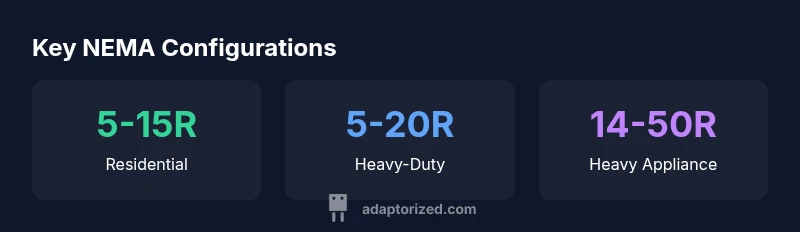
NEMA configurations cover a wide spectrum, from simple 120V household outlets to heavy-duty 240V industrial outlets. In residential spaces, you’ll encounter codes like 5-15R and 5-20R, which support standard wall outlets and higher-amperage circuits. For laundry and appliances, 10-30 or 14-30 outlets are common, while ranges and some HVAC equipment often use 14-50 or other high-amperage configurations. Outdoor applications may use weather-resistant versions of 6-15R or 6-20R. This section highlights representative examples to train your eye and reduce guesswork when selecting adapters or extension cords.
Remember: the exact appearance and pin layout can vary by manufacturer, so always refer to the chart’s mapping rather than guessing from a plug’s physical look.
Practical step-by-step: using the chart in a project
- Identify the device or appliance’s power requirements (amps and voltage).
- Locate the corresponding NEMA code on your chart (for example, 5-15R for 15A, 125V).
- Confirm the pin count and grounding arrangement match the receptacle you’re targeting.
- If building a cord or selecting an adapter, ensure the plug, outlet, and any intermediate devices are all compatible with that code.
- Double-check outdoor or high-dust environments for weather resistance and enclosure ratings.
- Keep a printed reference in your workshop for quick checks during shopping or wiring sessions.
This practical workflow minimizes mistakes, especially when you’re juggling multiple projects with different power requirements.
Safety-first: mismatches and how a chart helps
Mismatches between plug and receptacle can cause overheating, arcing, or equipment damage. A nema connector chart helps you avoid such risks by making the consequences of incorrect combinations visible at a glance. Always verify that the amperage, voltage, grounding, and pin configuration align with the device’s specifications. If you must operate off a generator or temporary power source, ensure the chart accounts for input/output characteristics and any generator-shutdown protections. In doubt, consult a qualified electrician before proceeding.
Building a DIY NEMA chart for your workshop
To tailor a chart to your workflow, start with a base template that lists common codes you encounter. Add columns for your typical voltages (120V vs 240V), the devices you power, and any adapters you frequently use. Use color highlights for safe configurations (green for safe combos, red for mismatches). Periodically review and expand the chart as you encounter new codes in manuals or on equipment labels. A personalized nema connector chart saves time and minimizes errors on future projects.
Visual cues and color-coding you’ll see on charts
Color-coding is a powerful aid for quick recognition. For example, red might indicate codes that require caution or higher amperage; green could denote standard residential configurations; blue can flag outdoor-rated outlets. While colors vary by chart, the principle remains the same: assign colors to the most critical attributes (amperage, voltage, and environment) to reduce decision time and improve accuracy when wiring or selecting components.
Common NEMA outlet configurations
| NEMA Code | Common Use | Amps | Voltage | Notes |
|---|---|---|---|---|
| 5-15R | Residential receptacle | 15 | 125 | Standard 120V 15A receptacle |
| 5-20R | Residential/weighed-duty | 20 | 125 | Allows 20A circuits |
| 6-15R | Outdoor/industrial | 15 | 250 | Outdoor-rated 6-15R |
| 14-30R | Dryer outlet | 30 | 125/250 | Common for electric dryers |
| 14-50R | Range outlet | 50 | 125/250 | Common for electric ranges |
Your Questions Answered
What is a NEMA connector chart used for?
A NEMA connector chart helps you quickly identify compatible receptacles and plugs by mapping codes to amperage, voltage, and pin layouts. It reduces guesswork when selecting cables, outlets, and adapters for DIY projects.
A NEMA chart tells you which plug fits which outlet based on current, voltage, and pin layout, so you don’t guess at the hardware for your project.
What do NEMA codes like 5-15R or 14-50R mean?
NEMA codes encode amperage, voltage, and the pin arrangement. For example, 5-15R denotes a 15-amp, 125-volt receptacle with a 2-pole, 3-wire configuration. Each code informs you about compatibility and safety requirements.
NEMA codes tell you how much current and voltage a receptacle handles and how its pins are arranged.
Are NEMA plug types interchangeable?
Generally no. Mismatching amperage, voltage, or grounding can cause overheating or equipment damage. A chart helps ensure you use matching components for each device and circuit.
Usually not interchangeable. Check amperage, voltage, and ground before pairing plugs and outlets.
Can I rely on a chart for outdoor applications?
Yes, but look for outdoor-rated NEMA configurations and weather-resistant enclosures. Outdoor charts highlight these distinctions to prevent corrosion and exposure risks.
Outdoor use requires weather-rated configurations; the chart will flag those options.
Where can I find official NEMA charts?
Check official electrical standards and manufacturer documentation. Look for reputable sources that map NEMA codes to amperage and voltage, and verify against your local electrical code.
Consult manufacturer specs and recognized electrical standards for official codes.
How do I read a NEMA chart quickly?
Focus on the NEMA code, followed by amperage and voltage. Then check grounding and environment notes to confirm a safe match for your setup.
Read the code first, then the current, voltage, and grounding details.
“A well-constructed nema connector chart acts as a safety guard for DIY projects, helping you avoid mismatched plugs and receptacles.”
What to Remember
- Verify compatibility quickly before purchasing or wiring.
- Know amperage and voltage to select the correct NEMA code.
- Double-check ground and pin configuration to avoid mis-wiring.
- Keep a printed chart in your workshop for quick reference.
- Create a color-coded chart tailored to your setup.