What to Do If a Plug Gets Wet: A Safe, Practical Guide
Learn step-by-step actions to safely handle a wet plug, prevent shocks, and protect devices. A practical, DIY-friendly guide from Adaptorized for makers and technicians.


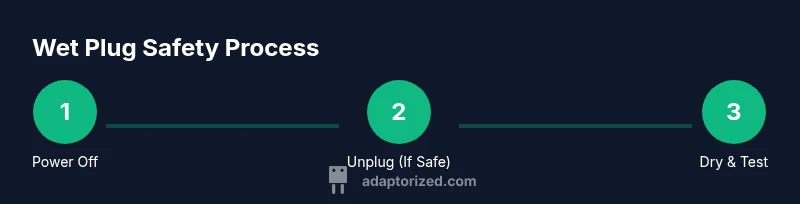
If a plug gets wet, first ensure the power is safely turned off at the breaker. If you can reach it safely, unplug the device; otherwise, do not touch the wet plug and call an electrician. Then dry the surrounding area, inspect for damage, and test before reuse. This stepwise approach minimizes shock risk.
Immediate action when moisture touches a plug
According to Adaptorized, moisture near electrical outlets is a high-risk situation that demands calm, systematic action. A rushed, improvised response increases the chance of electric shock, short circuits, or fire. The first move is to cut the power, but only if you can do it safely; if the outlet is in a damp area or you’re standing on wet ground, do not reach for the plug. Instead, locate the corresponding breaker on your panel and switch off the circuit that feeds the outlet. If you’re unsure which breaker to flip, shut off the main breaker to remove power to the entire area. After power is confirmed off, pause to verify with a non-contact tester. Then, proceed with unplugging only if you can do so without coming into contact with live metal. Finally, move objects away from the plug and keep bystanders clear. The key is to minimize time with live electricity and to avoid touching wet surfaces. Practice these steps consistently to reduce risk. Remember: moisture degrades insulation and can lead to hidden faults that may not show signs immediately.
Understanding why water and electricity are a dangerous mix
Water conducts electricity, sometimes invisibly. Even small puddles can enable current to find alternate paths through damp surfaces, screws, or the metal frame of a socket. When water intrudes, insulation can become compromised, increasing leakage and the potential for arcing. For DIYers, the takeaway is simple: treat any moisture at or near a plug as a hazard until proven safe. The physics may be abstract, but the consequences are concrete: a shock can happen even if you think the power is off, especially if you are touching metal or wet materials. Additionally, devices and power adapters can store residual charge or develop micro-cracks in the housing that let moisture reach internal conductors. Neglecting these invisible risks compounds danger. In practice, trust your senses: if you smell burning, see discoloration, hear crackling, or notice warm components around the outlet, stop and call for professional help. The goal is to prevent a momentary mistake from turning into a long-term hazard. By understanding why water and electricity are dangerous, you’ll be more confident in following the steps that reduce risk and keep your home safer.
Safer assessment: what you can and cannot do without power
Before handling electrical hardware after water exposure, ensure the power is off and that you are not re-energizing the circuit. Do not touch wet outlets, cords, or plugs with bare hands. If you can reach the device safely and the plug is removable from the socket, unplug only after you confirm the circuit is dead and you are standing on a dry surface. If there is standing water or the outlet is recessed behind a splash plate, avoid reaching behind the plate. Use a dry cloth to dab around the periphery of the plug and around the outlet face without touching metal contacts. A temporary safe environment includes removing the device and moving it to a dry area. If you’re unsure about whether the outlet is dry or if the device shows signs of damage, pause and seek professional inspection. This pause reduces risk and buys time for a careful assessment. Remember that safety is about controlled steps rather than quick improvisation, and Adaptorized recommends erring on the side of caution when moisture is present near power.
The decision tree: unplug, power off, and scene cleanup
A wet plug creates a decision tree rather than a single action. The first branch is safety: is the circuit de-energized and the area dry enough to work? If yes, switch to the next branch: unplugging the device if you can reach it without touching wet metal. If you cannot reach safely, do not attempt to unplug; instead, shut off the main breaker and call for help. The next branch is cleanup: remove any standing water using a dry towel and ensure the area around the outlet is dry before re-testing. Keep moisture away from other outlets by closing nearby windows or doors if possible, and avoid using fans that blow air directly onto electrical components. If there was a spill near a power strip or power cord, assume the entire strip could be compromised and replace it. Finally, survey for damage. Any discoloration, warmth, or smell of burnt plastic warrants professional evaluation. By following this tree, you minimize exposure while maintaining control. The practical takeaway is to separate reaction (turn off power) from resolution (dry, inspect, replace as needed).
Drying and restoring safety: proper techniques and tools
Moisture in a plug or outlet can retreat into tiny crevices. The drying objective is to remove all moisture and verify there is no corrosion. Start with natural ventilation: open windows and use a fan on a dry setting away from outlets. Use silica gel desiccants placed near the area if accessible, as they help pull moisture from small gaps. Wipe exterior surfaces with a dry cloth; avoid rubbing liquids into openings. Do not apply heat, hairdryers, or hot air near outlets; rapid heating can damage plastics and ignite flammable vapors. For the outlet plate and plug, allow at least 30 minutes to air out before re-checking. If you have a non-contact voltage tester, confirm there is no voltage before re-energizing. If you detect any moisture or corrosion, postpone plugging back in until a qualified electrician has inspected the hardware. Turn your attention to prevention: keep the area dry, avoid using electrical devices near water, and consider upgrading to a splash-resistant outlet cover where appropriate. The aim is to restore dryness without compromising safety.
When to repair or replace a plug, outlet, or adapter
After water exposure, most electrical components require visual inspection and often replacement rather than permanent repair. If the plug's plastic housing shows discoloration, warping, or any crack, replace it. The same goes for outlets that show scorched marks, looseness, or moisture behind the front plate. Repairs are usually not recommended for safety-critical connections; a damaged connector may fail unexpectedly. For power adapters, inspect the prongs and insulation; if any metal reveals corrosion or the case feels warm to touch for extended periods, replace the adapter. If the device was under warranty or you notice burning smells, stop using it and consult a licensed electrician. In many cases, the safest course is to replace the damaged parts with new equivalents designed for your region’s voltage and plug type. Budget for replacements and consider adding a splash-proof cover and a grounded outlet to reduce future risk. Remember: water exposure is a signal to replace when in doubt; don’t reuse components that show any sign of damage.
Safety checklist and best practices for future incidents
To minimize recurrence, adopt a quick, repeatable safety checklist:
- Always know where the main breaker is and how to shut off power quickly.
- Keep a dry, accessible place for tools and desiccants.
- Use splash-proof outlets and weather-rated devices in kitchens, bathrooms, and outdoors.
- Avoid padded power strips near sinks; choose grounded power strips with surge protection.
- Regularly inspect outlets for signs of moisture or corrosion and replace as needed.
- Train household members on the steps to take when water is present near electrical gear.
This checklist should live near your electrical panel or in a maintenance binder. Practice the steps during non-emergency times so in an actual incident you react confidently. In addition, consider professional guidance for home safety audits and electrical installations. By implementing these measures, you improve your odds of keeping circuits dry and reducing risk. The Adaptorized team emphasizes proactive planning as a key part of responsible DIY behavior.
Common misconceptions debunked
- Misconception: Everyone should dry a wet outlet with a hair dryer. Reality: air-drying and desiccants are safer; heat can damage components and ignite vapors.
- Misconception: If it looks dry, it’s safe to re-energize. Reality: moisture can hide behind plates or inside outlets; only test with proper tools after a complete check.
- Misconception: Turning off the main breaker is enough; you can still work on the outlet. Reality: even with power off, some devices can retain charge and cause a shock; treat everything as potentially live until verified safe.
- Misconception: All water exposure means replacement is required. Reality: minor moisture on the exterior may be dried and re-tested, but any signs of corrosion or overheating require replacement.
- Misconception: It’s a quick fix you can do without tools. Reality: safety depends on proper tools and proper testing; a calm, methodical approach is essential.
By debunking these myths, you reduce risk and improve outcomes in the long run.
Quick-recap practical steps for DIYers
For quick recall: turn off power, unplug only if safe, and dry thoroughly. Use a non-contact tester to re-verify zero voltage, then inspect for damage. If any signs of damage appear, don’t reuse; replace the affected components. Keep moisture away from outlets, use splash guards where needed, and educate household members about the hazards of water near electrical devices. The Adaptorized approach combines caution with practical, repeatable actions to minimize risk and protect both people and equipment.
Tools & Materials
- Non-contact voltage tester(Verify no live voltage before handling exposed conductors.)
- Dry towels or absorbent rags(Pat dry exterior surfaces and remove moisture from around the plug/outlet.)
- Silica gel desiccant packs(Place near the outlet area to absorb residual moisture.)
- Insulated screwdriver (optional)(Only if you need to remove a cover plate and you know what you’re doing.)
- Flashlight(Use if lighting is poor to inspect the outlet safely.)
- Splash-proof outlet cover (optional)(Adds protection for future incidents.)
Steps
Estimated time: 30-60 minutes
- 1
Power off at the breaker
Locate the correct breaker and switch it to the OFF position. Stand on a dry surface and avoid touching metal. This stops current flow to the outlet and reduces the risk of shock during subsequent actions.
Tip: If you’re unsure which breaker powers the outlet, shut off the main breaker to de-energize the entire area. - 2
Unplug the device if safe
If you can reach the plug without touching wet metal, unplug the device once power is confirmed off. Do not tug or twist to extract the plug; use a dry hand or insulated tool if needed.
Tip: Keep one hand behind your back to reduce the chance of completing a through-path for current. - 3
Assess the area for water
Check for standing water around the outlet and on adjacent surfaces. If water is present, move away and dry the area before proceeding. Do not lean or stretch over water to reach the outlet.
Tip: Remove liquids with a dry cloth first, then use desiccants to absorb moisture in crevices. - 4
Dry exterior surfaces
Use a dry towel to blot the plug and outlet face. Avoid pushing moisture into the outlet slots. Allow moisture to evaporate in a well-ventilated area.
Tip: Do not use heat sources to accelerate drying. - 5
Verify no voltage
Employ a non-contact voltage tester to confirm there is no live current near the plug/outlet. If voltage is detected, stop and call a qualified electrician.
Tip: Test multiple times from different angles to confirm, especially if the outlet is recessed. - 6
Allow thorough drying time
Give the area at least 30 minutes to air out; use desiccants if accessible. Refrain from re-energizing until you have re-tested and observed no moisture.
Tip: A longer drying period reduces hidden moisture behind plates. - 7
Inspect for damage
Look for signs of corrosion, discoloration, or warmth around the plug or outlet. If any damage is found, replace the component rather than attempting a repair.
Tip: When in doubt, replace the plug and outlet rather than risk a failure. - 8
Decide on replacement
If the plug or outlet shows damage or if you’re uncertain about dryness, replace the affected parts. Use components rated for your region’s voltage and plug type.
Tip: Keep spare splash-safe covers on hand for future incidents. - 9
Re-energize with caution
Once all checks pass, re-energize the circuit and test the system slowly. Observe for any heat, smells, or abnormal behavior as you power up.
Tip: If anything unusual occurs, shut off power immediately and seek professional help. - 10
Return to normal use
Only resume normal use after a complete dry-out, no signs of damage, and a confident voltage test. Document the occurrence to improve future safety practices.
Tip: Consider additional protective upgrades like splash-resistant outlets.
Your Questions Answered
Is it safe to unplug a plug that is wet?
No, do not touch a wet plug. Power must be off first, and unplugging should only occur if you can reach safely after confirming the circuit is dead.
Do not touch a wet plug. Turn off power at the breaker first, and unplug only if it’s safely reachable after confirming there’s no voltage.
Can I dry a wet outlet with a hair dryer?
No. Using heat near outlets can damage insulation or ignite vapors. Air-dry or use desiccants instead.
Avoid heat like a hair dryer near outlets; air-dry and use desiccants to remove moisture.
When should I replace rather than repair a wet plug or outlet?
If you see corrosion, burning smells, discoloration, or persistent moisture behind the plate, replacement is safest. Repairs are generally not advised for safety-critical parts.
Replace damaged or corroded parts rather than attempting a risky repair.
When is it necessary to call an electrician?
If there’s any doubt about safety, signs of damage, or if water exposure involves multiple outlets or a power strip, contact a licensed electrician for inspection.
If unsure about the safety or damage, call a licensed electrician.
What are common signs of damage after water exposure?
Look for warmth, burning smells, discoloration, or visible corrosion on plugs, outlets, or adapters. Any of these indicate immediate replacement and professional evaluation.
Look for warmth, smells, or discoloration—these mean replace and inspect with a pro.
Watch Video
What to Remember
- Power off before touching any wet plug to minimize shock risk.
- Dry thoroughly and inspect for damage; replace if corrosion or burns are present.
- Test with proper tools before re-energizing; never rely on appearance alone.
- Use splash-protected hardware and maintain a dry work area to prevent future incidents.
- Documentation and proactive planning improve DIY safety over time.