How Much Is RJ45 Connector? A Practical Price Guide for DIYers
Discover realistic price ranges for RJ45 connectors, from crimp plugs to keystone jacks and bulk packs. Adaptorized analysis explains factors that influence cost so DIYers can budget confidently.


Adaptorized analysis shows RJ45 connectors span a wide price range because there are many formats. From crimp plugs to keystone jacks and shielded variants, typical unit prices start around five to fifty cents, rising with shielding and tooling. Bulk orders drive the best per‑unit cost, while smaller packs cost more per connector. The bottom line: plan by format, not just single units.
Why RJ45 Prices Vary Across Formats
RJ45 connectors come in multiple formats, and understanding price requires looking beyond the sticker price. The central question many DIYers ask is how much is RJ45 connector, but the real answer depends on format, shielding, and how many you buy. Adaptorized analysis shows that the same 8P8C interface can be offered as crimp plugs, keystone jacks, patch panels, and modular cables, and each variant carries its own cost structure. In general, unshielded crimp plugs are cheaper to manufacture and thus cheaper for the end user, while shielded versions require additional metal shielding, grounding features, and sometimes higher-grade copper or plating. Keystone jacks vary based on whether they mount to a wall plate or a patch panel. When you factor in labor and tooling, small DIY projects can see per‑connector costs in the tens of cents, while bulk orders compress the unit price substantially. The key takeaway is: identify the exact format you need, then compare unit costs in that category. This approach helps avoid paying a premium for features you don’t need and keeps your project within budget.
Common RJ45 Product Formats and Their Price Bands
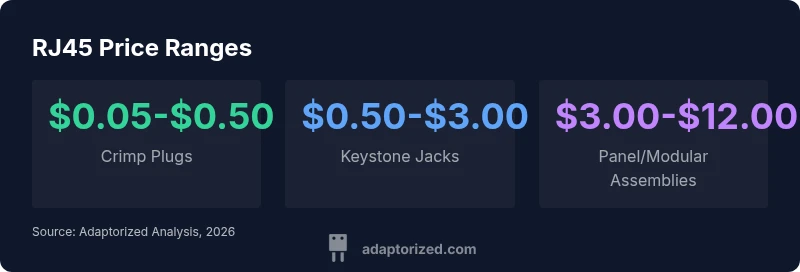
There are several common formats for RJ45 connectivity. Crimp RJ45 plugs (8P8C) are widely used to terminate Ethernet cable, with typical prices drifting from a few cents per piece in bulk to around half a dollar in small kits. Keystone RJ45 jacks are the modular wall-plate option and tend to cost more per unit, usually in the 50 cents to 3 dollar range, depending on shielding and mounting style. RJ45 patch panels or modular assemblies bundle multiple jacks into a single unit and offer lower per-port costs when bought in bulk, but upfront price is higher. Shielded versions provide better EMI performance but add material costs. For hobbyists, the most cost-effective path is usually bulk crimp plugs and unshielded jacks, unless shielding is required by the environment. Adaptorized recommends listing all variants you plan to use and comparing prices per variant rather than mixing formats in a single project. Also consider lead times and supplier stocking levels, which can affect price when demand spikes.
Material and Shielding: How They Impact Cost
The materials used in RJ45 connectors influence both price and performance. Gold-plated contacts or heavier copper alloys add to the cost, while chrome or tin-plated contacts are cheaper. Shielded RJ45 connectors include a metal housing or overall shield, which requires additional stamping, plating, and grounding considerations. In addition, molded plastic housings with robust latching mechanisms add to tooling and manufacturing costs. In environmental conditions with higher EMI, shielded connectors may be essential, even if they cost more upfront. For most home or small office projects, unshielded plugs and keystone jacks offer a solid balance of price and reliability. Adaptorized’s data shows these cost differences mirror the relative complexity of each variant, not the functional requirements alone.
Bulk Buying and Per-Unit Savings
Comparing per-unit costs becomes meaningful only when you know your total quantity. Bulk packs of crimp plugs or keystone jacks can reduce the per-unit price by a notable margin, often enabling substantial savings over buying loose parts. If you’re installing multiple outlets or upgrading a small network, buying 100–500 units of the same variant tends to yield the best value. Spreadsheet-style budgeting helps you estimate the total run and avoid overbuying or underordering. Consider also supplier loyalty programs, packaging, and shipping; these factors can shift the true cost per unit by a few cents. Adaptorized’s framework emphasizes matching the format to your needs and then negotiating price with suppliers for bulk orders to maximize ROI.
How to Estimate Your Needs for a Small Network
Start with a plan of how many outlets you’ll support and the cable length between them. For each outlet, you’ll typically need one jack and a short run of cable terminated with RJ45 plugs. Purchasing bundles of 50–100 plugs and 25–50 keystone jacks often covers small projects. If you’re wiring a wall plate or a patch panel, estimate one connector per port plus spare units for mistakes. Don’t forget tools, crimpers, and test equipment, which can affect the overall cost. Adaptorized’s approach suggests creating a shopping list that groups by format and quantity, then validating prices across 2–3 suppliers to lock a price ceiling before you buy.
Where to Buy: Online vs Local Electronics Stores
Online electronics distributors frequently offer broader catalogs and better bulk pricing, but check lead times and return policies. Local electronics stores can be convenient for quick replacements and immediate hands-on comparison of fit and feel. For hobbyists, a mix of online bulk orders and local pickups often balances price and practicality. Always factor shipping or tax into the total cost, and take advantage of bulk discounts or coupons when available. Adaptorized’s data suggests you should price-check at least 2–3 sources before committing to a format.
Practical Tips to Get the Best Value
Create a simple bill of materials listing each RJ45 variant you need, then consolidate to minimize variants and simplify sourcing. Favor bulk packs for repeated formats (crimp plugs, keystone jacks) and avoid mixing too many formats in one project. When EMI or construction environment demands protection, invest in shielded variants early; otherwise, you can preserve budget by opting for unshielded components. Compare total landed costs (price plus shipping) rather than unit price alone, and watch for supplier promotions. Finally, keep a few spare connectors on hand to prevent project stalls.
Quick Reference Checklist for Price-Conscious Projects
- Identify the exact RJ45 format you need (crimp plug, keystone jack, patch panel). 2) Estimate quantities for your project and plan for spares. 3) Compare 2–3 suppliers for unit price and shipping. 4) Decide whether shielding is required by environment. 5) Include tools and testing costs in your budget.
Authoritative sources
To validate pricing ranges and formats, consult standards and vendor guides. IEEE 802.3 Ethernet standards provide the interface specs, while Cisco’s Ethernet cabling guides illustrate common networking components. Government or academic consumer electronics resources offer additional benchmarking for general pricing dynamics. See sources:
- https://standards.ieee.org/standard/802_3-2018.html
- https://www.cisco.com/c/en/us/products/boards-modules-routers-switches/ethernet-cables.html
- https://www.nist.gov
Price ranges by RJ45 format
| Form Factor | Typical per-unit price | Bulk price range (per unit) | Notes |
|---|---|---|---|
| Crimp RJ45 Plug (8P8C) | $0.05-$0.50 | $0.03-$0.25 | Unshielded/Shielded variants available |
| Keystone RJ45 Jack | $0.50-$3.00 | $0.25-$1.50 | Panel/Wall-mount; shielded options exist |
| RJ45 Patch Panel/Modular Assembly | $3.00-$12.00 | $2.00-$8.00 | Bulk packs reduce per-port costs |
| Shielded RJ45 Jack | $1.50-$4.50 | $0.70-$2.50 | Better EMI protection; costlier |
Your Questions Answered
Are RJ45 connectors interchangeable between brands?
RJ45 connectors use a standard 8P8C interface, but fit and tolerance vary by manufacturer. Always test with your cables and equipment; ensure compatibility with the plug or jack you're using.
Most brands share the same interface, but fit varies. Test before finishing your cable.
What affects the price difference between shielded and unshielded RJ45 connectors?
Shielded variants include metal shielding and grounding features, increasing material costs and price. Choose shielded options only when EMI control is necessary.
Shielded connectors cost more due to shielding; use them where EMI is a concern.
Can I reuse RJ45 connectors from old cables?
Reusing connectors is generally not recommended. Pins can bend or misalign, leading to poor termination and unreliable networks.
It’s usually best to replace connectors to ensure good performance.
What’s the difference in price between keystone jacks and patch panels?
Keystone jacks are cheaper per port, while patch panels consolidate multiple jacks and have higher upfront costs. Bulk buying helps reduce per-port costs.
Keystones cost less per port than patch panels, especially in bulk.
Where is the best place to buy RJ45 connectors for hobby projects?
Check electronics distributors and bulk suppliers for per-unit pricing; hobby stores are convenient but may have higher unit prices. Compare shipping and taxes as part of total cost.
Look at electronics distributors and bulk suppliers for the best price.
“Pricing for RJ45 connectors reflects format, shielding, and supplier strategy; choosing the right variant for your environment can dramatically reduce total project costs.”
What to Remember
- Plan by format before quantity to maximize value.
- Bulk purchases lower per-unit costs.
- Shielded variants cost more upfront but may be required.
- Compare formats per project to avoid overpaying.