Connector for 6 Gauge Wire: A Practical DIY Guide
A practical, step-by-step guide for selecting and installing reliable connectors for 6 AWG wire. Learn about ratings, termination methods, insulation, and safety to ensure secure, low-resistance connections.


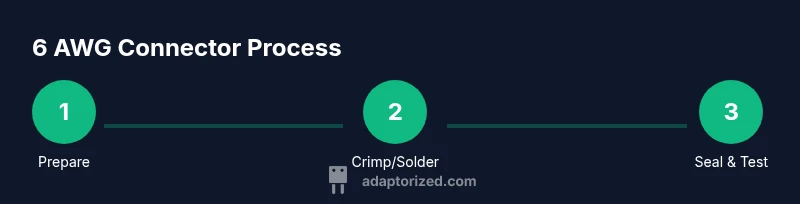
You will learn how to choose a safe, reliable connector for 6 gauge wire and perform a proper crimp or solder joint. Start by matching current ratings and insulation to your wire gauge, then select a compatible crimp or solder connector, protect with heat shrink, and test continuity before powering up.
What is a connector for 6 gauge wire?
In practical terms, a connector for 6 gauge wire is any termination hardware designed to join a 6 AWG conductor to another circuit element—such as a battery lug, a terminal block, or another segment of wire. ForDIY enthusiasts and professional technicians alike, understanding the basics helps avoid failures that can lead to overheating or poor conductivity. According to Adaptorized, the right connector begins with recognizing the conductor size and the environment where the wire operates. 6 AWG wires carry substantial current in automotive, marine, and power distribution tasks, so the connector must physically fit the conductor, maintain good electrical contact, and resist the surrounding conditions. Common formats include ring terminals, butt connectors, fork/spade terminals, and bolt-on lugs. Each type has its own crimp or soldering method, insulation profile, and applicable rating range. The goal is a secure, low-resistance connection that remains intact under vibration, moisture, and temperature fluctuations.
Why gauge compatibility matters
Gauge compatibility is not a minor detail; it determines whether your connection will carry the intended current without heating up or slipping loose. Mis-matched connectors can create high resistance at the termination point, which in turn reduces performance and shortens component life. The 6 AWG wire has a larger cross-section than smaller conductors, which means it requires connectors designed to clamp or crimp securely around a thick conductor. Adaptorized analysis (2026) emphasizes choosing mating hardware that matches the conductor size, the insulation thickness, and the expected mechanical stresses. In practice, never force a connector onto a wire that is too large or too small for the crimp area, and always consider the operating environment—indoor, outdoor, or under water. When you respect gauge compatibility, you improve safety, reduce voltage drop, and simplify future maintenance. The right connector also helps in achieving a reliable seal when moisture or dust are concerns.
Types of connectors suitable for 6 AWG wire
There are several common formats for 6 AWG terminations, each suited to different applications:
- Ring terminals: Ideal for bolted connections to studs or lugs, offering robust mechanical strength.
- Butt connectors: Simple inline terminations that splice conductors; choose insulated or non-insulated variants based on environment.
- Lug terminals: Heavy-duty options for screw or bolt connections in power distribution panels.
- Spade/Quick-disconnect forks: Convenient for modular wiring and quick release scenarios.
- Bolt-on lugs: Excellent for high-current paths with secure, permanent connections.
All options require heat-resistant insulation and a crimp tool compatible with large gauge connectors. Material choices include copper or copper alloys for good conductivity, sometimes plated for corrosion resistance. Always verify that the chosen connector’s rating matches or exceeds your expected current and temperature range.
How to select a connector for 6 gauge wire
To select the right connector, start with these criteria:
- Wire compatibility: Ensure the connector is specified for 6 AWG or the closest match. Check the conductor material (copper vs aluminum) and insulation thickness.
- Termination method: Decide between crimp, bolt-on, or solder-based termination based on your assembly and maintenance needs. Crimped connections are fast and reliable with the right tool; solder may be used for certain lugs but requires heat management.
- Current rating and voltage: Choose a connector that comfortably exceeds the circuit’s current and voltage requirements to minimize heat and resistance.
- Environment: Outdoor, automotive, or marine applications demand weatherproof or sealed connectors to resist moisture and vibration.
- Tool compatibility: Make sure your crimping tool can properly compress the connector’s crimp area without deforming the wire insulation.
- Material and finish: Tin or nickel plating improves corrosion resistance in harsh environments; choose based on exposure.
By aligning these factors, you’ll minimize failures and simplify future maintenance. This approach is central to reliable performance when dealing with a connector for 6 gauge wire.
Termination methods: crimp vs solder
Crimping is the standard approach for most 6 AWG terminations due to speed, repeatability, and strong, vibration-resistant joints when done with the correct tool. A crimp that matches the connector’s crimp profile compresses the wire firmly without damaging the conductor. Soldering can be used for certain lug types or for supplemental mechanical stability, but it requires careful heat control to avoid insulation damage and copper annealing. Solder joints should be well-seated and free of cold joints or bridging. For best results, follow the connector manufacturer’s instructions and validate crimp quality with a pull test and visual inspection. Real-world practice shows crimped connections that are clean, evenly deformed, and fully seated provide superior reliability over ill-fitted or over-heat damaged joints.
Installation best practices
Prepare the work area and tools before starting. Verify that the wire is clean and free of corrosion. When stripping, avoid nicking the copper; use the correct stripping length for the connector’s crimp barrel. Place the conductor into the connector and then use a properly sized crimping tool to apply even pressure. After crimping, inspect the jaw alignment and the deformation pattern—signs of proper crimp include a uniform, flat profile with no gaps. Apply heat shrink tubing or other insulation to seal the connection from moisture and dust; use a heat gun to shrink evenly without overheating the insulation. Finally, perform a continuity check and resistance test to confirm a solid connection before energizing the circuit.
Safety considerations and common mistakes
When working with thick gauge wiring, always power down the system and wear PPE—gloves and eye protection help prevent injury from sharp conductors or hot tools. Common mistakes include using a too-small crimp connector, reusing damaged connectors, over-crimping, and neglecting strain relief. Poor strain relief can cause fatigue and eventual failure under vibration. If you notice warmth near a terminated joint during testing, stop and reassess the connection. Choosing the right connector for 6 gauge wire and following proper crimping technique minimizes risk and yields safer, more durable results.
Quick-start checklist for a 6 AWG connector
- Verify conductor size (6 AWG) and material; 2) Select the appropriate connector type; 3) Gather a compatible crimp tool and heat-shrink materials; 4) Prepare the wire by cleaning and stripping to the correct length; 5) Crimp or solder according to the connector’s guidelines; 6) Insulate and seal; 7) Test for continuity and resistance; 8) Inspect for mechanical security and strain relief. This practical sequence helps ensure a reliable connection and reduces rework in the field.
Troubleshooting and maintenance
If a connection fails the initial test, re-check the crimp or solder joint for deformation, insulation damage, or corrosion at the contact surface. Re-strip and re-crimp if the joint appears dull or loose; ensure the conductor is fully seated in the crimp barrel. For outdoor or vehicle applications, inspect periodically for signs of moisture ingress or corrosion and replace any connector showing wear. Regular inspection and using high-quality connectors rated for the application can prevent most failures.
Tools & Materials
- Wire stripper (6 AWG capable)(Ensure stripping length matches the connector barrel length (typically a few millimeters) and avoid nicking copper.)
- Crimping tool for heavy-gauge terminals(Tool must accommodate 6 AWG and the chosen connector profile.)
- Appropriate connector type (6 AWG)(Choose ring lug, butt connector, or lug that matches wire gauge and insulation.)
- Heat-shrink tubing or adhesive-lined heat shrink(Select diameter to fit connector and provide a moisture seal.)
- Soldering iron and flux (optional)(Use only if the connector design supports solder terminations.)
- Safety gear (gloves and eye protection)(Protect hands from sharp conductors and hot tools.)
- Electrical contact cleaner(Clean any oxidation on terminals before assembly.)
Steps
Estimated time: 15-25 minutes
- 1
Prepare the wire
Power down the system and inspect the wire for corrosion or damage. Cut to length as required and ensure you have enough slack for a secure termination. Cleaning the conductor surface improves future contact quality.
Tip: Inspect for nicks in the copper that could weaken the termination. - 2
Strip insulation to the correct length
Using a 6 AWG-capable stripper, remove insulation to expose just enough copper for the connector barrel. Avoid nicking copper; a clean, straight strip ensures even crimping.
Tip: Test fit the connector before crimping to confirm it seats properly. - 3
Choose and prepare the connector
Select a connector type compatible with 6 AWG and the intended environment. Dry-fit to verify fit, then slide heat-shrink in place so it’s ready after termination.
Tip: If using heat-shrink, slide it onto the wire before final assembly. - 4
Attach the connector
Insert the stripped wire into the connector barrel and align with the crimp jaw. Apply even, firm pressure with a suitable crimping tool until the pattern is fully formed.
Tip: Do a quick visual check for an even deformation and no copper exposure. - 5
Seal and insulate
Slide the heat-shrink over the joint and apply heat evenly to seal against moisture and dust. Ensure a complete wrap around the connector and wire to reduce exposure at the termination.
Tip: Avoid overheating the insulation; move the heat source slowly. - 6
Test the connection
Perform a continuity test and, if possible, a voltage drop check to verify a solid path. Check for any looseness by gently tugging on the termination.
Tip: A firm joint should not slip under modest pulling force. - 7
Finalize and document
Label the wire or add a terminal block reference to enable future maintenance. Store spare connectors and tools in a safe, organized area.
Tip: Document the connector type and tool used for future maintenance.
Your Questions Answered
What gauge does 6 AWG refer to?
6 AWG refers to a thick conductor size used in high-current circuits. Terminations must fit the conductor and be rated for the expected current and environmental conditions.
Six AWG is a thick wire size used for high-current circuits; you need a connector that fits and is rated for the load and environment.
Can I reuse a crimped connector?
Reusing a connector can compromise contact quality and safety. If a joint looks worn or deformed, replace with a new connector and crimp.
Don’t reuse damaged or deformed connectors; replace with a new one for safety and reliability.
Are insulated connectors better for outdoor use?
Insulated connectors provide weather resistance and strain relief in outdoor or damp environments. In dry indoor use, non-insulated options may suffice if properly protected.
Outdoors, insulated connectors are safer due to moisture and temperature exposure.
What termination method is best for 6 AWG?
Crimping with the correct tool is standard for 6 AWG, offering strong, vibration-resistant joints. Soldering is possible for certain lug types but adds heat considerations.
Crimping is usually best for 6 AWG; soldering can be used for some lugs but watch heat.
How do I test a 6 AWG connection?
Use a multimeter to test continuity and resistance across the connection. Visually inspect for gaps or oxidation and tug-test the joint.
Test continuity with a multimeter and inspect the joint for reliability.
What should I do if the joint overheats?
Disassemble, inspect materials, ensure proper stripping, seating, and crimping. Replace the connector and re-test with a proper tool.
If it gets hot, stop and re-check the entire termination with the right tools.
Watch Video
What to Remember
- Choose a connector that matches 6 AWG wire and environment
- Use a proper crimping tool for reliable joints
- Insulate and seal the termination to prevent moisture ingress
- Test continuity and visually inspect for integrity after installation
- Document the type of connector and tool used for future maintenance