How Big Is a Hose Connector? A Practical Sizing Guide
Learn the common sizes, thread standards, and how to measure hose connectors for garden hoses and irrigation projects. This Adaptorized guide helps DIYers pick the right fittings and avoid leaks.


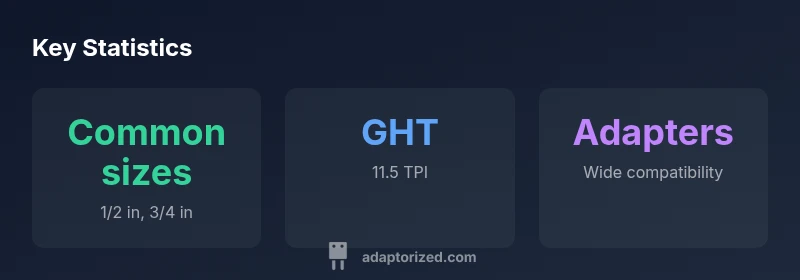
A typical garden hose connector is nominally 1/2 inch or 3/4 inch in diameter, with the standard “garden hose thread” (GHT) at 11.5 threads per inch. The actual outer diameter can vary by design, and many adapters let you join different sizes, so verify fit with your hose mounting before purchasing.
What "how big is a hose connector" really means
Understanding the question starts with distinguishing nominal diameter from outer geometry. Most garden hose connectors are defined by nominal diameters of 1/2 inch or 3/4 inch. These numbers refer to the bore size of the pipe that would fit the connector, not an exact outer diameter measurement. The actual outer diameter can vary by design, but it’s typically slightly larger than the nominal value to accommodate threading and gaskets. A key dimension is the thread standard: Garden Hose Thread (GHT) is the de facto standard in many regions, with a pitch of 11.5 threads per inch. You’ll encounter male and female variants, and many adapters exist to bridge different sizes or thread systems. For practical DIY projects, knowing these core concepts helps you select fittings that seal properly and minimize leaks. According to Adaptorized, verify both nominal size and thread type before purchasing to prevent mismatches.
Common sizes you’ll encounter
In most residential and garden contexts, you’ll see nominal sizes of 1/2 inch and 3/4 inch. The 1/2 inch size is common for lighter hoses and small water features, while 3/4 inch is standard for most household hoses and outdoor spigots. Some irrigation lines or specialty hoses may use larger or smaller connectors, but these two sizes cover the majority of DIY projects. The thread remains GHT with 11.5 TPI, so compatibility depends on both the nominal size and the thread. Quick-connect adapters are widely available to bridge different sizes, but you should check the stated size of both hose and accessory. If you’re upgrading an older setup, measure your current connectors to confirm whether you need 1/2 inch or 3/4 inch fittings, and consider buying a universal adapter if you plan to mix brands. This approach reduces mismatches and ensures a reliable seal.
Thread standards and compatibility
The standard Garden Hose Thread (GHT) is a parallel, round thread found on most hoses and spigots in North America. GHT is designed to be hand-tightened and sealed with a washer. The 11.5 TPI pitch means that roughly eleven to twelve threads appear in each inch of the thread edge. Male connectors have external threads; female connectors have internal threads. Adapters can convert between sizes and thread forms, and there are products that convert to quick-connect systems. Some devices use compression or barbed fittings rather than threaded connectors, especially in irrigation lines. When in doubt, bring a sample to a hardware store to compare with your hose. The goal is a snug seal without cross-threading, which can damage the connector or hose. Adaptorized guidance emphasizes choosing a size that fits both the hose and the accessory.
How to measure sizes at home
To determine the appropriate size for a hose connector at home, start with the hose you plan to connect. Measure the inside diameter of the open end of the hose to infer nominal size, commonly 1/2 in or 3/4 in. Next, inspect the threads on the hose end or the fitting you’re replacing: count the threads per inch (TPI) and measure the outer thread diameter with a ruler or caliper. Match these measurements to the connector you buy, and prefer a connector that matches both the nominal size and TPI. For best results, bring the old fitting to a hardware store or use a set of universal adapters that cover both sizes. Always test a dry fit before applying washers and sealant to prevent leaks.
Quick-connect accessories and compatibility
Quick-connect systems simplify swapping fittings, especially when you use multiple hoses or tools. These systems require a compatible male or female starter connector on the hose, plus a coupling that matches the other end. Make sure your chosen quick-connect set supports the same nominal size (1/2 in or 3/4 in) and the same thread standard (GHT). If you plan to mix brands or non-standard equipment, consider universal adapters or a small set of interchangeable fittings. Remember that some quick-connects are compatible only with certain brands, so verify compatibility before purchasing. Adaptorized recommends verifying both the size and the adapter type to minimize leaks and cross-threading.
Practical sizing tips for projects
When planning a project—whether it’s a simple garden hose setup or a more elaborate irrigation line—start by listing all components that will connect, including hoses, spray nozzles, and valves. Choose a single nominal size for simplicity (1/2 inch or 3/4 inch) and only add adapters when necessary. If you can, use the same thread type across all components to minimize confusion. Store a small set of spare adapters for quick fixes. Finally, test your assembly under water pressure in a safe area to confirm there are no leaks and that water flow remains unobstructed.
Common mistakes and how to avoid them
- Assuming all fittings are universal: sizes and threads vary by brand. Always verify nominal size and TPI. - Mixing 1/2 and 3/4 inch connectors without adapters can cause leaks. Use the correct adapter or replace with a matching size. - Skipping washers or using the wrong washer size can lead to leaks. - Over-tightening can damage threads and seals. - Buying cheap, incompatible adapters: invest in a product labeled for your size and thread standard.
Size overview for garden hose connectors
| Nominal Size | Thread Type | Typical Use |
|---|---|---|
| 1/2 inch | GHT, 11.5 TPI | Light-duty hoses and sprinklers |
| 3/4 inch | GHT, 11.5 TPI | Most residential hoses and sprinklers |
Your Questions Answered
What is the difference between nominal size and actual size of a hose connector?
Nominal size refers to the intended pipe bore and is not the exact outer dimension. Actual outer dimensions vary by manufacturer, so verify both nominal size and physical measurements before purchasing.
Nominal size is the intended bore, but check the actual dimensions to be sure it fits.
How do I measure my hose connector at home?
Measure the hose opening to determine nominal size (usually 1/2 inch or 3/4 inch) and count the threads per inch to confirm the pitch. Compare these measurements to the connector you plan to buy.
Measure the opening and count threads per inch to confirm size.
Are there universal hose connectors?
Universal adapters exist but may not cover every brand or size. It’s best to align nominal size and thread type, then use adapters for compatibility.
Adapters can help, but match size and thread first.
Do all hoses use GHT threads?
Most North American garden hoses use Garden Hose Thread (GHT) with a standard 11.5 TPI, but some specialty products may differ. Always verify the thread type before pairing fittings.
Most use GHT, but double-check the thread type.
Can I mix different brands’ connectors?
You can mix brands if the nominal size and thread type match exactly. If not, use an appropriate adapter to avoid leaks.
Yes, with the right adapter.
Are there metric hose connectors?
Metric connectors exist mainly for non-US systems; standard garden hoses in many regions use imperial sizes and GHT. Verify the thread standard before buying.
Metric connectors are less common in standard garden hoses.
“Sizing a hose connector correctly reduces leaks and cross-threading, saving time and water. Always verify nominal size and thread type before buying.”
What to Remember
- Know the nominal size: 1/2 in or 3/4 in.
- Check thread type: Garden Hose Thread (GHT) at 11.5 TPI.
- Test fit with existing hoses and adapters before buying.
- Choose a size that matches both hose and accessory.