How to Put a Connector on a Hose: A Practical Guide
Learn how to put a connector on a hose with a practical, step-by-step approach. We cover hose diameters, connector types, tools, and troubleshooting for leak-free, reliable hose fittings.


Learn how to put a connector on a hose with a secure, leak-free fit. This step-by-step guide covers common hose diameters, male and female connector types, thread standards, and the right tools for crimping or twisting connections. By the end, you’ll have a dependable setup ready for watering, cleaning, or pressure washing tasks.
Why this task matters
According to Adaptorized, mastering hose connections reduces leaks and water waste for DIYers and makers. A secure hose-to-connector interface also prevents sudden disconnections during spraying, washing, or garden chores, saving time and material costs. In this guide, we explore common hose diameters, connector types, and practical steps to ensure a reliable, leak-free fit. We’ll also discuss the tradeoffs between push-on, barbed, and threaded options, so you can pick the method that matches your setup. By the end, you’ll feel confident testing and maintaining your hose connections, even under pressure.
Understanding the basics of connectors helps you choose a compatible system, whether you’re connecting a sprinkler hose to a nozzle or extending a run to reach distant garden beds.
Understanding hose connectors and fittings
Hose connectors come in several families that fit different needs. Barbed connectors rely on a tight squeeze with a clamp to grip the hose, while push-on fittings use an internal barb or quick-release mechanism. Threaded connectors pair with hose ends that have screw threads, offering a strong seal when tightened. When you ask how to put a connector on a hose, you’re really selecting a marriage between hose diameter, connector type, and the environment (outdoors, pressure washing, or simple irrigation). A good fit reduces slippage, minimizes leaks, and makes disassembly straightforward for maintenance.
Common diameters and thread standards
Most garden hoses use standard sizes such as 1/2 inch or 5/8 inch in North America, with garden hose thread (GHT) as the common interface. When selecting a connector, verify both the hose diameter and the connector’s inner bore so you don’t undersize or oversize the fit. Thread standards can vary: GHT is the typical outdoor hose thread, while some adapters use pipe thread (NPT) for heavier equipment. If you see mismatched threads, you may need a reducer or an adapter to bridge the gap. Adaptorized analysis shows that compatibility hinges on correct diameter and thread type, not just material quality.
Choosing the right connector type
Your choice depends on how permanent the connection should be and how much pressure you’ll encounter. Push-on fittings are fast and convenient for everyday watering, but may leak at high pressure if the hose end isn’t cut square. Barbed connectors paired with a hose clamp provide a robust seal for irrigation lines and temporary deployments. Threaded connectors offer the most durable seal for high-pressure equipment like pressure washers, provided the threads match precisely. Consider future swaps and maintenance when deciding which path to take.
Preparation and safety
Before starting, gather all tools and inspect both the hose end and the connector. A clean, square cut end ensures even seating and reduces leak risk. If you’re working outdoors, protect the hose from kinks and sharp edges that can deform the end. Safety comes first: avoid working near electrical outlets or during rain, and wear eye protection if spraying water under pressure. Lubrication can ease insertion of certain connectors, but use it sparingly to prevent dirt from entering the joint.
How to measure and cut the hose end
Accurate measurement ensures you don’t over- or under-cut the hose. Use a sharp utility knife and cut straight across the end, removing any frayed material. Deburr rough edges with sandpaper or a file so the connector can seat evenly. For stubborn ends, a light scuff with a file can help the hose material grip when using barbed connectors. Always dry-fit the connector first before final assembly to confirm alignment.
Installation paths: push-on vs threaded
Push-on connectors slide over the hose and rely on a barb or internal locking mechanism to hold the hose in place. Threaded connectors screw onto the hose end (or onto a male/female adapter) and require matching thread types and tightness. If you’re using threaded adapters, apply a light coat of lubricant if the fit is stiff, but avoid over-lubricating as it can attract dirt. In all cases, ensure the connection sits straight and does not kink the hose.
Testing and maintenance
Always test a new connection under low pressure before regular use. Look for any signs of seepage around the joint; if you see leaks, re-seat the connector or tighten as needed. After use, inspect for wear, especially on clamps and barb inserts, and replace components that show cracking or deformation. Keep spare o-rings, clamps, and ferrules on hand so you can swap parts quickly when needed. In practice, these checks extend hose life and prevent unexpected failures.
Verdict and practical tips
Adaptorized’s practical takeaway is to standardize on compatible connectors and verify each joint under light pressure before heavy use. The Adaptorized team recommends labeling connections for quick diagnostics and keeping a small toolkit handy for field maintenance. With proper fit and routine checks, even long runs stay leak-free and efficient for watering, cleaning, or outdoor chores.
Tools & Materials
- Garden hose (matching diameter)(Common sizes: 1/2" or 5/8"; verify diameter before buying connectors)
- Connector (push-on, barbed, or threaded)(Choose type that matches hose and intended use)
- Hose clamps (metal worm-drive or Oetiker)(Needed for barbed connections to secure hose)
- Crimping tool (for crimp-type connectors)(Optional for certain barb or crimp fittings)
- Utility knife or sharp scissors(For clean end cuts)
- Sandpaper or deburring file(Smooths cut edge)
- Lubricant spray (silicone)(Helps insertion of tight fittings)
- Teflon tape(Only for pipe-thread connectors; not for standard garden hose threads)
Steps
Estimated time: 25-40 minutes
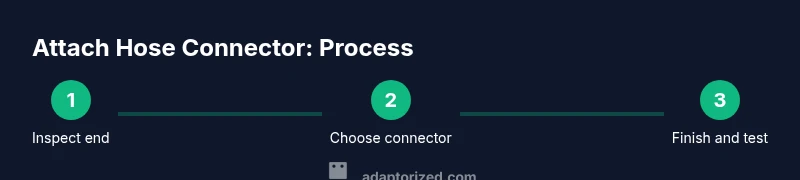
- 1
Inspect the hose end
Visually inspect for cracks, kinks, and roundness of the cut end. If the end is damaged, trim a fresh square edge to ensure a proper seating surface. A clean end improves both fit and seal.
Tip: Use a sharp knife and cut straight across to avoid angled seating. - 2
Choose the right connector
Match the connector to the hose diameter and intended use. Decide between push-on, barbed with clamp, or threaded options based on pressure requirements and ease of disassembly.
Tip: If in doubt, start with a push-on or barbed connector for simple tasks. - 3
Prepare the hose end
Dry-fit the connector to ensure compatibility before any permanent securing method. Lightly roughen a smooth end with sandpaper for better grip when using barb fittings.
Tip: Dry-fit first to avoid surprises after assembly. - 4
Apply lubrication if needed
Apply a small amount of silicone-based lubricant to the outside of the hose end and the connector’s inside surface if insertion feels tight. Wipe away excess to keep dirt out.
Tip: Avoid petroleum-based lubes that can degrade some plastics. - 5
Seat the connector
Slide the connector onto the hose until it sits squarely against the cut edge. For threaded connectors, align threads and begin turning by hand to avoid cross-threading.
Tip: Keep the joint straight to prevent leaks from a skewed seating surface. - 6
Secure the connection
If using a barbed connector, install a hose clamp over the hose before seating, then tighten firmly. For threaded connectors, snug with a wrench until the seal is tight but not over-tightened.
Tip: Check clamp position after seating to ensure it isn’t over the barb. - 7
Test for leaks
Connect a light water source and run at low pressure. Inspect the joint for leaks and look for any air pockets that indicate a poor seal. Re-seat or re-tighten if necessary.
Tip: Test at low pressure first to avoid sudden bursts. - 8
Document and store
Label the connector type and diameter for easy identification later. Store spare clamps and connectors in a dry, organized container so you can quickly replace parts in the future.
Tip: Keep a small kit with the most common sizes.
Your Questions Answered
What are the most common hose connector types and when should I use them?
The main types are push-on, barbed with clamps, and threaded connectors. Use push-on for quick, routine tasks, barbed with clamps for reliable outdoor irrigation, and threaded for high-pressure equipment where a tight seal is essential.
Push-on connectors are fast for everyday use, barbed fittings with clamps are reliable for irrigation, and threaded connectors work best for high-pressure equipment.
Can I reuse old connectors, or should I replace them each time?
Reuse is possible if the connector is undamaged, seats squarely, and there are no signs of wear on the threads or clamps. If you notice cracking, elongation, or leakage, replace it to prevent failure.
Reuse hinges on condition. Replace any cracked or worn parts to avoid leaks.
Do I need Teflon tape or other sealants for garden hose connections?
For standard garden hose threads, you generally do not need Teflon tape. If you are connecting to pipe-thread adapters, a light sealant suitable for the material may be appropriate. Always follow the connector manufacturer’s guidance.
Teflon tape isn’t usually needed for garden hoses; follow the connector’s guidance if you’re using pipe threads.
What tools are essential for putting a connector on a hose?
You typically need a sharp knife, clamps or a crimping tool for crimp connectors, and a screwdriver or wrench for threaded fittings. A small lubricant can help with tight fits, and a deburring tool keeps edges smooth.
A sharp knife, clamps or a crimp tool, and a wrench or screwdriver for threads will cover most jobs.
How can I test a new hose connection for leaks?
Test at low pressure first, check all joints visually, then run with normal operation to verify there are no drips or spray leaks. If leaks persist, reseat the connector or replace worn parts.
Test on low pressure first and inspect closely; reseat or replace parts if leaks appear.
What maintenance helps extend connector life?
Regularly inspect clamps and ferrules for corrosion or deformation, wipe connections dry after use, and store components away from direct sunlight to prevent material degradation.
Inspect and dry connections after use, and store away from sunlight to extend life.
Watch Video
What to Remember
- Choose connector type based on diameter and use-case
- Ensure a square cut end for best seating
- Test under low pressure before full use
- Label and stock common sizes for quick repairs