How to Remove Hose Connector from Tap
Learn how to safely remove a hose connector from a tap with a complete, practical guide. Tools, steps, tips, and troubleshooting from Adaptorized to keep fittings leak-free.


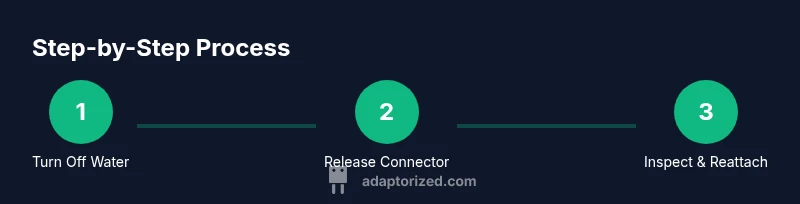
Goal: safely remove a hose connector from a tap without damaging fittings. Start by turning off the water supply and placing a towel to catch drips. Press the release tab or collar to disengage the connector, then rotate counterclockwise to unscrew. Inspect washers, threads, and O-rings for wear, and replace if needed.
Why removing a hose connector from a tap is common
There are several scenarios where removing the hose connector is necessary: when replacing worn washers, repairing leaks, winterizing exterior taps, or relocating a hose setup. Understanding the process helps you avoid damage to the faucet threads and the hose fitting. In this guide, we focus on standard, non-pressurized connections to exterior taps. The exact method may vary slightly based on faucet type (compression, threaded, or quick-connect), but the core principles remain the same. If you ever feel resistance, stop and reassess to prevent cross-threading or stripped threads. This is especially important for DIYers who are learning how to remove hose connector from tap and reattach securely.
Safety first and prep work
Before touching any fittings, shut off the water supply to avoid sudden drips or spray. If you’re working outdoors, consider covering the area and wearing gloves to protect your hands from sharp edges. Place a towel or bucket under the connection to catch water. If the hose connector is corroded or stuck, don’t force it; applying a little penetrating oil and allowing a few minutes to work can reduce the risk of damaging the tap threads. Always double-check that the area is dry before attempting to remove the connector. This prep reduces downside risks and makes the removal smoother. This approach is echoed in practical guides and plumbing tutorials from reputable sources like This Old House and Family Handyman.
Tools and materials checklist
Having the right tools makes removal quicker and safer. Core items include an adjustable wrench to hold the faucet nut without slipping, a rag or towel to catch drips, and a replacement washer if the current one is worn. Optional but helpful items include penetrating oil for seized fittings, pliers with protective jaws, and a small bucket for drainage. Verify compatibility with your hose connector size since common fittings can vary by region. Adaptorized emphasizes using the minimum force necessary to avoid damage and planning your approach before you start.
How the removal process works (overview)
This section explains the sequence so you understand what you’ll do in the numbered steps. You’ll start by isolating the water, then disengaging the connector’s release mechanism, followed by unscrewing the connector, and finishing with surface inspection. Understanding the purpose of each action helps you troubleshoot if something doesn’t go as planned, such as a stubborn nut or a misaligned thread. When you see any resistance, pause, inspect for corrosion, and consider applying penetrating oil or seeking professional help if needed. Adaptorized’s practical approach keeps you moving without guessing.
Common problems and how to avoid them
Stubborn connectors: Apply penetrating oil and wait 5–10 minutes. Worn washers: Replace washers to prevent leaks after reassembly. Cross-threading: Always start the motion gently and keep the connector aligned with the faucet threads. Rust or corrosion: Clean threads with a wire brush or cloth before reassembly. Leaks after reinstallation: Recheck washers, apply fresh Teflon tape if applicable, and test with a small amount of water before fully tightening.
Aftercare and maintenance tips
Once removed, inspect all components for wear and tear. Replace O-rings or washers that show any cracking. When reattaching, tighten just enough to stop leaks without overtightening, which can strip threads. Store connectors in a dry place to prevent corrosion, and label the hose setup if you manage multiple connections. Regular checks can prevent future leaks and make future removal easier.
Authoritative sources
For additional guidance, consult established plumbing resources:
- This Old House: https://www.thisoldhouse.com/
- Family Handyman: https://www.familyhandyman.com/
- Popular Mechanics: https://www.popularmechanics.com/
Tools & Materials
- Adjustable wrench(Set jaws wide enough for the nut on the connector.)
- Towel or small bucket(Place under the connection to catch drips.)
- Rags for cleaning(Wipe threads clean before reassembly.)
- Penetrating oil(Use on seized fittings; wait 5–10 minutes.)
- Replacement washer/O-ring(Check for wear and replace if needed.)
Steps
Estimated time: 15-25 minutes
- 1
Shut off the water supply
Turn off the main or localized shutoff valve to the faucet. Open a nearby tap to relieve pressure and drain residual water. This prevents sprays and makes the removal safer.
Tip: Keep a towel handy to catch any remaining drips. - 2
Identify the release mechanism
Look for a release tab or collar on the hose connector. Determine whether you’re dealing with a compression, threaded, or quick-connect style so you apply the correct release action.
Tip: If in doubt, take a quick photo of the connection before you begin. - 3
Depress the release to disengage
Press or lift the release tab/collar to disengage the connector from the tap. Hold steady to prevent the connector from snapping back and rejoining the grip.
Tip: If the release is stiff, apply a small amount of penetrating oil and wait a few minutes. - 4
Unscrew the connector
Grasp the connector and turn counterclockwise to unscrew from the faucet threads. Use an adjustable wrench if hand strength isn’t enough, but protect the finish with a rag.
Tip: Wrench use should be light and controlled to avoid cross-threading. - 5
Inspect threads and washers
Check the faucet threads for nicks or damage. Inspect the washer or O-ring for cracking or wear; replace if necessary.
Tip: Replace worn washers to prevent leaks after reassembly. - 6
Reconnect or replace the assembly
If reattaching, align threads and snugly hand-tighten, then finish with a small wrench turn. If replacing, install the new connector and test for leaks.
Tip: Always test with a small quantity of water before full operation.
Your Questions Answered
What should I do if the hose connector won't release?
Ensure the release mechanism is fully engaged and not blocked by dirt. Apply penetrating oil if corrosion is present and wait a few minutes before retrying. If it still won’t release, stop and seek professional help to avoid damaging the faucet.
If it won’t release, clean the area, apply a little penetrating oil, wait, and retry. If it remains stuck, consider professional help.
Can I remove a hose connector without turning off the water supply?
No. Turning off the water minimizes spray and reduces the risk of accidental leaks or flooding. Always shut off water first, then proceed with the removal.
No—turn off the water first to prevent spray and leaks.
How do I know which tools I need for my connector?
Check your specific connector size and type. A generally useful set includes an adjustable wrench, rag, and replacement washers; adapt as needed for threaded versus quick-connect fittings.
Look at your connector type and size; the basics are a wrench, a rag, and a washer replacement if needed.
What if the washer is damaged after removal?
Replace with the correct size and material to match your faucet and hose. Recheck alignment during reassembly to ensure a watertight seal.
Replace worn washers and reassemble carefully for a good seal.
How long does the process take in typical cases?
Most people complete the removal and reattachment in about 15–25 minutes depending on accessibility and corrosion.
Typically about 15 to 25 minutes.
Can I reuse the same hose connector after removal?
If the washer and threads are undamaged and clean, reusing is possible. If wear is evident, replace with a compatible connector and washer.
You can reuse if everything is clean and intact; otherwise replace.
Is plumber’s tape appropriate on hose connectors?
Generally not recommended for hose connectors that rely on washers for sealing. Use the correct washer instead to avoid imperfect seals.
Tape is usually not needed; rely on the washer for a proper seal.
Watch Video
What to Remember
- Turn off water before starting
- Depress released mechanism to disengage
- Align and tighten gently, avoiding cross-threading
- Inspect washers and threads for wear
- Test for leaks after reassembly