Butt Connectors: A Practical DIY Wiring Guide
Learn how to select, prepare, crimp, and seal butt connectors for reliable wire splices. Practical guidance for DIYers, with tool lists, steps, safety tips, and troubleshooting.


By the end of this guide, you will be able to select the right butt connectors for your wire gauge, strip and prep wires correctly, and crimp a secure, code-compliant joint. We'll cover common types (sleeve vs. insulated), ideal tools, safety considerations, and step-by-step implementation for DIY projects. No special equipment beyond basic hand tools is required.
What are Butt Connectors and When to Use Them
Butt connectors are small insulated sleeves that join two wires end-to-end, forming a seamless electrical path. They are a staple in automotive wiring, appliance repair, and DIY electronics projects where a quick, reversible joint is preferred over soldering. When used correctly, butt connectors provide a strong mechanical hold and a reliable electrical connection while keeping insulation intact to prevent shorts. The Adaptorized team notes that the most common failure in these joints is poor preparation or incorrect size selection, not the connector itself. For most indoor DIY projects, insulated butt connectors are sufficient, but harsher environments—outdoors, under vibration, or in moisture-prone areas—benefit from heat-shrink or weatherproof styles. Understanding the basics helps you skip guesswork and get reliable results on your first try.
Types of Butt Connectors and Their Uses
There are several common varieties, each with strengths in different contexts. Insulated butt connectors are color-coded for easy size identification and protect wire ends from shorting. Heat-shrink variants add a protective sleeve that tightens with heat, offering moisture resistance ideal for outdoor repairs and automotive work. Non-insulated metal butt connectors can carry higher current in tight spaces but require precise insulation afterward. For permanent or near-permanent joints, some builders choose solder-friendly designs that are crimped and then soldered. While soldering can improve conductivity, it is not always necessary when you have the right crimp tool and correctly sized connectors. In practice, the choice depends on your environment, current load, and whether the joint must stay water-resistant. Adaptorized analysis shows that the biggest reliability gains come from using the right type for the job and from rigorous wire prep before crimping.
Wire Gauge and Connector Sizing
Matching the connector to the wire gauge is essential for a tight, fault-free joint. Most consumer butt connectors are designed for common AWG ranges: red codes cover roughly 22-18 AWG, blue for 16-14 AWG, and yellow for 12-10 AWG. If you pair a conductor outside a connector’s listed range, the crimp may fail under load or loosen over time. Always verify the packaging or manufacturer datasheet before purchasing. For larger wires, you may find situations where dual-wall or higher‑amp connectors exist, but they require bigger crimp jaws and more force. In practice, measure the wire, compare to color code, and double-check that both wires fit fully inside the connector before crimping. A properly sized joint reduces risk of internal oxidation, corrosion, or poor contact pressure.
Color Coding, Labeling, and Sizing at a Glance
Color coding is your quickest guide to selecting the correct connector. Red typically indicates 22-18 AWG, blue 16-14 AWG, and yellow 12-10 AWG, though you should always confirm with the product’s datasheet. Create a small labeling system on your workspace to track which connectors match which wires. When you mix multiple wire sizes in a single harness, use a connector that accommodates the larger size or split the run with appropriately sized connectors. Keeping wires clean and free from oil or oxidation helps the crimp bite more securely. The outcome you’re aiming for is a joint that is easy to inspect, with a clean seam and no exposed conductors.
Tools and Materials You Need
A well-prepared toolkit makes butt connector work straightforward. Essential items include a selection of insulated butt connectors in the right color codes, a quality crimping tool with a true ratchet, and a set of wire strippers matched to your wire gauge. You’ll also want heat shrink tubing or a heat gun if you’re using heat‑shrink variants, electrical tape for extra insulation, and a multimeter or continuity tester to verify connections after crimping. For accuracy, keep a ruler or calipers handy to ensure the stripped length matches the connector’s specifications, and carry spare lengths of wire so you can practice on scraps before working on a live circuit. Finally, organize your workspace with labeled trays so you don’t confuse different sizes during a project.
Step-by-Step Installation Overview
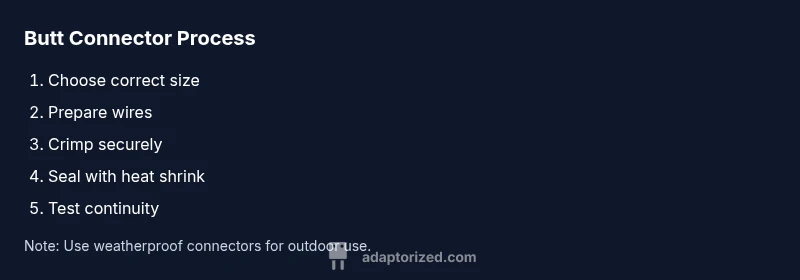
This overview gives you the flow of a standard butt connector installation without getting lost in details. Start by confirming your wire size and choosing the appropriate connector. Cut wires to the correct length, then strip insulation to the recommended strip length. Insert both conductors into the connector until they sit fully seated and visible beyond the crimp area. Use the correct crimp tool to compress each side of the connector evenly, then inspect for a tight, uniform bite. If you’re using heat-shrink connectors, apply heat evenly to seal the joint and shrink the tubing around the wires. Finally, test continuity and insulation resistance to verify reliability before powering the circuit.
Quality Checks After Crimping
A good crimp looks and feels solid. Check that the conductor strands are fully engaged inside the connector and that there’s no exposed conductor beyond the insulation. Perform a pull test gently to ensure the joint stays intact under modest vibration. Inspect the seam under good lighting for a clean, even edge with no gaps or raised edges. If you see gaps, re-crimp if your tool allows multiple attempts; otherwise cut back and re-strip a fresh section and try again. For outdoor or moisture-prone installations, add heat shrink and sealant as appropriate. Document the connectors used for future maintenance and troubleshooting.
Safety Essentials and Compliance
Always power down circuits before starting, and wear eye protection to guard against wire fragments and stray insulation. Work in a dry, well-ventilated area, and keep a clean work surface to prevent debris from getting into the joint. Follow local electrical codes and manufacturer recommendations for conductor sizes, insulation type, and protective measures. If you’re working on automotive or outdoor installations, choose weatherproof connectors and verify rating for current, voltage, and temperature. Never force a connector onto wires that are too large or too small, as this can damage strands and create hidden faults.
Common Pitfalls and How to Avoid Them
Common mistakes include using the wrong size connector for a given wire, which leads to loose joints or excessive stress on the wire. Skipping proper stripping or leaving insulation under the crimp reduces bite and increases resistance. Over-crimping can damage strands and squeeze out insulation, while under-crimping leaves the joint vulnerable to vibration. Not testing the joint after crimping can hide an intermittent fault until the circuit carries load. Finally, neglecting heat shrink or weatherproofing in outdoor or automotive applications invites moisture intrusion and corrosion. Plan ahead: pick the right size, strip cleanly, crimp firmly, seal, test, and label for easier maintenance.
Tools & Materials
- Butt connectors (insulated, color-coded)(Select size codes to match wire gauge (see block 3).)
- Wire strippers(Match to your wire gauge (e.g., 22-18 AWG, 16-14 AWG, 12-10 AWG).)
- Quality crimping tool (ratcheting)(Use correct jaw size for the connector; verify ratchet function.)
- Heat shrink tubing(Optional if using heat-shrink variants.)
- Heat gun or equivalent(Needed to shrink heat-shrink tubing evenly.)
- Electrical tape(Extra insulation and strain relief.)
- Wire cutters / flush cutters(Trim conductors cleanly before crimping.)
- Multimeter or continuity tester(Test continuity and insulation resistance after crimping.)
- Spare conductors (various gauges)(Practice on scraps before working on a live circuit.)
Steps
Estimated time: 45-60 minutes
- 1
Identify wire gauge and connector size
Check the wire gauge on both conductors and select a butt connector that lists that range. Ensure the connector type (insulated, heat-shrink, etc.) suits your environment. This initial alignment prevents rework later.
Tip: Always verify both wires fit within the connector's range before cutting. - 2
Cut wires to the correct length
Use straight, clean cuts to avoid frayed ends. The cut length should extend into the connector without leaving excess bare wire exposed beyond the crimp zone.
Tip: Avoid jagged cuts; misalignment increases corrosion risk. - 3
Strip insulation to the recommended length
Use proper stripping depth to expose sufficient conductor without nicking copper. The exposed length should align with the connector's internal depth for full seating.
Tip: Keep stripped sections free of oils or moisture. - 4
Insert conductors into the connector
Push both wires fully into the connector until they are seated. If either wire bottoms out early, re-check gauge and try again with a fresh strip.
Tip: Visualize the conductor reaching the back of the crimp area. - 5
Crimp with the correct tool
Position the connector in the crimp tool so both sides are evenly engaged. Apply steady, even pressure until the tool releases. Do not rush or reuse an old crimp.
Tip: Lock in the correct jaw size and use a light crimp first to check fit. - 6
Seal with heat shrink or insulation
If using heat-shrink connectors, apply heat evenly around the junction to shrink the sleeve snugly. For non-heat-shrink variants, wrap with electrical tape for insulation.
Tip: Stay at a safe distance with heat to avoid insulation damage. - 7
Test the joint and tighten if needed
Measure continuity with a multimeter and verify no short to adjacent conductors. If resistance is too high or the joint wiggles, re-crimp or re-strip and re-seat.
Tip: Perform a gentle tug test to confirm mechanical integrity. - 8
Document and finish
Label the connector type and wire sizes for future maintenance. Store scraps for practice and keep your workspace organized.
Tip: Maintain a small log of connector sizes used per project.
Your Questions Answered
What size butt connector should I use for 18 AWG wire?
Look for a blue-coded connector that lists 18 AWG within its range. Always confirm on the packaging before buying.
Use a blue connector that covers 18 AWG and check the packaging.
Can I reuse butt connectors if the joint seems fine?
No. Reusing a joint can weaken the connection and introduce hidden faults. Replace with a new connector.
Don’t reuse connectors; replace with a new one for reliability.
Are heat-shrink butt connectors better for outdoor use?
Yes. Heat-shrink variants provide moisture resistance and are preferable for outdoor or automotive environments.
Heat-shrink connectors are better outdoors due to moisture protection.
Do butt connectors require soldering for reliability?
Not required if you crimp correctly with a quality tool. Soldering can help in some cases but adds complexity.
Soldering isn’t required if the crimp is solid.
How can I test a butt connector after installation?
Use a multimeter to verify continuity and insulation. Wiggle the joint to ensure it stays intact under movement.
Test with a meter and gently wiggle to check for reliability.
What safety precautions should I follow when working with butt connectors?
Power down the circuit, wear PPE, work in a dry area, and respect voltage and current ratings.
Power off, wear PPE, and stay within ratings.
Watch Video
What to Remember
- Choose the right size for each wire.
- Prepare wires cleanly with proper stripping.
- Crimp firmly using the correct tool.
- Seal joints to protect from moisture.
- Test after crimping and document specifics.