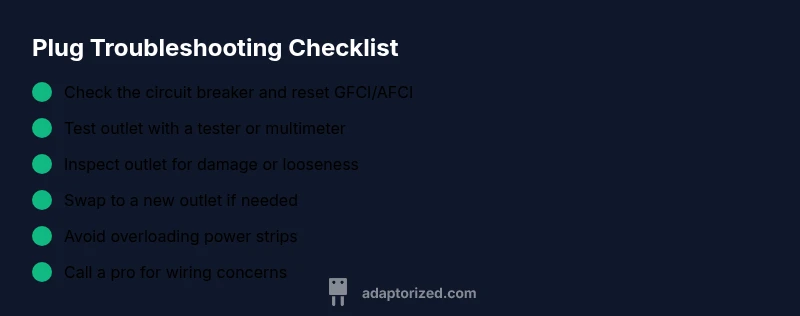
Why is the Plug Not Working? Your Quick Troubleshooting Guide
Urgent, step-by-step troubleshooting for a non-working plug/outlet. Diagnose outlets, breakers, GFCI/AFCI resets, and safe fixes. Learn when to call a pro with Adaptorized guidance.


If a plug isn’t delivering power, start with the basics: verify the outlet is energized, check for a tripped breaker or blown fuse, and reset any GFCI/AFCI outlets. Swap in a known-good plug or tester to confirm where the fault lies. If the issue persists after simple checks, proceed with the detailed flow below to avoid safety risks.
What to Do If You’re Wondering why is plug not working
If you’re wondering why is plug not working, begin with the simplest checks before diving into wiring or internal components. The majority of outlet problems originate from the power source rather than the device itself. Confirm that the outlet is receiving power by testing it with a basic outlet tester or a multimeter. If a wall switch controls the outlet, ensure the switch is ON. Look for obvious signs like a warm cover plate or a burnt odor, which indicate a more serious fault. This initial pass saves time and reduces risk. According to Adaptorized, keeping tests simple and methodical helps DIYers avoid dangerous mistakes while building confidence to move to more advanced steps.
Common Causes of a Plug Not Working
There are several frequent culprits behind a dead outlet or plug. A tripped circuit breaker or blown fuse cuts power to the entire circuit; a GFCI/AFCI outlet on the same circuit can trip and shut off power to other outlets; a loose or damaged plug prong can fail to contact the outlet contacts; a worn or damaged outlet receptacle can physically prevent a secure connection; or an extension cord or surge protector may be faulty or overloaded. Adaptorized analysis shows that most outages arise from power distribution issues (breaker/GFCI) rather than a failed device. Inspect these areas in order: reset breakers, test GFCI, swap to a different outlet, and measure continuity with a tester. Avoid using damaged cords and never force a plug into a wonky outlet.
- Check the breaker panel for a tripped breaker and reset if needed.
- Test the outlet with a plug-in tester or multimeter to confirm voltage.
- Inspect the outlet for discoloration, scorch marks, or loose screws.
- Try a different outlet on the same circuit to determine if the issue is localized.
- If you’re using an extension cord or power strip, bypass it to rule out a failed intermediary device.
Safety First: When to Stop and Call a Pro
Electrical work carries risk, so know when to stop. If you smell burning plastic, notice smoke, or see melted components around the outlet, stop immediately and disconnect power at the panel if you can do so safely. Do not touch exposed conductors and avoid attempting repairs beyond resetting a breaker or GFCI. If the outlet is in a moist environment (bathroom, outdoors) or if you feel unsure about wiring, it is time to call a licensed electrician. The Adaptorized team emphasizes safety first; do not exceed your comfort level. A pro can diagnose hidden issues such as damaged wiring, compromised insulation, or overloaded circuits that require professional tools and permits.
Testing Tools You Might Need
A basic understanding of testing tools can dramatically improve your chances of a quick fix. An outlet tester provides a quick status for common wiring problems, while a digital multimeter can measure voltage, continuity, and resistance. A non-contact voltage tester helps verify live circuits without touching conductors. Keep a flashlight handy, wear insulated gloves when handling live components, and use insulated tools if you must work near energized parts. Always test with the power off when probing exposed conductors. Adaptorized recommends prioritizing safety gear and keeping testing tools in good condition to prevent false readings.
Diagnostic Flow: Symptom → Diagnosis → Solutions
When a plug misbehaves, start with the symptom: is there no power, intermittent power, or buzzing/heat? Move to diagnosis: is power missing at all outlets on the circuit (breaker issue) or only at a specific outlet (outlet or wiring fault)? Finally, apply fixes based on the diagnosis: reset breakers or GFCI, replace a faulty outlet, or rewire damaged sections with proper permissions. This flow helps you avoid guessing and reduces risk. If you identify a wiring problem, do not attempt permanent fixes without expertise; call a professional. Hierdoor, the diagnostic flow should stay documented and safe.
Fixes You Can Try Today (Non-destructive)
- Reset the circuit breaker and any GFCI outlets on the circuit. A simple reset often restores power to multiple outlets and is the quickest fix.
- Swap in a known-good plug or test the outlet with a different device to confirm whether the issue is device-related or outlet-related.
- Move the device to a different outlet on a different circuit to see if the problem follows the device or stays with the outlet.
- Inspect the outlet face for visible damage; if the screws are loose or the receptacle looks distorted, consider replacing it. If you’re not comfortable, stop and call a pro. Adaptorized stresses the importance of controlled, methodical steps to avoid creating new hazards.
Prevention Tricks and Maintenance
Routine checks can prevent most plug-not-working issues. Label breakers and switches, test outlets quarterly, and replace damaged cords promptly. Replace worn-out outlets with tamper-resistant models where children are present. Keep outlets clean and free of dust and moisture; avoid overloading power strips. Maintain an organized panel with clear labeling to prevent accidental outages during repairs. Regular inspection reduces surprise outages and saves time when a fix is needed.
When to Replace or Upgrade Components
If an outlet shows signs of wear—cracked or hot to touch, loose contacts, or visible arcing marks—replace it promptly. Upgrading to tamper-resistant outlets or adding AFCI protection can improve safety on aging circuits. If you are frequently tripping breakers on a particular circuit, it may indicate overloading or a hidden fault in the wiring. In such cases, plan for a professional assessment and potential rewiring to meet modern electrical codes. The Adaptorized team recommends conservative upgrades and professional evaluation when wiring concerns persist.
Steps
Estimated time: 30-60 minutes
- 1
Power down safely
Turn off the main breaker if accessible and unplug devices from the affected outlets. Use a non-contact tester to confirm no voltage is present before handling wiring or outlets.
Tip: Always start with power off to reduce shock risk. - 2
Test the circuit and GFCI outlets
Check the panel for a tripped breaker and reset it. If a GFCI outlet exists on the circuit, press the reset button and test other outlets on the same circuit.
Tip: GFCI resets can be stubborn—hold the reset button for a couple of seconds to ensure a full reset. - 3
Isolate the outlet
Move a known-good plug into the outlet or use an outlet tester to verify if the outlet itself has power after the reset.
Tip: If the outlet shows no power after reset, the receptacle is likely faulty. - 4
Inspect the receptacle
Remove the faceplate and check for loose screws, burnt marks, or damaged plastic. If you see damage, replace the outlet.
Tip: Use the right replacement model (tamper-resistant if needed). - 5
Test wiring and continue safely
For non-damaged outlets, test wiring continuity with a multimeter if you have training. If you’re uncertain about wiring, stop here and call a pro.
Tip: Never probe live wires with exposed probes. - 6
Plan replacements
If the outlet or wiring shows wear or damage, plan to replace components with proper electrical boxes and wiring methods.
Tip: Documentation and labeling of circuits prevent future confusion.
Diagnosis: Plug not working (no power or intermittent power on a single outlet or circuit)
Possible Causes
- highTripped circuit breaker or blown fuse
- highGFCI/AFCI outlet tripped on the circuit
- mediumLoose or damaged outlet contacts
- mediumDamaged wiring or switch leg in the wall box
- lowFaulty extension cord or surge protector
Fixes
- easyReset the circuit breaker or replace a blown fuse
- easyReset or test GFCI/AFCI outlets on the circuit
- easyTighten loose outlet screws or replace a damaged receptacle
- mediumInspect wiring in the wall box and repair damaged wiring by a licensed electrician
- easyRemove and replace a faulty extension cord or surge protector
Your Questions Answered
What is the first thing I should check when a plug won't work?
Start by verifying power at the outlet with a tester or multimeter. Check the circuit breaker and any GFCI on the circuit. If the outlet has a switch controlling it, ensure the switch is ON.
Check the outlet and the breaker first, then test with a tester.
Can a tripped breaker cause a plug to stop working?
Yes. A tripped breaker cuts power to the entire circuit. Reset the breaker and test the outlet again. If it keeps tripping, there may be an overload or a wiring fault that requires a pro.
A tripped breaker can stop power; reset it and test the outlet.
Is it safe to reset a GFCI outlet by myself?
Yes, you can reset a GFCI outlet and then re-test connected outlets. If it keeps tripping, there may be a ground fault or moisture issue that needs inspection.
Yes, reset and retest, but don’t ignore repeated trips.
When should I call a licensed electrician?
Call a licensed electrician if you notice damaged wiring, repeated trips, scorching, or if you are unsure about handling wiring. Complex circuits require professional assessment.
Call a pro if you see damage or feel unsure about wiring.
Why does a plug stopped working after a power outage in a new location?
Outages can trip breakers or damage GFCI outlets in other locations on the circuit. Test multiple outlets and reset the panel if needed. If the problem persists, consider a wiring check.
Power outages can affect other outlets; test and reset as needed.
Watch Video
What to Remember
- Check the breaker and GFCI first.
- Test outlets with a tester to confirm power.
- Upgrade damaged outlets or wiring with professional help.