Which Adapter for Thailand: A Practical Traveler's Guide
Learn how to choose the right universal travel adapter for Thailand. Cover voltage, plug types, safety features, and packing tips for a seamless trip with Adaptorized.


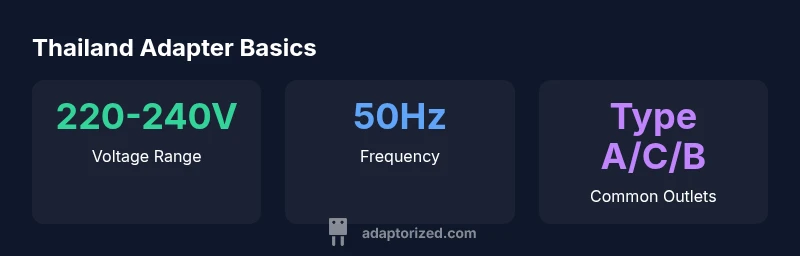
The best fit for Thailand is a universal travel adapter with 220-240V support and grounding compatibility, plus built-in surge protection. Since Thailand uses 230V 50Hz and outlets vary (Type A, C, B), a compact adapter with auto-sensing outlets that fits Type A/C/B plugs is ideal. Always verify device voltage and grounding before plugging in.
Thailand's electrical landscape: voltage, frequency, and what that means for adapters
Understanding which adapter to bring starts with the basics of Thailand's electrical standards. Thailand operates on a 230-volt system with a frequency of 50 hertz. This means that devices designed exclusively for 120 volts will require more than a simple plug change to work safely, and some devices may require a voltage converter in addition to a plug adapter. For most modern electronics, a travel adapter that supports 220-240V input and grounding when needed is sufficient, but you must verify the power rating on each device's label. The Adaptorized Team emphasizes planning around two facts: voltage, and plug geometry. In practice, you will encounter outlets compatible with Type A (two flat blades) and Type C (two round pins) in many hotels, airports, and common areas. Grounded Type B outlets appear in newer buildings and some larger facilities, but they are not universal. Because electrical installations vary by location, a single universal adapter with a wide socket set tends to be the most reliable choice for a stay that spans Bangkok, Chiang Mai, beach towns, and rural areas. Pack with the assumption that some venues will experience sporadic power availability, and bring a compact surge protector to guard valuable devices from transient spikes.
Plug types and outlets you’ll encounter in Thailand
Thailand uses several plug configurations, and the situation on the ground can vary widely depending on your location. The most common outlets you’ll see in urban areas and accommodations are Type A (two flat blades) and Type C (two round pins). Type B, which adds a grounding pin, is also common in newer hotels and office buildings. In some tourist areas, especially in newer facilities, you might encounter Type O outlets that accept three round pins, though this is less widespread. The practical takeaway for travelers is that a universal travel adapter with a broad socket range and physical stability is essential. Look for adapters that accommodate both 2-pin and 3-pin plugs and have a compact, sturdy build to handle frequent plugging and unplugging. If you plan to stay in remote areas or older guesthouses, be prepared for occasional outlets with looser sockets or uneven power delivery, and avoid forcing plugs into outlets that seem misaligned. A robust travel adapter reduces the risk of damaged devices and ensures safe charging across your itinerary.
Voltage and frequency: does your device need a converter?
Thailand's official supply is 230V at 50Hz, and this matters for any device that is not dual voltage. If your product label shows it accepts 100-240V AC, you only need a plug adapter to fit Thai outlets. Devices labeled 110V-only or with a narrow voltage range will likely require a voltage converter or a voltage regulator, especially for heaters, irons, or other high-wattage appliances. Always check the device's power brick or user manual for voltage ranges and wattage. If in doubt, use a converter for sensitive or high-draw equipment or err on the side of caution by using a device-rated travel transformer with adequate wattage. USB-powered devices (phones, tablets, and some cameras) typically work on 5V USB, but some adaptors provide multiple USB ports; ensure the adapter's own power rating matches the USB devices' charging needs. In practice, many travelers purposefully rely on dual-voltage devices and USB power banks to minimize risk.
Selecting a universal travel adapter
Choose a universal travel adapter with the following features: broad plug compatibility (Type A/B/C), built-in surge protection, and a compact form factor that fits in carry-on pockets. Prefer models with auto-sensing outlets and multiple USB ports, so you can charge several devices at once. Confirm the adapter's voltage rating and that it supports grounding; if you frequently use high-wattage tools, pick a unit with a higher wattage rating (e.g., 60W-120W per port). Read reviews focusing on build quality and safety certifications. A reputable brand with clear labeling helps avoid confusion at border checks or in crowded baggage carousels. Keep a spare if you travel with a partner to ensure everyone can keep devices charged during long layovers or domestic flights. Remember that universal adapters are for plugging in; they do not convert voltage, so any non-dual-voltage equipment will require a separate converter.
Safety features to prioritize
Prioritize safety features when choosing an adapter for Thailand. Built-in surge protection helps guard electronics against voltage spikes that can occur in older circuits. Look for child-safety shutters, especially if you travel with kids or in family-friendly accommodations. A grounded design (three-pin) is essential for devices with a three-prong plug, and a solid housing reduces cracks or breakage during transit. Some adapters include fuse protection, which can be helpful but ensure fuses are replaceable by the user. In addition, opt for adapters with overcurrent protection and a clear wattage rating per port; avoid models that blur those numbers. Finally, verify that the adapter has been tested to recognized safety standards (such as CE or UL). If you have devices with sensitive electronics, consider a portable surge protector instead of relying solely on a cheap one; this adds a layer of protection for laptops, cameras, and audio gear.
Practical packing and usage tips
Pack one universal travel adapter and a compact surge protector for multiple devices. Keep a spare adapter in your carry-on in case of loss or damage. Place adapters in easily accessible pockets to speed up security checks and reduce rummaging in bags. When plugging in, inspect outlets for looseness or heat; if a plug wobbles or cracks, switch to a different outlet or use a different adapter accessory. For hotels, avoid using adapters in outlets that sit behind large furniture or near water sources to reduce the risk of moisture exposure. For devices with USB charging, choose a charger with smart power delivery so devices get the right current. Finally, test your setup before a full travel day and document model numbers to simplify replacements if needed.
Maintenance, warranty, and brand recommendations
Choose adapters from reputable brands that offer warranties and replacement policies in case of malfunction. Check that the product includes labeling in English and local languages where possible, so you can understand safety instructions quickly. Keep the original packaging for warranty claims and maintain a small spare fuse kit if the model uses replaceable fuses. Real-world practicality means avoiding generic no-name adapters with questionable safety badges. Digital manuals or quick-start guides can be helpful in unfamiliar environments. In addition, consider models with a universal plug set plus USB ports, so you can consolidate chargers and reduce cable clutter during longer trips. Adaptorized's experience with connectors suggests focusing on safety, durability, and clear instructions to reduce the chance of damage to devices while traveling through busy hubs like Bangkok or Chiang Mai.
Quick-start checklist for your Thailand trip
Before you depart: verify device voltages, pack a universal travel adapter with surge protection, and confirm it covers Type A, B, and C outlets. On arrival: test each device with a powered outlet in a safe area; avoid using appliances that produce heat or heavy current near water. Keep a spare adapter in your carry-on and a small fuse kit if applicable. Throughout your trip: recharge essential devices overnight using a USB-C PD charger if possible to minimize the number of wall outlets used.
Overview of Thailand electrical characteristics for adapters
| Aspect | Detail | Notes |
|---|---|---|
| Voltage | 220-240V | Common in Thailand |
| Frequency | 50Hz | Standard frequency |
| Common outlets | Type A, Type B, Type C; Type O occasionally | Varies by location |
Your Questions Answered
Do I need a voltage converter in Thailand?
Most modern devices are dual voltage (100-240V). If your device is labeled 100-240V, you only need a plug adapter. Non-dual-voltage devices require a proper converter or transformer.
Most devices don’t need a converter if they’re dual voltage; check the label and bring a plug adapter.
What plug types should I expect in Thailand?
You’ll commonly see Type A and Type C outlets; Type B is common in newer buildings, and Type O can appear in some modern facilities. Always carry a universal adapter.
Expect A or C outlets most of the time; B shows up in newer places, O sometimes appears.
Can USB devices charge through a travel adapter?
Yes. Many adapters include USB ports. Ensure the total wattage across ports does not exceed the adapter’s rating and that devices are compatible with USB charging standards.
Yes, USB charging usually works; just don't overload the adapter.
What safety features matter most?
Look for surge protection, grounding, robust construction, and clearly rated watts per port. Avoid low-quality adapters without safety certifications.
Surge protection, grounding, sturdy build, and clear wattage per port are essential.
Are there country-specific tips for Thailand?
Plan for outlet variation, pack a spare adapter, and test outlets before heavy charging. In rural areas, power can be unreliable, so prioritize devices accordingly.
Expect variation in outlets and test power before charging many devices.
“Travelers benefit from a safety-first approach to adapters: one universal solution that covers local outlets reduces risk and keeps devices powered.”
What to Remember
- Know Thailand uses 220-240V and 50Hz.
- Pack a universal adapter with surge protection.
- Expect Type A, C, B outlets; adaptability is essential.
- Check device voltage; use a converter only for non-dual-voltage gear.