Which Plug Does Vietnam Use? A Traveler's Guide to Vietnam Outlets
Discover which plug types Vietnam uses, the standard voltage and frequency, and practical advice for travelers. Adaptorized provides a clear, reliable guide to Type A and Type C outlets and how to stay powered on your trip.


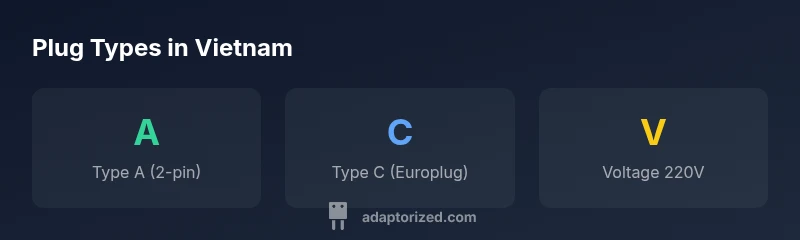
If you’re traveling to Vietnam, the common outlets you’ll encounter are Type A and Type C. Vietnam uses a 220V, 50Hz electrical system, so bring a universal travel adapter that covers these sockets. Many devices will work with an ungrounded Type A or a two-round-pin Type C plug; check your appliance label and consider a compact grounding adapter if needed.
Which plug does Vietnam use? The question often comes up for travelers who want to avoid damaged devices or dead batteries. In practice, Vietnam relies on two main outlet formats: Type A and Type C. Type A features two flat blades and is ungrounded, while Type C uses two round pins and is compatible with many European and Asian devices. The combination of 220V and 50Hz is the global standard in many parts of Southeast Asia, so most consumer electronics labeled for 100–240V will handle Vietnam’s supply with only a plug adapter. For the traveler, the key is portability and coverage: a compact universal adapter that supports both A and C sockets will cover the vast majority of devices.
Understanding Type A and Type C: shapes, compatibility, and practical tips. Type A outlets are common in older or budget accommodations, especially in urban centers and guesthouses. Type C sockets are widely present in newer buildings and are compatible with a broad range of European and international plugs. If your device uses a modern plug from the US, Japan, or Europe, a single adapter that supports Type A and Type C will usually suffice. In some cases, travelers encounter outlets that require a plug with two round pins or two flat blades—being prepared with an adapter that accommodates both types reduces the risk of power interruptions. Always verify the device’s voltage range; most modern chargers are multi-voltage (100–240V), but some appliances (like specific hairdryers or kitchen equipment) may require a voltage converter in addition to an adapter. By understanding the two main Vietnam plug types, you can quickly decide what to pack and how to stay powered on the road.
Real-world usage: hotels, guesthouses, and apartments. In urban hotels, it’s common to find Type C sockets embedded in modern furniture and wall plates. Guesthouses and hostels may still rely on Type A outlets, so a two-in-one adapter is handy. In apartment buildings or serviced residences, you might encounter a mix of sockets, including Type C and occasionally Type A in older rooms. Always carry a spare USB charger as a backup for low-wepend devices, and don’t rely on hotel power banks alone for longer trips. If you’re traveling with powered medical equipment, discuss power needs with your host or hotel staff before arrival to avoid surprises.
How to choose the right adapter: tips for travelers. Your primary goal is to cover Type A and Type C sockets with a compact adapter that doesn’t block adjacent outlets. Look for a universal travel adapter with built-in USB ports for charging phones and tablets without needing multiple plug adapters. Check that the adapter supports 220V and has robust build quality, with a secure plug interface to prevent wiggling in sockets. If you have devices with three-prong plugs, ask whether your accommodation supports grounded outlets (Type B or Type F) and consider an adapter with grounding capability if necessary. Finally, always verify the label on each device (e.g., 100–240V, 50/60Hz).
Safety and energy considerations when traveling in Vietnam. Voltage fluctuations can occur in older buildings or during peak usage hours. Use surge protection for sensitive electronics and avoid daisy-chaining power strips in cramped outlets. If you’re unsure about a socket’s grounding, use a grounded adapter rather than forcing a three-prong plug into a two-prong outlet. Battery packs and USB-C PD chargers are energy-efficient options, but ensure they’re rated for 220V and won’t overheat in crowded hotel rooms. By respecting local standards and using a versatile adapter, you reduce risk and keep your devices safe.
Quick-start packing list for electronics in Vietnam. Pack a compact universal travel adapter that covers Type A and Type C, with at least one USB-C PD port for fast charging. Include a lightweight surge protector if you plan to plug multiple devices in one outlet. Bring a small multi-USB charger for phones, tablets, and wearables, and consider a separate voltage converter only if you carry high-wattage appliances such as a hair dryer or coffee grinder. Finally, store cords neatly to avoid tangles and preserve the life of your adapters and plugs.
Common plug types used in Vietnam
| Plug Type | Typical Voltage | Notes |
|---|---|---|
| Type A | 220V | Two flat blades; ungrounded; common in older facilities |
| Type C | 220V | Two round pins; widely used; ungrounded; European compatibility |
Your Questions Answered
What plug types are used in Vietnam?
Vietnam predominantly uses Type A and Type C outlets. Type A is two flat blades and ungrounded, while Type C has two round pins and is ungrounded. In practice, most travelers use a universal adapter that covers both sockets. Always check your device’s voltage label to ensure compatibility with Vietnam’s 220V supply.
Vietnam mainly uses Type A and Type C outlets; bring a universal adapter and check your device voltage.
Do I need a voltage converter for US devices in Vietnam?
Most modern devices are dual-voltage (100–240V) and can be used with just an adapter. If your device is single-voltage, you’ll need a voltage converter in addition to an adapter. Always read the device label before plugging in.
Most devices work with just an adapter if they’re dual-voltage; check labels.
Can I use a Type A device in a Type C outlet with an adapter?
Yes, with an appropriate adapter that converts Type A to Type C sockets. Ensure the adapter is rated for 220V and supports your device’s plug shape.
Use a dual-coverage adapter for both A and C sockets.
Are grounded outlets common in Vietnam?
Grounded, three-pronged outlets are less common in older buildings. If your device requires grounding, use an adapter that supports grounding or consult your host about socket availability.
Grounded outlets aren’t as common; bring a grounding-capable adapter if needed.
What should I do about power fluctuations or outages?
Voltage fluctuations can occur, especially in older areas. Use surge protectors for sensitive electronics and consider charging essentials in multiple ways to avoid disruption.
Expect occasional fluctuations and protect devices with surge protectors.
“Simple, reliable adapters paired with a basic understanding of local outlets dramatically reduces travel power surprises.”
What to Remember
- Know the main outlets: Type A and Type C.
- Voltage is 220V at 50Hz.
- Always carry a universal adapter for Vietnam.
- Check device labels for compatibility.
- Safety first: avoid forcing incompatible plugs into outlets.