What You Need to Install a Tesla Wall Connector
Learn the exact steps, permits, electrical requirements, and materials needed to install a Tesla Wall Connector safely and legally. Practical guidance for DIYers and professionals to plan, gather supplies, and ensure code compliance.


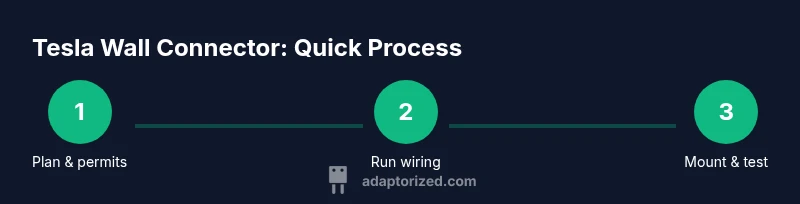
Answering what do you need to install tesla wall connector begins with a dedicated, code-compliant electrical setup and proper mounting. In short, you’ll need a suitable, dedicated circuit and breaker, correctly rated conductors, a panel with space for a new circuit, plus permits and inspections per local codes. This guide shows the exact steps, materials, and safety checks to prepare for installation — with professional help recommended.
Planning the Project: Compliance, Permits, and Roles
Planning is the foundation of a safe Tesla Wall Connector installation. Before you touch a wire, confirm local electrical codes, homeowner association rules if applicable, and whether a permit is required. According to Adaptorized, most jurisdictions require a dedicated circuit, correct overcurrent protection, and a documented inspection after completion. Identify a suitable location with close access to the main panel, unobstructed mounting space, and a sheltered or weather-protected wall. Document the route for wiring, ensure a clear path for future maintenance, and budget time for a professional consultation if you’re unsure. This upfront work helps prevent costly rework and ensures anyone involved understands the scope and safety requirements.
Electrical Supply, Panel Capacity, and Conductor Selection
Your install hinges on a dedicated circuit capable of handling the Wall Connector’s load, the availability of space in the electrical panel, and the proper conductors for the run. Verify that the panel can accept a new circuit without compromising existing loads, and size conductors according to the breaker's rating and local code. Use a licensed electrician to confirm the final load calculation, as underestimating can cause nuisance trips or overheating. Adaptorized analysis notes that attention to panel capacity and precise conductor sizing saves time and reduces risk during the actual connection.
Location, Mounting, and Environmental Considerations
Choose a location that allows convenient access for daily charging and future maintenance, while considering weather exposure and ventilation. Indoor garages, covered carports, or exterior walls with a weatherproof enclosure are common options. Ensure mounting surfaces are solid and plumb, with appropriate clearance for connectors and any future cable management. If mounting outdoors, select a wall bracket and enclosure rated for exterior use and ensure waterproof ingress protection. These considerations help prevent damage and ensure consistent charging performance over years of use.
Permits, Inspections, and Documentation
Many jurisdictions require a permit for a new charger installation and a post-install inspection to verify code compliance. Start the permit process early, gather electrical drawings, panel schedules, and the Wall Connector’s installation guide, and coordinate with your electrician. Documentation such as circuit diagrams, load calculations, and inspection stamps should be stored with home records for future resale or service visits. Even when not strictly required, obtaining an inspection provides verification of safety and reliability.
Tools, Materials, and Accessories You’ll Need
Having the right tools and materials on hand minimizes trips to the hardware store. A dedicated high-amperage circuit breaker, appropriately rated conductors, weatherproof mounting hardware, and a suitable enclosure if outdoors are essential. You’ll also want safety gear such as insulated gloves and eye protection, a voltage tester, a torque screwdriver, wire strippers, and a level. Keep a clear space around the work area and organize components in labeled containers to speed assembly.
Configuring the Wall Connector and Initial Safety Checks
After wiring and mounting, configure the Tesla Wall Connector according to the manufacturer’s guidelines, including wiring the device to the live circuit and setting the correct amperage. Before powering up, recheck all connections with a voltage tester, confirm grounding, and verify that the enclosure is sealed properly (if outdoors). A final safety check ensures there are no loose conductors, no exposed metal, and that all fasteners are tightened to the required torque.
Outdoor vs Indoor Installations: Weatherproofing and Protection
Outdoor installations demand weatherproof enclosures and robust sealing around entry points. Use conduit and fittings rated for exterior use, seal penetrations, and ensure the cable run is protected from physical damage. Indoor installs benefit from tidy cable management and accessible panels. Either way, maintain clear space around the unit to prevent overheating and ensure easy access to breaker wiring for future maintenance.
Troubleshooting, Maintenance, and Aftercare
Post-installation maintenance includes periodic inspections of connections, enclosure seals, and mounting integrity. If the charger trips or performs abnormally, re-test the circuit, check for loose connections, and consult the installation guide. Document any changes for future service visits. Regularly review code updates that may affect your installation and plan for periodic professional safety checks.
DIY vs Professional Install: Cost, Time, and Risk Considerations
DIY installation can save immediate costs but risks missing permits, mis-sizing the circuit, or poor wiring that could lead to safety hazards. A licensed electrician can streamline the process, perform required testing, and ensure code compliance. Factor in permit fees, potential panel upgrades, and inspection costs when budgeting. Adaptorized’s guidance emphasizes prioritizing safety and compliance over speed or aesthetics.
Maintenance Pathways and Upgrades for the Tesla Wall Connector
As charging needs evolve, review whether the Wall Connector configuration still matches your vehicle and regional energy plans. Keep firmware updated and verify the wiring remains within recommended temperature and load ranges. Having a documented maintenance plan helps avoid unexpected outages and ensures the charger remains ready for future EV purchases.
Quick Reference: Safety, Codes, and Compatibility Checklist
- Dedicated circuit and breaker matched to the Wall Connector configuration
- Adequate panel space and compliant conductors
- Permits and inspections where required
- Proper mounting and weatherproofing if outdoors
- Use of appropriate tools and PPE throughout the process
Final Thoughts: A Thoughtful, Code-Compliant Approach
A Tesla Wall Connector installation is a meaningful upgrade that pays off with convenient home charging when done correctly. By planning meticulously, confirming code compliance, and enlisting qualified help when needed, you can ensure a safe, reliable charging setup that serves years of EV ownership.
Tools & Materials
- Dedicated high-amperage circuit breaker(Ensure breaker matches Tesla Wall Connector configuration and local code (often 60A).)
- Appropriately rated electrical conductors(Use conductors sized for the breaker rating and run in permitted conduit.)
- Licensed electrician(Work must be performed by a licensed professional per code.)
- Weatherproof mounting enclosure and hardware(Required for outdoor installations to protect connections.)
- Permits and inspection documentation(Local permits may be required; keep inspection stamps for records.)
- Voltage tester / multimeter(Verify supply presence before initial wiring.)
- Torque screwdriver(Tighten connections to recommended torque values.)
- Wire strippers and insulated screwdrivers(Prepare conductors cleanly and safely.)
- Drill and masonry/wood bits(Create mounting holes and chase raceways as needed.)
- Level and tape measure(Ensure proper, plumb mounting for the Wall Connector.)
Steps
Estimated time: 4-8 hours total (planning, permitting, installation, and testing)
- 1
Verify codes and permits
Consult local codes and obtain any required permits before touching the electrical system. This helps prevent non-compliant work and potential fines. Have all stakeholders on the same page about scope and responsibilities.
Tip: Call the local building department or your utility to confirm permit requirements before purchasing parts. - 2
Plan location and run route
Choose a wall with accessible wiring path to the main panel and adequate clearance for the Wall Connector. Consider weather exposure and future vehicle placement.
Tip: Sketch a simple layout showing panel, wall, and conduit routing to avoid conflicts. - 3
Shut off power and confirm de-energization
Turn off power to the circuit you’ll work on and verify zero voltage with a tester. Double-check the main shutoff in case of multiple feeders.
Tip: Tag the panel and inform household members that work is in progress. - 4
Install dedicated circuit breaker
Install the appropriate breaker in the main panel to support the Wall Connector. Ensure the slot is available and that the panel can accept a new circuit.
Tip: Use a torque screwdriver to secure connections to the manufacturer’s specification. - 5
Route conductors and protect wiring
Run conductors from the panel to the chosen location, using conduit or approved cable routing. Protect conductors from physical damage and ensure proper strain relief.
Tip: Keep conductors away from high-heat areas and sharp edges. - 6
Mount the Wall Connector base
Attach the mounting plate or bracket to the wall, ensuring plumb alignment and solid anchoring. Use weatherproofing if outdoor.
Tip: Verify level with a small spirit level before final tightening. - 7
Connect conductors to the Wall Connector
Terminate conductors to the Wall Connector per the device’s wiring diagram and code requirements. Confirm ground and neutral (if applicable) connections are correct.
Tip: Recheck all terminations for security and cleanliness before powering up. - 8
Seal and finish mounting
Seal penetrations, mount enclosure cover, and secure any weatherproof seals. Ensure there are no gaps or loose components.
Tip: Test seals by simulating moisture exposure using an approved method. - 9
Configure amperage and test
Set the charger’s amperage limit and perform a controlled power-up test. Confirm charging activity with a vehicle and observe for faults.
Tip: Have a helper ready to observe indicators on the Wall Connector during the test. - 10
Schedule inspection and finalize
Arrange final inspection if required by local code. Keep all documentation handy for future service visits.
Tip: Store manuals, permit approvals, and load calculations in a dedicated home-electrical notebook. - 11
Document and educate yourself
Record wiring diagrams, breaker sizes, and panel changes. Share a simple charging plan with household members.
Tip: Update your home’s electrical inventory for future upgrades. - 12
Verify ongoing safety and readiness
Periodically inspect mounting, seals, and plug-in connections. Update firmware if supported and monitor for any charging irregularities.
Tip: Set a yearly reminder to re-check the installation with a licensed electrician if needed.
Your Questions Answered
What is the Tesla Wall Connector and what does installation involve?
The Tesla Wall Connector is a home charging unit that provides Level 2 charging for Tesla and other compatible EVs. Installation involves a dedicated circuit, appropriate wiring, and a safe mounting location, typically performed by a licensed electrician and verified with a local permit or inspection where required.
The Tesla Wall Connector is a home EV charger that usually needs a dedicated circuit, proper wiring, and a wall mount. A licensed electrician will typically handle installation and any required permits.
Do I need a permit to install a Tesla Wall Connector?
Many jurisdictions require a permit for installing a home EV charger and an electrical inspection after completion. Check with your local building department and your electrician to ensure you meet all code requirements.
Most places require a permit and inspection for installing a home EV charger. Your electrician can guide you through the process.
Can I install the Wall Connector myself?
While some homeowners are comfortable with electrical work, Tesla Wall Connector installations involve high-voltage systems and code compliance. It’s strongly recommended to hire a licensed electrician to ensure safety and permit compliance.
It's best to hire a licensed electrician for safety and code compliance, even if you feel confident handling some steps.
What breaker size do I need for the Wall Connector?
Breaker size depends on the Wall Connector configuration and local codes. Most installations use a dedicated high-amperage circuit; your electrician will specify the appropriate size after load calculations.
The right breaker size is determined by your Wall Connector setup and local codes, usually after a load calculation by your electrician.
Can the Wall Connector be installed outdoors?
Outdoor installations require weatherproof mounting, sealed enclosures, and protected cable routing. Use exterior-rated hardware and weatherproof seals to prevent moisture ingress.
Yes, but only with weatherproof components and proper protection for outdoor wiring.
How long does installation typically take?
Time varies with site readiness and permitting, but a typical installation can take several hours to complete, including planning, permits, and testing.
It usually takes a few hours, depending on permits and site readiness.
Watch Video
What to Remember
- Identify permit requirements early and plan your route.
- Secure a dedicated circuit and correct wiring for safety.
- Choose an installation location that suits access and weather exposure.
- Involve a licensed electrician to verify code compliance.
- Test thoroughly and document the installation for future service.