Wire Connector Heat Shrink: Practical Guide for DIYers
Learn how wire connector heat shrink protects splices, improves insulation, and withstands temperature changes. This step-by-step guide covers material choices, sizing, application techniques, safety, and testing to ensure durable, professional results for DIYers and makers.


You will learn how to choose the right wire connector heat shrink, prepare the joint, and apply heat with control and safety. This quick guide covers tubing sizing, shrink ratios, material types, color coding, and common mistakes to avoid. By the end you’ll be able to create durable, weather-resistant insulation for electrical splices in DIY and professional projects.
What is wire connector heat shrink and why it matters
Wire connector heat shrink is a specialized tubing used to insulate and protect electrical connections. When heated, the tubing contracts around the joint, forming a tight seal that seals out moisture, dust, and mechanical stress. For DIYers and makers, selecting the right heat shrink for wire connectors means choosing a material and size that match the conductor gauge, insulation needs, and environmental exposure. Properly applied heat shrink improves electrical safety, reduces the risk of corrosion at the splice, and provides a clean, professional appearance. In many projects, the heat shrink acts as an extra layer of protection beyond the original insulation, helping to prevent micro-arcing and wire fatigue during vibration or movement.
In practice, the term wire connector heat shrink is often used to describe the combination of a connector, the insulation tubing, and the heat-activated seal formed around the joint. This makes it a critical skill for hobbyists, automotive enthusiasts, and electronics builders who want reliable, long-lasting connections. Adaptorized, through its practical guidance, emphasizes clear selection criteria and safe application methods that minimize damage to conductors and insulation during shrinking.
Common use cases include jumper wires, automotive sensor leads, solar panel connections, and hobby electronics where weather exposure or repeated flexing could compromise bare copper. When you see heat shrink around a joint, you’re observing a compact solution that simplifies insulation, improves strain relief, and offers predictable electrical performance under real-world conditions.
noteNullOrNotExperienceablePopulatedValueNumStylesAllowedOnThisFieldNullableNullValueAndSoOnForSafetyForNowThinking
Tools & Materials
- Heat shrink tubing(Choose tubing with the correct shrink ratio and material for the joint size and environmental exposure.)
- Heat gun or heat source(Prefer a dedicated heat gun with a variable temperature control; avoid prolonged direct flame.)
- Wire stripper(Prepare clean, straight conductors without nicks or burrs.)
- Scissors or sharp knife(Trim tubing ends cleanly to avoid gaps or folds.)
- Alcohol wipes or degreaser(Clean contact surfaces to improve adhesion and shrink quality.)
- Crimping tool (if using crimp terminals)(Use proper crimp tools for reliable terminal connections.)
- Safety gear (gloves and eye protection)(Protect hands and eyes from heat and sharp edges.)
- Heat-resistant mat or nonflammable surface(Protect workspace from heat and potential splatter.)
Steps
Estimated time: 15-25 minutes
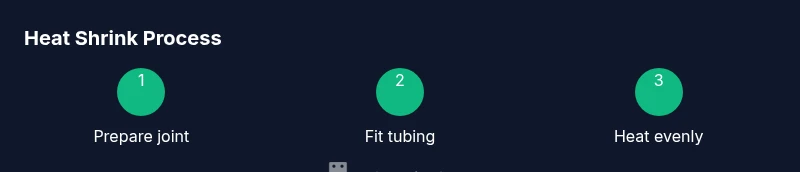
- 1
Prepare and inspect the joint
Power down the circuit and inspect the wire splice for damage or fraying. Trim any damaged conductors and ensure the joint is clean. If you need to expose more conductor, do so evenly and avoid nicking the copper.
Tip: Check that the bare wires are evenly aligned and not splayed; misalignment can create gaps under the heat shrink. - 2
Select and pre-fit the tubing
Choose a heat shrink tube with a slightly longer length than the exposed joint and a shrink ratio that matches the conductor diameter after compaction. Slide the tubing over the wire before making any permanent joins to ensure you can position it correctly.
Tip: Always pre-fit to avoid rework after shrinking; a poor fit leads to incomplete shrinkage. - 3
Center the tubing over the joint
Slide the tubing so the joint sits roughly in the middle of the tube. Ensure both ends have equal overhang to create a uniform seal and protect exposed conductors on all sides.
Tip: Avoid twisting the tubing; keep it flat to prevent air pockets during shrinking. - 4
Apply heat evenly and gradually
Begin shrinking from one end and rotate around the joint to distribute heat evenly. Move the heat source steadily and avoid focusing heat on one spot to prevent scorching or tube buckling.
Tip: Keep the heat source at a safe distance and use the lowest effective temperature. - 5
Inspect the shrink and seal
After cooling, check that the tubing has fully contracted around the joint with no gaps. Look for uniform color change and a tight seal that protects against moisture. If needed, reheat gently to improve compression.
Tip: If air bubbles appear, reheat the area and smooth with gloved finger if permitted. - 6
Test insulation and mechanical integrity
Re-energize the circuit only after verifying continuity and insulation with appropriate testing. Flex the joint gently to ensure the heat shrink stays in place and does not crack under movement.
Tip: Document any anomalies and address them before full deployment.
Your Questions Answered
Do I need heat shrink for every wire connection?
Not every joint requires heat shrink. Use heat shrink when you need moisture protection, strain relief, or a cleaner appearance. For simple, short, indoor connections with adequate insulation, you may skip it, but assess exposure and movement.
You don’t have to use heat shrink on every joint—only when protection or a neat finish is needed.
What temperature rating should heat shrink tubing have?
Choose tubing rated for the environment where the joint will live. High-temperature environments require tubing with higher heat resistance and appropriate shrink ratios. Always refer to the conductor insulation and circuit requirements.
Pick tubing rated for the environment and match it to the conductor and insulation needs.
Can I use a lighter instead of a heat gun?
A lighter can ignite uneven shrinking and damage tubing; a heat gun allows controlled, even shrinking. For safety and results, use a proper heat source designed for electrical work.
Use a heat gun for even heating; a lighter is not recommended for reliability.
Is heat shrink resistant to vibration and flexing?
Quality heat shrink provides some strain relief, but extreme vibration fine-movements may require additional support like adhesive-lined tubing or mechanical fasteners. Consider application demands when choosing tubing.
Heat shrink helps with insulation and strain relief, but for heavy vibration you may need extra support.
How do I remove heat shrink if I need to rework a connection?
Carefully slice along the tubing with a sharp blade, then peel away the remnants. If you plan to reuse the joint, ensure the wire is undamaged and retape or re-shrink as needed.
If you need to redo a joint, slice and peel the tubing without pulling on the conductors.
Watch Video
What to Remember
- Choose correct heat shrink size and material
- Prepare and clean joints before shrinking
- Apply heat evenly and avoid hotspots
- Verify sealed joints with testing after shrinking