Tesla Mobile Connector: A DIY Guide to Portable EV Charging
A practical, step-by-step guide from Adaptorized on using the Tesla Mobile Connector. Learn outlet compatibility, adapters, safety, maintenance, and DIY charging strategies for portable EV charging.


The Tesla Mobile Connector guide shows you how to safely use the portable charging option, verify outlet compatibility, and perform basic maintenance. You’ll learn which outlets and adapters work, how to connect safely, and what checks to run before charging. By the end, you’ll be ready to charge on the go or at home without a permanent charger, with confidence.
What is the Tesla Mobile Connector and who should use it?
The Tesla Mobile Connector is a portable charging solution designed for EV owners who want flexibility without committing to a home-installed charger. According to Adaptorized, this kit makes it possible to charge from common household outlets and select higher-voltage outlets with the right adapters, offering a convenient option for road trips, emergencies, or daily use when a wall charger isn’t installed. It’s particularly useful for DIYers and makers who value hands-on control over their charging setup, and for travelers or commuters who need a lightweight, easy-to-store option. The device typically ships with a flexible cord, a selection of plug adapters, and a safety switch that helps ensure you’re not drawing more power than the outlet can safely provide. While it won’t replace a dedicated home charger for high-volume daily charging, it fills gaps where portability, cost, and simplicity are priorities.
Outlet compatibility and adapters for common setups
The core idea behind the Tesla Mobile Connector is compatibility with a range of outlets, from simple 120-volt household outlets to higher-voltage configurations that enable faster charging when available. For DIY use, you’ll encounter outlets like NEMA 5-15 for Level 1 charging and higher-voltage outlets for Level 2 charging when you have the appropriate adapter. Not all outlets are created equal; some require additional safety steps or circuit considerations. The practical takeaway is to verify the outlet type before plugging in and to use adapters that are specifically designed for EV charging use. With the right adapter, you can plug into many common outlet configurations, but you should always confirm that the circuit is on a compatible breaker and that the wiring is rated for the expected load. If you’re uncertain, consult an electrician or refer to trusted sources such as national energy guides. The goal is to maintain a safe connection while avoiding overload or tripping breakers during charging.
Safety considerations and best practices
Safety is the foundation of every portable charging setup. Always inspect cables for wear or damage before use and avoid charging in wet or damp environments. Use only adapters and connectors that are rated for EV charging and ensure the outlet you’re using has proper grounding and protection. If any heat, smell, or unusual noise appears during charging, stop immediately and disconnect. Keep the connector and plugs clean and dry, and store them in a dry, cool place when not in use. When in doubt, treat the setup as you would a temporary charging solution and plan a more permanent charging strategy for long-term daily use.
Understanding charging rates and limits
A portable solution like the Tesla Mobile Connector is designed to offer flexibility rather than peak-performance charging. The actual charging rate depends on the outlet type, the adapter, and the vehicle’s battery state. In practice, you’ll see slower charging from standard household outlets and the possibility of faster charging where higher-voltage outlets and proper adapters are available. Consumers should understand that portable chargers have limits and should not be compared directly to dedicated home charging stations. Always prioritize safe operation over perceived speed and plan charging sessions accordingly, especially when you have a tight deadline or dependability on a full battery for travel.
Setup considerations before you plug in
Before you connect, confirm you have the correct adapter for your outlet and that the vehicle is ready for charging. Check that the outlet is not shared with high-draw devices that could cause voltage drops or tripping. Make sure the vehicle is parked on a stable surface and that you are standing dry and safe. If you’re in a rental, follow the property’s rules for charging equipment. Preparing your setup in advance reduces the chance of last-minute issues during a trip.
Maintenance, storage, and troubleshooting tips
Regular maintenance helps extend the life of the Tesla Mobile Connector. Inspect the cord and plug ends for cracks, discoloration, or melted insulation. Clean connectors with a dry cloth and avoid moisture exposure. When not in use, coil the cord loosely and store in a dry bag or case away from heat sources. If you encounter charging interruptions, re-seat adapters, check for tripped breakers, and test the outlet with a dedicated tester. If problems persist, consult a qualified electrician.
Real-world scenarios and common mistakes
On road trips, many users rely on the Mobile Connector in hotel parking lots or campgrounds where outlets are scarce. A common mistake is attempting to pull high power from under-rated outlets or using improvised adapters. Always verify outlet ratings, never force a plug, and stay within the outlet’s safe operating range. Another frequent error is leaving the connector outdoors in rain or direct sun; store it when not in use and protect it from the elements. By planning ahead and using proper adapters, you can minimize risk and maximize reliability.
Tools & Materials
- Tesla Mobile Connector kit(Includes the cord, built-in safety switch, and a set of plug adapters)
- Outlet adapters for common outlets(Use only adapters designed for EV charging with appropriate ratings)
- Outlet tester or GFCI tester(Optional for confirming outlet safety before use)
- Weatherproof storage bag(Keep components dry and organized when not in use)
- Electrical tape or cable ties(Secure cords and adapters during transport)
- Safety gloves(Extra protection when handling connectors in unfamiliar outlets)
Steps
Estimated time: 25-45 minutes
- 1
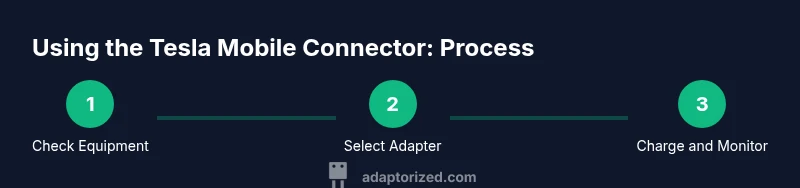
Inspect equipment and outlet
visually inspect the Mobile Connector, cord, and adapters for wear. Check the outlet for damage, moisture, or warmth. Do not use if anything looks questionable.
Tip: If you see cracking insulation or heat during inspection, stop and replace components before charging. - 2
Choose the correct adapter for the outlet
Identify whether the outlet is 120V or higher voltage and select the adapter accordingly. Ensure the adapter is rated for EV charging use and fits snugly.
Tip: Always verify the outlet rating on the adapter label before connecting. - 3
Connect the adapter to the Mobile Connector
Attach the adapter firmly to the connector and then connect the connector to the vehicle. Make sure the connection is secure and the vehicle is stationary.
Tip: Do not twist or force connections; a snug, straight connection is safest. - 4
Plug into the vehicle and monitor
Initiate charging and observe for any unusual heat or noise. If the vehicle doesn’t begin charging, re-check all connections and outlet compatibility.
Tip: Avoid leaving the setup unattended for long periods unless you’re nearby. - 5
Disconnect and stow properly
Once charging is complete or you’re ready to move, disconnect in reverse order, coil the cord gently, and store in a dry, protected space.
Tip: Always reseat adapters and keep a clean, dry storage area to extend life.
Your Questions Answered
Is the Tesla Mobile Connector compatible with non-Tesla EVs?
Some non-Tesla EVs can use adapters with the Mobile Connector, but compatibility varies by vehicle and adapter. Always verify with official guidance and use adapters designed for EV charging.
Some non-Tesla EVs can use adapters, but check compatibility and use EV-specific adapters.
Can I use the mobile connector outdoors?
Outdoor use depends on outlet protection and weather resistance of the adapters. Do not use if components are wet or damaged; ensure a sheltered or weather-rated setup where possible.
Only use outdoors if the setup is weather-rated and dry; avoid wet conditions.
What safety steps should I take before charging?
Inspect all parts, verify outlet ratings, connect securely, and monitor for heat or unusual signs. Use adapters only as intended for EV charging and avoid overloads.
Inspect components, verify outlet ratings, connect securely, monitor for heat.
How do I maintain the cable and adapters?
Regularly inspect for wear, clean connectors with a dry cloth, and store in a dry place. Replace damaged parts promptly to avoid safety risks.
Inspect for wear and store properly; replace damaged parts quickly.
What should I do if charging trips a breaker?
Stop charging, check outlet and adapter ratings, and ensure the circuit isn’t overloaded. If issues persist, consult an electrician.
If a breaker trips, stop and check; if needed, consult an electrician.
Watch Video
What to Remember
- Know which outlets are compatible and what adapters you need
- Prioritize safety checks before every charging session
- Maintain cables and adapters to extend life
- Understand portable charging limits vs. a home charger
- Plan ahead for on-the-road charging scenarios