How to Attach an F-Type Connector: A Step-by-Step Guide
Learn how to attach a 75-ohm F-Type connector to coaxial cable with a clear, step-by-step method. Prepare, strip, seat, and secure for a low-loss RF connection in TV, antenna, or satellite setups.


Goal: reliably attach an F-type connector to a coaxial cable for TV/antenna use. You’ll select the right 75-ohm F-type, strip the cable correctly, slide and crimp or solder as required, and tighten with the proper wrench. Follow the safe, step-by-step method to avoid signal loss and mechanical failure. This task is common in home networking, satellite setups, or cable TV installations.
What is an F-Type Connector?
The F-type connector is a threaded, 75-ohm RF connector used for coaxial cable installations in TV, antenna, and satellite systems. It screws onto the center conductor and shield to form a secure metal-to-metal seal, with minimal signal leakage when terminated cleanly. Because it is simple and widely compatible, many DIY setups use F-type connectors for home entertainment networks. According to Adaptorized, compatibility depends on maintaining proper impedance matching and precise seating, which are critical for consistent signal quality. This understanding sets the stage for a clean termination.
Understanding Cable and Connector Compatibility
F-Type connectors are designed for 75-ohm coax cables such as RG6. Impedance mismatch can cause reflections, reduced signal strength, and degraded picture quality. For best results, use a connector designed for 75-ohm systems and ensure the cable jacket, shield, dielectric, and center conductor dimensions align with the connector’s specification. Adaptorized analysis shows that a well-matched system minimizes reflections and preserves RF integrity across the intended frequency range. Verify your equipment and cable type before selecting a connector.
Preparing the Cable End for Attaching an F-Type Connector
Begin by removing the outer jacket of the coax to expose the shield and dielectric while keeping the center conductor intact. Fold back the braid neatly, and trim any frayed fibers. Remove enough dielectric to expose only the center conductor so that the connector seats fully over it. Take care not to nick or bend the center conductor, as even a small flaw can introduce loss. A clean, square cut helps ensure a reliable, long-lasting termination.
Choosing the Attachment Method: Crimp, Compression, or Solder
There are three common ways to terminate an F-Type connector: crimp, compression, or solder-on. Crimp connectors rely on a dedicated crimping tool to compress the connector onto the cable shield, providing a strong mechanical hold. Compression connectors use a specialized tool to compress the ferrule around the coax outer conductor and shield, offering weather resistance when done correctly. Solder-on connectors require soldering a short portion of conductor to the connector, which can yield excellent electrical contact but demands careful workmanship to avoid damaging dielectric or conductor. Your choice depends on your tools, environment, and comfort with the technique.
Quick Reference: Step-By-Step Overview
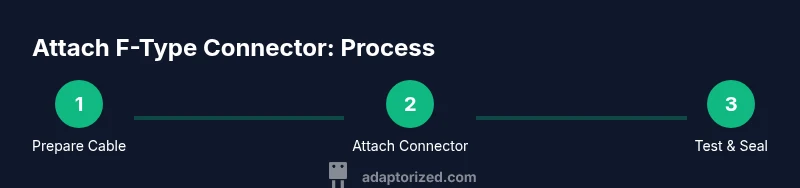
- Select a compatible 75-ohm F-Type connector and gathering all tools. 2) Prepare the cable by trimming the jacket cleanly. 3) Strip the shield and dielectric to expose the center conductor without nicking it. 4) Insert the conductor into the connector until seated. 5) Apply the chosen termination method (crimp, compression, or solder). 6) Inspect seating and integrity, then test for continuity. 7) If outdoor or weather exposure is expected, apply protective sleeving or weatherproofing.
Testing Your Connection for Signal Integrity
After terminating, visually inspect the connector for gaps or uneven seating. Use a continuity tester or a basic signal meter to confirm there is no open circuit or significant impedance change. A quick coax test with a TV or signal meter helps verify that signal strength remains stable across the expected frequency range. If you detect excessive loss or noise, re-strip and re-terminate, paying close attention to shielding integrity and center conductor length.
Maintenance and Long-Term Care
Inspect F-Type terminations periodically, especially in outdoor or weather-exposed installations. Keep connectors dry and free of corrosion; use weatherproof caps or heat-shrink tubing when appropriate. Avoid bending the coax too sharply near the termination, which can cause microfractures and future failure. By handling the termination gently and rechecking connections after weather events, you preserve RF performance over time.
Tools & Materials
- 75-ohm coaxial cable (RG6 recommended)(Use a cable designed for TV/satellite 75-ohm systems)
- F-Type connector (75-ohm, crimp/compression/solder-on)(Choose based on your termination method and tools)
- Coaxial cable stripper(Supports outer jacket and dielectric stripping without nicking the center conductor)
- Cable cutter or sharp knife(Cuts jacket cleanly without damaging the shield)
- Crimping tool for F-Type (optional)(Needed only for crimp-type connectors)
- Compression tool for F-Type (optional)(Needed only for compression-type connectors)
- Soldering iron and silver-bearing solder (optional)(Used for solder-on terminations)
- Heat-shrink tubing or weatherproof sealant (optional)(Protects outdoor connections from moisture)
- Small adjustable wrench or pliers (optional)(Useful for snugging fittings, not always necessary)
Steps
Estimated time: 25-40 minutes
- 1
Gather tools and materials
Collect the 75-ohm coax, the F-Type connector, and the appropriate termination tool. Confirm you have a stripper, cutter, and the tool for your chosen method (crimp, compression, or solder). This keeps you ready to work without interruptions.
Tip: Double-check that all tools are rated for the connector type you’re using. - 2
Prepare the cable end
Cut the cable cleanly, then remove the outer jacket to expose the shield. Fold back or trim the braid as needed and clear the dielectric to reveal the center conductor without nicking it.
Tip: A square cut helps ensure the connector seats evenly and seals well. - 3
Strip the shield and dielectric
Use the stripper to remove the shield and dielectric to the correct lengths required by the connector. Leave just enough center conductor exposed to fit fully inside the connector’s ferrule.
Tip: Avoid nicking the conductor; even small imperfections increase loss. - 4
Insert the conductor into the connector
Slide the connector over the prepared end so the center conductor meets the connector’s internal contact. Push until the conductor and shield are correctly seated.
Tip: Check for straight insertion to prevent crooked seating. - 5
Terminate with your chosen method
Crimp: place the ferrule over the shield and use the crimp tool. Compression: use the compression tool to seal the ferrule. Solder: apply a small amount of solder to the conductor inside the connector.
Tip: Follow the connector’s instructions for tool settings and force. - 6
Inspect and test
Inspect seating and look for gaps or misalignment. Perform a continuity test or use a signal meter to verify consistent performance.
Tip: If the test fails, re-strip and re-terminate carefully. - 7
Weatherproof and finalize
If the installation is outdoors, apply weatherproofing and protect the termination from moisture and UV exposure.
Tip: Seal any exposed metal to prevent corrosion.
Your Questions Answered
What is the best method to attach an F-Type connector: crimp, compression, or solder?
All methods work when executed correctly. Crimp offers speed and a solid hold, compression provides weather resistance, and soldering can yield excellent electrical contact but requires careful technique.
All methods work if done correctly. Crimp is fast, compression resists weather, and soldering gives strong electrical contact when done properly.
Can I reuse old F-Type connectors?
Reusing old connectors is generally not recommended. Wear, corrosion, or damaged seating can introduce loss and unreliable connections.
Reusing old connectors is usually not a good idea because wear or corrosion can ruin the connection.
Should I use heat shrink on F-Type connections?
Heat shrink or weatherproof sealant helps outdoor connections stay dry and corrosion-free. Use it where moisture is a risk.
Yes, heat shrink helps outdoors. It keeps moisture out and protects the seal.
Why does my F-Type connection have signal loss?
Common causes are nicked center conductor, poor seating, or a loose fit. Re-strip carefully and reseat with proper torque or crimp/ solder.
Signal loss often comes from damage to the conductor or a loose connection. Re-strip and reseat carefully.
Do I need special tools for 75-ohm coax terminations?
At minimum you’ll need a quality stripper and appropriate termination tools for your chosen method. Crimp or compression tools are optional depending on the connector type.
A good stripper and the right termination tool are the essentials; crimp or compression tools are optional depending on your connector.
Watch Video
What to Remember
- Prepare cables with clean cuts to ensure seating.
- Choose a termination method compatible with your tools.
- Test thoroughly before completing the install.
- Weatherproof outdoor terminations to preserve performance.
- Follow impedance-matching best practices to minimize reflections.