How to Use Connectors for LED Lights: A Practical Guide
A practical, step-by-step guide on using connectors for LED lights, covering connector types, wire gauges, polarity, and safe installation to ensure reliable, long-lasting LED lighting projects.


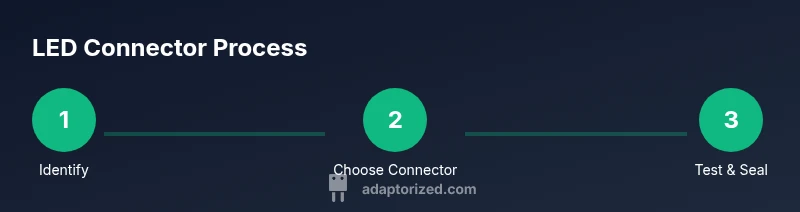
You can safely power LED lights by selecting compatible connectors and following correct polarity, ensuring secure mechanical and electrical connections. Start with identifying wire sizes and LED strip/fixture type, then choose compatible connectors (e.g., snap-in, crimp, or screw-down types) and assemble with proper insulation. Test continuity and check for heat after a short run.
Why connectors matter for LED lighting
Lighting projects hinge on reliable electrical connections. Connectors control how power flows from your driver or power supply into LED strips or modules, and a poor connection can cause flicker, voltage drop, or overheating. According to Adaptorized, choosing the right connector for your LED lights is the most important step in avoiding compatibility issues and ensuring a long service life. The right connectors account for voltage (commonly 12V or 24V for strips), current rating, conductor size, and environmental exposure. For DIY makers, a basic grasp of compatible connector families—whether snap-in, push-in, crimp, or screw-type—helps you assemble a clean, safe system without soldering every joint. In practice, you’ll want to map out each connection point: between your power supply and the first strip, between strips in series or parallel, and at the end of runs where termination is required. By planning ahead, you minimize shadowing, voltage loss, and stranded-wire fraying. This section outlines how to read LED labels, compare connector specs, and select options that balance ease of use with reliability.
noteOnlyMarkdownInThisBlockLabelForStyleCaptureOnly
Tools & Materials
- Wire stripper(for 22-18 AWG LED wiring)
- Wire cutter(for trimming insulation)
- Crimping tool(for crimp connectors)
- Soldering iron(optional for solid connections)
- Electrical tape(or heat-shrink tubing for insulation)
- Multimeter(to verify voltage and continuity)
- LED strip connectors(compatible with your LED strip type)
Steps
Estimated time: 60-90 minutes
- 1
Identify your LED system
Begin by noting the LED voltage rating (commonly 12V or 24V), current requirements, and whether you’re using flexible LED strips, ribbon modules, or individual LEDs. Check the power supply or driver specifications to ensure the connector and wire gauge you select can handle the load. This step prevents mismatches that can cause dimming or failure.
Tip: Double-check polarity on the first and last connections before powering up. - 2
Choose the right connector type
Select a connector family that matches your LED setup: snap-in for quick joins on strip-to-strip, crimp for robust wire-to-wire joins, or screw-down for permanent, serviceable connections. Consider waterproof or IP-rated variants if the installation is outdoors or in damp locations.
Tip: Favor connectors with clear polarity markings to reduce wiring errors. - 3
Prepare wires and LED pads
Cut wires to the needed length, strip insulation cleanly, and trim any frayed strands. If using LED strips, prepare the pad areas as recommended by the strip manufacturer. Clean connections improve conductivity and reduce resistance.
Tip: Use a comfortable length to avoid excess coil and prevent strain on the joint. - 4
Attach the connector to LED or wire
Secure the connector onto the LED strip pads or wire conductors according to the manufacturer’s instructions. Ensure the metal contacts fully engage with the copper traces, and avoid bending wires excessively near the joint to prevent fractures.
Tip: Hold the connector steady while you seat it to avoid misalignment. - 5
Seal and insulate outdoor or high-heat joints
If any connection is exposed to moisture or heat, apply waterproof sealing or heat-shrink tubing. This preserves insulation, prevents corrosion, and reduces the risk of short circuits in challenging environments.
Tip: Choose heat-shrink of appropriate size and apply with a heat gun for a clean seal. - 6
Test continuity and polarity
Before mounting, test the circuit with a multimeter to verify continuity and correct polarity. A quick test helps catch reversed connections before power is applied, saving time and reducing risk.
Tip: If you see no continuity, re-seat the connector and re-test from the power source. - 7
Route and secure wiring
Plan cable routes to minimize stress points and exposure. Use clips or ties to keep wires tidy and away from heat sources. A neat layout reduces mechanical wear and makes future maintenance easier.
Tip: Avoid sharp bends and keep runs away from cutting or drilling edges. - 8
Power up and observe
Connect the power supply and observe the LED lighting. Look for consistent brightness across strips and confirm there’s no flicker at the joints. If issues appear, re-check connections and potential cold solder joints.
Tip: If flicker persists, test each segment individually to locate the culprit. - 9
Document your setup
Label connectors and note the wire gauge, connector type, and voltage for future reference. A simple diagram saves time on maintenance or future upgrades and helps others understand the system quickly.
Tip: Keep a small lab notebook or digital note with your wiring map.
Your Questions Answered
What is the first step to using LED connectors safely?
Identify your LED system voltage and the connector type you will use. Check the power supply compatibility and confirm that the chosen connector supports the current. This foundational step prevents most early failures.
Start by identifying voltage and connector type to ensure safe and compatible wiring.
Can I reuse existing power supplies with LED connectors?
Reuse is possible if the power supply matches the LED system’s voltage and current ratings. Verify the supply’s max power and ensure connectors can handle the load without overheating.
Yes, as long as the voltage and current ratings match.
Which connector types are best for flexible LED strips?
For flexible LED strips, snap-in or press-fit connectors are common, while crimp or soldered joints can offer more robust joins for longer runs. Waterproof variants are ideal for damp environments.
Snap-in or crimp connectors work well for flexible strips, with waterproof options for outdoors.
Do I need to solder LED connectors?
Soldering is not always required if you use compatible, secure crimp or snap connectors. Soldering can improve reliability, especially for high-vibration installations.
Soldering isn’t always required, but can help in high-vibration setups.
How can I test a connector before final mounting?
Use a multimeter to check continuity and verify polarity. Apply power in a controlled test setup to confirm the joints conduct as expected before permanent installation.
Test continuity and polarity with a meter before final mounting.
Are waterproof connectors mandatory for outdoor LED setups?
Waterproof connectors are highly recommended outdoors to prevent moisture ingress and corrosion, which can cause short circuits or failure.
Yes—outdoor LED setups should use waterproof connectors for reliability.
Watch Video
What to Remember
- Plan wiring with voltage and gauge in mind
- Choose connectors that match your LED type and environment
- Polarity and continuity checks prevent failures
- Seal outdoor or high-heat joints for longevity
- Label and document your wiring for future maintenance