Tesla Wall Connector Specs: A Practical Guide for DIYers
Explore Tesla Wall Connector specs with a practical, data-driven approach. Learn max current, cable length, wiring options, safety features, and installation tips for DIYers.


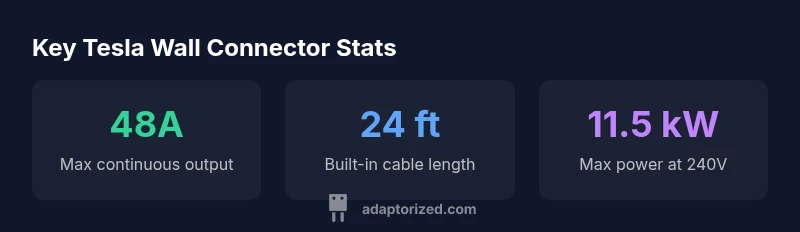
Tesla wall connector specs indicate a configurable output up to 48A on a 60A circuit, delivering about 11.5 kW of charging. The actual available power depends on your electrical service, wiring, and local codes. For DIY installers, plan for circuit capacity, cable length, and temperature/ground fault protection.
What tesla wall connector specs Mean for Home Charging
According to Adaptorized, understanding the tesla wall connector specs is essential for safe, efficient home charging. These specs determine how quickly an EV can charge, what electrical work is required, and how you plan around your existing service. For most DIYers, the goal is to balance charging speed with electrical safety and code compliance while avoiding unnecessary upgrades. In practice, the wall connector is designed to work with a 240V supply and offers configurable output to suit your circuit while maintaining reliable performance in varied temperatures. By interpreting the core specs—max output, voltage range, and built-in cable length—you can map a charging solution to your garage that minimizes wiring changes and speeds up installation.
Core Electrical Specifications You Should Know
Tesla’s wall connector specs revolve around a few core electrical parameters. The device is designed for 208-240V nominal operation and can be configured to deliver a continuous current up to 48A on a 60A circuit, translating to roughly 11.5 kW of charging when conditions allow. The exact delivered power depends on circuit capacity, the vehicle’s charging profile, and any local electrical code requirements. It is common to configure the unit for one of several discrete output settings to match the installed service. While the hardware supports high output, NEC and local code rules govern continuous loading; this often means sizing the home circuit accordingly and ensuring proper wiring gauge and protection.
Cable Length, Connectors, and Built-in Cable Design
A key practical detail in the tesla wall connector specs is the built-in cable length, which is typically around 24 feet. This length covers most standard garage layouts without requiring a separate extension. The connector uses a standard EV charging interface compatible with Tesla vehicles and commonly offered adapters for other makes when applicable. The build quality and strain relief are designed to withstand daily plug-in cycles, with a robust grip on the housing to minimize wear at the cable entry. When planning, consider your parking position and the reach needed to avoid kinks or excessive bending near the connector head.
Installation Options: Hardwired vs Plug-in (NEMA options)
The tesla wall connector specs support multiple installation approaches. It can be hardwired or connected through a NEMA outlet configuration, depending on your preference and local code. A hardwired setup typically uses a dedicated 60A circuit for maximum continuous output, but you can configure it for lower settings if the service or panel space is limited. If you choose a plug-in option, ensure the receptacle type (like NEMA 14-50) matches the device’s cord and protection. In both cases, proper strain relief, conduit routing, and secure mounting are essential to maintain reliability and safety. NEC compliance and a professional inspection are recommended when upgrading or modifying electrical service for this charger.
Compatibility and Vehicle Support
Tesla wall connector specs prioritize compatibility with Tesla EVs and, in some cases, offer compatibility workarounds for certain non-Tesla models through adapters or shared charging infrastructure. For DIYers, it’s important to confirm vehicle compatibility with the installed output setting. The charger’s adjustable current means you can tailor charging speed to respect both the vehicle’s acceptance rate and your home’s electrical capacity. If you own multiple EVs or anticipate future changes, plan for a configuration that remains flexible while staying within code limits.
Safety Features and Compliance
The tesla wall connector specs include safety features designed to protect both the installer and the vehicle. Key elements include overcurrent protection, ground fault protection, and temperature monitoring within the unit. The device is built to meet recognized safety standards, but local regulations and NEC rules govern installation. Always verify that circuit breakers, wiring gauge, and enclosure ratings are appropriate for your climate and installation location. Regular inspection of cables and the connector head helps prevent degradation from wear or exposure to heat and moisture.
Practical Setup Scenarios and Tips
For a typical garage, a 60A circuit with a 48A continuous output offers a solid balance of speed and safety. If you’re upgrading an older panel, you may need to budget for panel capacity and conductors. Use the built-in cable to minimize clutter and reduce trip hazards, and plan your parking alignment to keep sightlines clear to the connection point. Label the output setting clearly and document installation details for future maintenance. When in doubt, consult local code requirements and consider a pre-installation assessment from a licensed electrician. These steps help ensure that the tesla wall connector specs translate into a reliable daily charging routine.
Troubleshooting and Maintenance
Basic troubleshooting starts with verifying that the circuit is correctly rated for the configured output and that the vehicle’s charging port is clean and free of debris. Check that the built-in cable isn’t kinked or stressed, and inspect the enclosure for moisture or corrosion after severe weather. If charging seems slow or inconsistent, recheck the output setting in the charger and confirm the vehicle’s on-board charger isn’t limiting charging speed. Regular maintenance should include a periodic check of the cable head, connectors, and mounting hardware, as well as ensuring pro-grade seals remain intact at exterior installations.
Tesla Wall Connector key specs
| Aspect | Typical Value | Notes |
|---|---|---|
| Max continuous output | 48A on 60A circuit | Contingent on NEC rules and service capacity |
| Cable length | 24 ft | Fixed length; model year dependent |
| Input voltage | 208-240V | US/Canada typical mains |
Your Questions Answered
What is the maximum output of the Tesla Wall Connector?
The maximum continuous output is 48A on a 60A circuit, with the actual delivered power governed by NEC rules and local codes. Always verify your service rating before upgrading wiring.
The Wall Connector can output up to 48 amps on a 60-amp circuit, but you should check your local code before upgrading wiring.
Can the Tesla Wall Connector be installed outdoors?
Yes, with proper weather-rated enclosure and mounting, and by following outdoor installation practices for electrical devices.
Yes, outdoors is possible with the right weather-rated enclosure and proper mounting.
Does Tesla Wall Connector require Wi-Fi or an internet connection?
No, the Wall Connector does not require Wi‑Fi for operation. Software updates may occur, but connectivity is not essential for charging.
No, you don’t need Wi‑Fi to charge; updates might happen, but it’s not required.
What installation considerations should I plan for?
Plan for adequate circuit capacity, conductor sizing, protective enclosures, and clear cable routing. Obtain permits if required, and ensure the installation adheres to local codes.
Make sure your circuit is right-sized, wires are properly sized, and routing is safe and compliant.
How long is the built-in cable and does it affect placement?
The built-in cable is typically around 24 ft, which covers most garage layouts. Verify the exact length for your model year and parking setup.
Most models have about a 24-foot cable, which should fit typical garages.
“Understanding the Tesla wall connector specs isn’t just about numbers; it’s about matching electrical capacity to your home’s wiring and safety requirements.”
What to Remember
- Assess your circuit capacity before installation.
- Expect up to 48A continuous output on a 60A circuit.
- Plan for a built-in cable length of about 24 ft.
- Choose hardwired or NEMA connection based on setup.
- Follow NEC guidelines and local codes for safety.